Tuesday, January 18, 2022

glyphosate traces can render honey not "pure" for consumer protection claim

Scholder v. Sioux Honey Ass’n Coop., CV 16-5369 (GRB), 2022 WL 125742 (E.D.N.Y. Jan. 13, 2022)

Despite the failure of most “vanilla” claims, a metaphorically consumer vanilla false advertising claim can survive the motion to dismiss stage, as this case shows (though claims for breach of warranty and for injunctive relief get tossed, the latter for lack of standing).

Scholder alleged that defendant violated NY law because it puts “Pure” or “100% Pure” on the SueBee product labels, but the honey contains glyphosate, a synthetic chemical and herbicide that is potentially carcinogenic. Scholder alleged that “[c]onsumers reasonably believe that a product labeled ‘[P]ure’ or ‘100% [P]ure’ does not contain synthetic substances, such as artificial biocides,” and that had he known at the time that SueBee honey contained glyphosate, he would not have considered the honey to be pure and would not have paid a premium for the product.

Defendant argued that label couldn’t be materially misleading to a reasonable consumer because “any trace amounts of glyphosate in the honey was the result of the natural process of bees interacting with agriculture and not its production process, and thus its honey was in fact ‘Pure.’” At the pleading stage, though, it wasn’t clear whether a reasonable consumer would understand the terms “Pure” or “100% Pure” to mean that trace amounts of glyphosate could end up in honey from the bees foraging process.

As the Second Circuit previously held: “[u]nlike ‘natural,’ the words ‘pure’ and ‘100% natural’ indicate the absolute absence of contaminants.” Unlike the case where a term (“natural”) occurs only in the brand name and not elsewhere on the package, the product label here described the honey as “100% Pure Unfiltered Honey” on a stand-alone basis.

Further, the complaint alleged that the targeted consumers would care, because they “value pure foods,” and alleged the existence of specific statements/research about the potential dangers of glyphosate even at low levels. This made the allegations that reasonable consumers would care plausible.

Warranty claims failed for want of pre-suit notice, as required in NY, but unjust enrichment survived.

Disney+ catches up with the FTC

Okay, obviously I am the only person in the world who will care about this, but I noticed that Disney’s “Streamer” campaign for its streaming service is a lot like the ads for the product that the FTC made up for its Disclosure Exposure workshop 20 years ago. I guess the tech finally caught up (take a look at those FTC prices!). Side note: that means this is my 20th year teaching, wow.

court declines to drop hammer on competing game despite registrations

WRB, Inc. v. DAMM, LLC, 2022 WL 136914, No. 21-CV-1899 (NEB/TNL) (D. Minn. Jan. 14, 2022)

The court denies a preliminary injunction in this dispute between makers of stump-hammering games, finding issues of fact as to whether the claimed word mark is actually generic and as to likely confusion, but finds that the trade dress of plaintiff’s stump-hammering game isn’t functional (at this stage) because you can hammer nails into things other than stumps. This seems wrong to me—like holding a skateboard nonfunctional because you can also use roller skates if you want personal wheels, or the Dippin’ Dots ice cream configuration nonfunctional because one can eat regular ice cream instead—but does provide a nice illustration of the importance of market definition to functionality determinations.

There is a German drinking game involving striking nails with a hammer into a stump of wood. WRB has an incontestable registration for “Hammer-Schlagen” and a registration for the trade dress of its stump, cross-peen hammer, and nails: specifically, “a three-dimensional configuration ... comprising of a cylindrical cross-section of a tree with nails positioned around the outer circumference of its upward facing flat circular surface, and a cross-peen hammer,” issued in 2018. WRB offers a version of this game at various festivals such as local Octoberfests.  DAMM sells a different version of the game, called “Minneschlagen,” in an at-home kit.

“The Minneschlagen stump is smaller than the Hammer-Schlagen stump. It comes in a crate with a small finishing hammer and a bag of nails. The stump features the Minneschlagen logo—an outline of the state of Minnesota with ‘MINNESCHLAGEN’ written in capital letters.” DAMM has a registration for “Minneschlagen.”

“Hammer” and “schlagen” are German words, but the parties dispute whether the term “hammerschlagen” is a German word. WRB’s word mark registration states that “the English translation of ‘hammer-schlagen’ ... is ‘hammer beating.’ ”

However, “English-speaking Facebook users use “Hammer-Schlagen” to refer to a game; it is not clear whether the users are referring to the Hammer-Schlagen branded game or a more generic version.” E.g.,

“It’s called hammerschlagen where I have played it. Very entertaining to play!” At least some stumps shown in social media posts tagged “hammerschlagen” are not WRB stumps.

“Although DAMM does not describe Minneschlagen as hammerschlagen, Tyler Winkey, a relative of a DAMM founder, allegedly described Minneschlagen as a ‘portable hammerschlagen set.’ And some users have commented that Minneschlagen is a “knock off” of hammerschlagen or described it as hammerschlagen.”

DAMM also submitted evidence that a Google or Amazon search for “hammerschlagen” yields hammers, nails, and round pieces of wood—not just links to the WRB’s product or site, though the court wasn’t sure how to weigh Google/Amazon search results because they were “algorithmically” produced. (How does the court think other results are produced? I think the court means “ranked in some nontransparent way,” which is true and kind of interesting—both G and A have incentives to try to give people the most useful results, but how should we think about that in TM terms, and would we need a search expert to understand how we should think about that?)

There were alternatives to the stump: “Apparently, people also pound nails into other objects for fun. WRB submits several examples of people hitting nails into pieces of lumber as a game. These lumber-based games are likely cheaper to assemble than stump-based nail-pounding games (citing a source titled “The Hardest Thing About Hammerschlagen Is Scoring a Tree Stump”).

WRB had a presumption of ownership for both “Hammer-Schlagen” and trade dress because of its registrations. However, genericity can defeat incontestability, and there was a fact issue at this stage about whether the word was generic. As noted, the court wasn’t so sure about Google and Amazon results, but “the Facebook posts suggest generic use, at least by some consumers.” Thus, WRB wasn’t likely to succeed on ownership.

Registration of the trade dress also gave it a presumption of nonfunctionality. The court considered the trade dress as a whole, not the stump, cross-peen hammer, and nails separately (but see Groeneveld v. Lubecore, holding that where every feature is functional the combination does not become more than its parts). “[G]iven the many other nail-pounding games that use other shapes of wood, WRB will likely be able to show that the stump shape itself is aesthetic” and thus nonfunctional.

“WRB is entitled to a strong presumption of secondary meaning (and thus acquired distinctiveness) because the U.S. PTO already determined the mark has secondary meaning.” However, “DAMM presents sufficient evidence that consumers use ‘hammerschlagen’ and ‘the stump’ to name and identify a game not associated with WRB,” suggesting that it could meet its burden of showing nondistinctiveness. WRB pointed to “promotions and features in magazines,” but at least one of those featured an image of the stump, hammer and nails with no reference to WRB or “Hammer-Schlagen,” “so it is as likely the flyer is evidence of generic use as of acquired distinctiveness.” Likewise the court discounted declarations from coordinators of the Twin Cities and Northwest Oktoberfests that most attendees would associate “the round stump with nails around the perimeter and a cross-peen hammer” with WRB’s game design, because those were people in the trade, not ordinary consumers.

Even if WRB showed ownership, it didn’t show likely confusion at this stage. The fact question about whether there was even distinctiveness also weighed against finding likely confusion. Nor were the parties’ marks highly similar:

Minneschlagen is sold in a wood crate with rope handles, and the crate disassembles to reveal a small (10–14 inch) stump, a small finishing hammer, and a bag of nails. The Minneschlagen logo—“Minneschlagen” written over an outline of the state of Minnesota—features prominently on the stump and the bag of nails. In contrast, at the hearing on this motion, Counsel for Hammer-Schlagen explained that Hammer-Schlagen sets up large stumps, with large cross-peen hammers, and nails, under tents at events. At these events, WRB passes out stickers with innuendo such as, “I Got Nailed” and “Got Wood?” Its advertising is in orange with block letters and a drawing of a hammer. Each leaves a consumer with a different first impression—DAMM’s suggests a homey, Minnesota game for any occasion, and WRBs is a rugged, spirited, outdoor party game.

Although the products’ names both included “schlagen,” “[t]he use of identical, even dominant, words in common does not automatically mean that two marks are similar.” “The Court will not find names to be confusingly similar where the only similarity is a word in a foreign language [that means something relevant to the product].”

Overlap in markets: “WRB sells its service (and not a take-home game) at the Twin Cities Oktoberfest, while Minneschlagen targets Minnesota consumers with its name and the outline of the state of Minnesota on the packaging. But even in Minnesota markets, consumers will not likely be confused by the similarities given the differences in overall impression and because WRB sells a service and DAMM sells a product.” The good/service distinction also increased the competitive separation between the parties, making confusion less likely.

Intent: “DAMM’s knowledge of WRB’s product does not show DAMM intended to confuse consumers.” Their shared use of “schlagen” had a non-goodwill-based explaination, and “Minneschlagen features its own logo prominently, which suggests DAMM’s intent to represent its own brand to consumers and not to copy,” as did its additional packaging and portable size.

Consumers’ degree of care: hard to say; didn’t favor either party.

Actual confusion: The Facebook posts’ meaning was ambiguous; they could show confusion or genericity. Declarations from two Oktoberfest coordinators who attest that they “would have assumed Minneschlagen’s product is affiliated with WRB” also didn’t show actual confusion “because the coordinators themselves were not confused nor do they report knowing of attendees who were confused.”

No injunction would issue.


Thursday, January 13, 2022

Arbitration agreement doesn't cover sweepstakes that has its own rules

Suski v. Marden-Kane, Inc., 2022 WL 103541, No. 21-cv-04539-SK (N.D. Cal. Jan. 11, 2022)

Plaintiffs filed a putative class action “on behalf of themselves and persons who opted into Coinbase’s $1.2 million Dogecoin (DOGE) sweepstakes in June 2021, and who purchased or sold Dogecoins on a Coinbase exchange for a total of $100 or more between June 3, 2021 and June 10, 2021.” The plaintiffs created Coinbase accounts before the sweepstakes began; the user agreement “indisputably” contains an arbitration provision covering “any dispute arising under this Agreement” or “any dispute arising out of or relating to this Agreement or the Coinbase Services,” depending on the plaintiff.

The sweepstakes ad stated:

Trade DOGE. Win DOGE. Starting today, you can trade, send, and receive Dogecoin on Coinbase.com and with the Coinbase Android and iOS apps. To celebrate, we’re giving away $1.2 million in Dogecoin. Opt in and then buy or sell $100 in DOGE on Coinbase by 6/10/2021 for your chance to win. Terms and conditions apply.

Along with some other fine, light-colored print, the ad continued: “NO PURCHASE NECESSARY TO ENTER OR WIN. PURCHASES WILL NOT INCREASE YOUR CHANCES OF WINNING.” There were other steps that encouraged consumers to trade. The complaint alleged that, “Coinbase, based on in-depth, empirical data from a previous sweepstakes, knew that the wording, design, and presentation of their Dogecoin sweepstakes advertisements would cause most users never to see the information about the alternative ways to enter on the separate ‘rules and details’ webpage.”

The ”Official Rules” stated, in relevant part (uncapitalized because I actually would like you to be able to read this): “The California courts (state and federal) shall have sole jurisdiction of any controversies regarding the promotion and the laws of the state of California shall govern the promotion. Each entrant waives any and all objections to jurisdiction and venue in those courts for any reason and hereby submits to the jurisdiction of those courts.”

Plaintiffs alleged that this was an unlawful lottery and that the promotion violated the usual California statutes.

Coinbase moved to compel arbitration.  “A party seeking to compel arbitration must prove by a preponderance of the evidence the existence of an arbitration agreement.” The terms conflicted; which governed and who decides? Whether the court or the arbitrator would determine which contract applied was an issue “for judicial determination unless the parties clearly and unmistakably provide otherwise.” Three of four plaintiffs agreed to language that said “enforceability, revocability, scope, or validity of the Arbitration Agreement … shall be decided by an arbitrator and not by a court or judge.” But the dispute here wasn’t about the scope of the agreement; it was whether the agreement had been superseded by another, separate contract. The plaintiffs agreed that the arbitration agreement would apply if it were not for their subsequent agreement to the official rules. Because of this subsequent agreement, the interaction between the two contracts was not “clearly and unmistakably delegated in the arbitration provision to the arbitrator.”

So, which contract governed? “Both provisions are all-inclusive, both are mandatory, and neither admits the possibility of the other.” Coinbase’s argument that the sweepstakes Official Rules only applied to non-Coinbase users was contradicted by the terms applying the rules to all “entrants.” Given this conflict, the subsequent contract superseded the first.

Turning to the motion to dismiss: Coinbase argued that the Dogecoin sweepstakes was not an illegal lottery under California law because it provided free alternative methods of entry. This was a close case, but the current allegations did not support a claim that the sweepstakes was an illegal lottery. “Although Plaintiffs may not have been aware of it when they made a trade of Dogecoins, they were not actually required to trade Dogecoins in order to enter the sweepstakes and have a chance to win. Because California penal statutes are construed strictly and because no California court has held that being unaware of the free method of entry is sufficient to demonstrate the required consideration, the Court finds that Plaintiffs have not and cannot allege a violation of California Penal Code § 320.”

However, “[t]hat many people may not have been aware that there was a free method of entry is significant for Plaintiffs’ claims for disclosure and misrepresentation under the UCL, FAL, and CLRA.”

Plaintiffs stated a claim that the materials were likely to deceive a reasonable consumer that they needed to make a trade to participate in the sweepstakes. Despite the disclosures, “its advertising methods heavily directed people to make a trade in order to participate in this sweepstakes,” and “no purchase necessary” was ambiguous in light of the other statements regarding the need to “buy or sell” Dogecoin. “Persons could have reasonably believed they were required to buy or sell Dogecoin to participate, which would have been consistent with not making a purchase but still requiring them to make a trade.”

California law also requires a “clear and conspicuous statement of the no-purchase-or-payment-necessary message” in solicitation materials. Plaintiffs alleged sufficient facts to show that Coinbase’s advertisements were not “clear and conspicuous” as to whether all persons could enter for free.

Thursday, January 06, 2022

Advertising injury coverage may exist even when gravamen of underlying complaint is TM

Vitamin Energy, LLC v. Evanston Ins. Co., -- F.4th ---, 2022 WL 39839, No. 20-3461 (3d Cir. Jan. 5, 2022)

The court finds that, contrary to the district court’s holding, at least some of the underlying lawsuit’s allegations claimed that Vitamin Energy made disparaging statements about 5-hour Energy, thus triggering the insurer’s duty to defend under its “advertising injury” policy.

“Pennsylvania law imposes on insurers a broad duty to defend lawsuits brought against those they insure.” 5-hour Energy [a frequent litigant in this space] sued mainly over trademark infringement, but also alleged false advertising (and trademark dilution). “Read liberally in favor of coverage, as is required, the 5-hour Energy complaint and the insurance policy impose on Evanston a duty to defend Vitamin Energy in the underlying suit, at least until there is no possibility that 5-hour Energy could prevail against Vitamin Energy on a claim covered by the policy.”

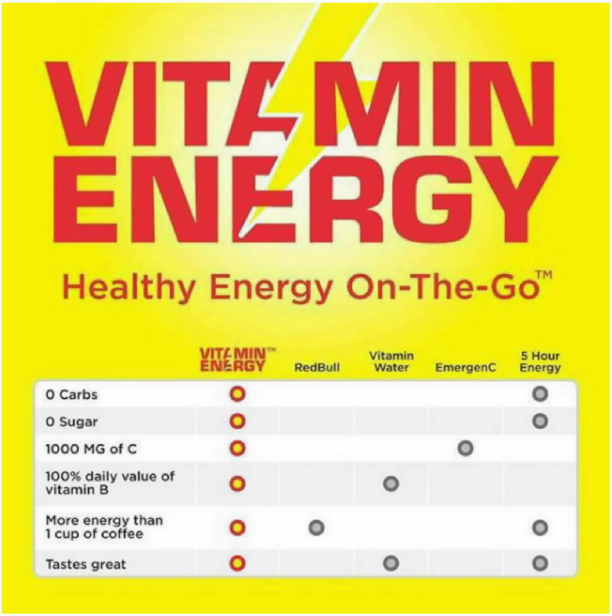
5-hour Energy alleged “false and misleading comparative advertising” about the benefits of Vitamin Energy’s products relative to competing products, including 5-hour Energy’s, as shown in the following chart from the underlying complaint:


This is allegedly false/misleading in representing that 5-hour Energy’s products don’t have 100% of the recommended daily value of Vitamin B. There were other alleged falsehoods about Vitamin Energy’s own products.

Under Pennsylvania law, “[a]n insurer’s duty to defend is broader than its duty to indemnify,” and potential coverage is determined “by comparing the four corners of the insurance contract to the four corners of the [underlying] complaint.” The Policy here defines Advertising Injury as an injury “arising out of oral or written publication of material that libels or slanders ... a person’s or organization’s products, goods or operations or other defamatory or disparaging material, occurring in the course of the Named Insured’s Advertisement.” This includes, at a minimum, an injurious false statement about another’s goods.

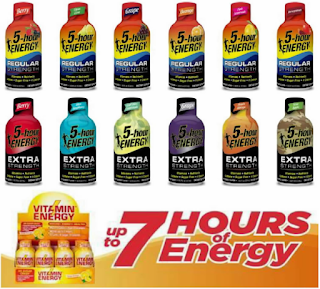
Even if all the other allegations in 5-hour Energy’s complaint pertain only to Vitamin Energy’s own products, the relevant allegations about the ad at issue “are best read as saying not only that Vitamin Energy’s own products contain 100% of the daily recommended value of vitamin B, but also that 5-hour Energy’s products do not. That latter representation is clearly about 5-hour Energy’s products, not Vitamin Energy’s, and 5-hour Energy asserts that it is false.” The underlying complaint need only contain “at least one allegation that falls within the scope of the policy’s coverage [for] the duty to defend [to be] triggered[.]” This is true even if the “gravamen” of the complaint is that the slogan promoting “up to 7 HOURS of Energy” is trademark infringement. The relevant question is “whether a claim against an insured is potentially covered[,]” “not whether the most salient claim is potentially covered.”

image illustrating the TM claim

The duty to defend “is not limited to meritorious actions; it even extends to actions that are groundless, false, or fraudulent as long as there exists the possibility that the allegations implicate coverage.”

Likewise, the exclusions were construed in favor of coverage. The IP exclusion for “Personal Injury or Advertising Injury arising out of piracy, unfair competition, the infringement of copyright, title, trade dress, slogan, service mark, service name or trademark, trade name, patent, trade secret or other intellectual property right,” was likewise inapplicable to the Vitamin B comparative advertising allegation. Although the exclusion listed “unfair competition,” that term “does not have a singular, unambiguous meaning.” In context, the other terms “refer narrowly and consistently to intellectual property rights, and so should ‘unfair competition.’” The court pointed out: “[I]f the exclusion did bar coverage because of allegations supporting a potential disparagement claim, it would arguably render the Policy’s coverage of injury from ‘disparaging material’ a nullity, which we doubt the parties intended.”

So too with the exclusions for the insured’s incorrect description/failure to conform with its own representations about its products’ own characteristics. And the exclusions for “knowing” personal/advertising injury didn’t apply because the complaint alleged knowing trademark infringement, not knowing disparagement.

In a footnote, the court said something that puzzled me: “Of course, had Vitamin Energy cabined its comparative advertising efforts to simple puffery, claims of relative superiority over other competitors, or claims about competitors that its competitors did not allege were false or misleading, then no duty to defend would arise because it is well established that such claims are not actionable.” It seems to me that until a court in the underlying action agrees that the comparative advertising is puffery, there’s still a duty to defend, because otherwise one court could say it’s not puffery and thus there is Lanham Act/disparagement exposure and another could say nonetheless there’s no duty to defend or indemnify, which seems wrong.

Wednesday, January 05, 2022

TripAdvisor might not get 230 protection when its own ad touted pandemic precautions

Chang v. TripAdvisor, LLC, 2021 WL 6237376, Civ. No. 2021-00347 (Mass. Super. Ct. Nov. 19, 2021)

Chang sought transportation services for an upcoming trip he had planned to San Jose Del Cabo in Mexico and found an ad on TripAdvisor’s website for a shuttle service from the Los Cabos Airport to his hotel. “Relying in part on the advertisement’s representations regarding safety measures taken to prevent the spread of COVID-19, Mr. Chang booked a one-way ticket for July 15, 2020 on the shuttle service.” He alleged that the shuttle didn’t comply with those safety measures, and sued TripAdvisor and Viator, “a company that advertises its services in cooperation with TripAdvisor,” under California law. The court rejected TripAdvisor’s §230 argument at the pleading stage, but nonetheless granted the motion to dismiss.

§230 supports a motion to dismiss only if the CDA’s “barrier to suit is evident from the face of the ... complaint.” The complaint did not admit that TripAdvisor wasn’t an information content provider, that is, “any person or entity that is responsible, in whole or in part, for the creation or development of information provided through the Internet or any other interactive service.” The complaint alleged that defendants “publish[ ] and advertise[ ] [their] services in cooperation” with others on their website. After his reservation, Chang received an email from TripAdvisor containing a section titled “Keeping you safe during COVID-19” which reiterated the same safety measures touted in the initial ad. “While Mr. Chang does not allege the extent of Defendants’ contributions to the description of the safety measures in the advertisement, it is certainly plausible that the text describing such safety measures was created at least in part by Defendants.”

However, Chang didn’t allege facts suggesting that either defendant had the requisite knowledge or intent required under each claim. The FAL bars making or disseminating to the public any statement concerning a product or service that “is untrue or misleading, and which is known, or which by the exercise of reasonable care should be known, to be untrue or misleading.” The complaint lacked allegations suggesting defendants either intentionally or negligently disseminated the untrue advertisement. The court noted that there was no allegation that either defendant operated the shuttle service itself or oversaw its operation. The CLRA likewise bars advertising goods or services “with intent not to sell them as advertised,” Cal. Civ. Code §1770(a)(9), so that claim had the same flaw. Chang also argued that he stated a claim under Cal. Civ. Code §1770(a)(7), which makes it unlawful to “[r]epresent[ ] that goods or services are of a particular standard, quality, or grade, or that goods are of a particular style or model, if they are of another” and has no intent requirement, but the complaint didn’t mention (a)(7), only (a)(9) (adding “et seq.” to the reference wasn’t sufficient, since 27 different bad practices were listed). He could amend his complaint.

Thursday, December 23, 2021

Competitor has standing to bring false association claims for false association w/3d party

FireBlok IP Holdings, LLC v. Hilti, Inc., 2021 WL 6049964, No. 3:19-cv-50122 (N.D. Ill. Dec. 12, 2021)

After Lexmark, can a competitor bring a false association claim when the false association is with an unrelated third party? This court answers yes, though limits the effect of that by applying what looks like ordinary false advertising analysis.

FireBlok owns a patent on a system and method for suppressing fire in electrical boxes using intumescent material. Through a licensing agreement, Hilti also markets and sells the Firestop Box Insert based in part on that same patent.

The labels of both products include the Underwriter Laboratories (UL) certification mark. Hilti claimed that it didn’t design the label, but that defendant RectorSeal did the final design.

RectorSeal also sells a product known as the Metacaulk Box Guard. Hilti was authorized to use the UL mark on its label through UL’s Multiple Listing service, which basically allows one product to piggyback off another identical product that is sold under another brand name. Through this process, the Firestop Box Insert was Multiple Listed with RectorSeal’s Metacaulk Box Guard, and thus—for a time—authorized to use the UL certification mark.

However, in 2008, “RectorSeal sent UL a letter withdrawing the Multiple Listing because it would no longer be manufacturing the Firestop Box Insert for Hilti, which was a requirement of the Multiple Listing program.” UL then allegedly withdrew the Multiple Listing, and therefore Hilti’s authority to use the UL mark on its labels. In 2019, RectorSeal requested that Hilti’s Firestop Box Insert be added back. Despite this, Hilti allegedly used the UL mark continuously during the period of noncertification.  FireBlok alleged that customers were likely confused into thinking that UL certified the Firestop Box Insert when it did not.

Illinois Uniform Deceptive Trade Practices Act: Plaintiff sought injunctive relief, which means that a “nonspeculative likelihood of future harm” is required under the statute (and, in federal courts, under Article III). It wasn’t enough to argue that RectorSeal withdrew the certification in the past and might do so again. Currently, the suggestion that the parties might mislabel the product was speculative.

Illinois Consumer Fraud Act: This requires that the relevant acts occur primarily and substantially in Illinois, but here they were nationwide, so that claim failed too.

Lanham Act claims did better. §43(a)(1)(A) false association with UL: FireBlok isn’t required to own the UL mark to bring a false association claim under Lexmark, since it established the relevant commercial interest and alleged proximate cause:

Nothing in the plain text of section 1125(a)(1)(A) requires trademark ownership. On the contrary, the text of the statute merely contemplates unfair competition that causes a likelihood that consumers will mistakenly believe the defendant’s product is sponsored by, affiliated with, or otherwise endorsed by another entity.

After all, Lexmark held that “the classic plaintiff in a Lanham Act case is one who is directly injured by a competitor’s false statements about its own goods or the goods of the plaintiff, and thereby induces customers to choose its goods over the plaintiff’s goods. That is precisely what FireBlok claims here.”

It was plausible that consumers would interpret the label to mean that the product was UL-certified and that this would cause them to purchase it instead of FireBlok’s product. This was literally false because the product was not UL-certified during the relevant period. “And literally false statements presumptively cause competitors harm.” [This is the ‘false advertising instead of likely confusion’ analysis I mentioned.]

§43(a)(1)(B): Same, without need to analyze materiality: “[B]ecause plaintiffs need not present evidence of actual consumer confusion in literal falsity cases, the only further requirement is that FireBlok has alleged that the literal falsity occurred in a commercial advertisement.” Materiality might have to be shown to avoid summary judgment, though.

RectorSeal argued that it couldn’t be liable for any false advertising on Hilti’s website, but the product label itself, which RectorSeal allegedly designed, also counts as a commercial advertisement. “Hilti and RectorSeal no doubt designed the label to entice customers into purchasing the product. Indeed, what other reason could they have for including the UL certification mark on the label?”


Tuesday, December 21, 2021

Proximate cause and puffery in real estate agent's claim against real estate ranking site

McLaughlin v. HomeLight, Inc., No. 2:21-cv-05379-MCS-KES, 2021 WL 5986913 (C.D. Cal. Sept. 17, 2021)

Lexmark’s “commercial interest” standing requirement gives, and its proximate cause requirement takes away.

HomeLight allegedly analyzes home sales data to generate a list of the best-performing real estate agents in a given area. “The website presents certain representations about its ‘custom, unbiased, data-driven recommendations.’” But its lists of the top real estate agents in Agoura Hills, California do not include McLaughlin, who alleged that he is the agent with the highest number of transactions and gross sales in Agoura Hills over the past 20 years. McLaughlin alleges that HomeLight’s website falsely implies that it has no “pay-for-play” relationship with top agents on its lists, but the real estate agents share part of their commission with HomeLight if HomeLight refers them.

McLaughlin’s alleged injury by “the diversion of real estate customers to Defendants and their commercial partners and/or loss of Plaintiff’s goodwill” fell within the Lanham Act’s “zone of interests.” However, McLaughlin failed to plead that his injury “flow[s] directly from the deception wrought by the defendant’s advertising”—that is, that the “deception of consumers causes them to withhold trade from the plaintiff.” It was not enough to generally allege diversion of potential consumers, tarnishment of his goodwill, or that “he would have even more transactions but for the false and misleading statements of Defendants.”

Indeed, McLaughlin pled that he conducted 12 real estate transactions in Agoura Hills in 2021, and that only two of the agents appearing on HomeLight’s lists conducted real estate transactions in Agoura Hills this year. He didn’t plead facts suggesting that HomeLight “caused the buyers and sellers in those transactions to retain those agents over him, or that he lost any other transactions to other agents because HomeLight did not feature him on its website.” E.g., he didn’t plead facts demonstrating that any clients or prospective clients viewed HomeLight’s advertising, “let alone that the advertising influenced their decisions to retain him or another agent.” He also didn’t explain how HomeLight’s purported failure to disclose its “pay-for-play” relationships with featured agents injured him in any way.

This also meant that he didn’t plausibly plead damages.

Also, he didn’t plausibly plead falsity because “top,” “best performing,” and “top performing” “do not signify any quantifiable, objective measure of agent performance” and constituted nonactionable puffery. The website itself signaled that the terms were nonexhaustive: it claimed to identify “20 of the top REALTORS® and real estate agents in Agoura Hills,” didn’t rank the listed individuals, and didn’t order them by transaction count or gross sales. It presented “objective measures of agent performance, such as transactions completed, as well as subjective information, such as client reviews.” Nor did McLaughlin plead facts showing that his omission from the list disproved HomeLight’s representations that its lists are “data-driven,” “unbiased,” and the result of an analysis of “millions of home sales.”

Also, the website clearly stated that real estate agents HomeLight refers through its website provide a referral fee to HomeLight, so nondisclosure couldn’t support his claim.


Monday, December 20, 2021

MLM's essential oils claims were puffery

Macnaughten v. Young Living Essential Oils, LC, 2021 WL 5965195, No. 5:21-cv-00071 (BKS/ML) (N.D.N.Y. Dec. 16, 2021)

Some cases are a reminder that puffery is a doctrine that allows sellers to trick buyers, as long as the way they trick buyers is with statements that sound like they mean something, but aren’t really tangible if you stop and think about them. Some theorists think there should be no such doctrine, because sellers make it sound like the claims are meaningful and consumers respond to the claims as if they were meaningful. This case, where the legal holding is that the central advertising claims are just puffery, is a good illustration of the problem.

Young Living sells “essential oils and blends” through an MLM model. Challenged claims include:

Defendant’s frankincense oil “promotes feelings of relaxation & tranquility”;

Defendant’s lavender oil “promote[s] feeling of calm and fight[s] occasional nervous tension’ and has ‘balancing properties that calm the mind and body”;

Defendant’s peppermint oil “helps to maintain energy levels when applied topically.”

“Therapeutic-Grade.”

Young Living instructs its salespeople that when “describing therapeutic-grade oils,” they should relay that “every essential oil ... has the highest naturally-occurring blend of constituents to maximize the desired effect.” One now-partially-removed statement said that “you can share our products with confidence, knowing that Young Living truly has the experience to produce essential oils that work.” Its blog said: “Pure, therapeutic-grade essential oils can have therapeutic effects on their users. The purer the oils, the stronger the benefits ... Peppermint essential oil should contain between 38 and 47 percent menthol to be therapeutic ... Look for a guarantee of therapeutic grade, which Young Living provides…. [Young Living’s] guarantee of therapeutic-grade oils is superior to all other ‘therapeutic-grade’ promises because Mr. Young ‘developed Young Living’s very high standards for therapeutic-grade essential oils,’ … that separate its products from its competitors.’”

Customers allegedly pay premium prices for these essential oils.

In 2014, FDA issued a warning letter to Young Living as a result of promoting its essential oils for the treatment of “viral infections (including Ebola), Parkinson’s disease, autism, diabetes, hypertension, cancer, insomnia, heart disease, post-traumatic stress disorder (PTSD), dementia, and multiple sclerosis,” conditions that are not “amenable to self-diagnosis and treatment by individuals who are not medical practitioners.” The NAD also directed Young Living to permanently discontinue its claim that the oils are “therapeutic.” Specifically, the NAD found:

in the absence of specific product testing (or evidence that Young Living’s essential oils have not only the same ingredient, but that such ingredients appear in the products in the same dosage and formulation and that the route of administration is the same as the underlying tests reasonably permitting extrapolation of results from the studies to the claims made) ... claims its essential oils are “therapeutic grade” and confer promised physical and mental benefits are unsubstantiated.

NARB affirmed the ruling in 2020. Young Living agreed to discontinue use of its “therapeutic-grade” claim and several other health-related claims, including that its oils “promote feelings of calm,” “help consumers sleep,” “reduce your anxiety,” and “provide clarity, focus and/or alertness.” Nevertheless, promotion of “therapeutic-grade” continues.

The court held that the challenged claims were puffery: vague and subjective claims on which no consumer was entitled to rely, and if they did so, too bad for them.

The term “100% Pure, Therapeutic-Grade” was puffery because it was on all of Young Living’s product labels, ranging from peppermint and eucalyptus to orange and frankincense, “all of which have different purported health benefits according to claims on Defendant’s website.” The term lacked “concrete discernable meaning,” didn’t communicate “any specific details about the product,” nor was it accompanied by any specific details on the label—other than the type of oil—that would, when viewed together, signal to a consumer that “the product would operate in an objective measurable way.” Considering the overall advertising, the claims were too vague, nonspecific, and aspirational: “promote[ ] feelings of relaxation,” “help[ ] to maintain energy levels,” “can ease ... tension,” or “may help relieve tension.” The advertising describes “intangible, non-measurable benefit[s] akin to puffery.” A reasonable consumer could not rely on the “vague advertising language” that the oils “can help promote feelings,” “may help relieve tension,” or “promote” assorted feelings. “In fact, from the cited language a reasonable consumer could expect that the oils may not help promote feelings or may not relieve tension.”

What about all those statements of superiority to other oils? When defendants’ blog answered the question “If an oil is labeled ‘pure, therapeutic-grade,’ can I be sure that it is?” with “NO! Look for a guarantee of therapeutic-grade which Young Living provides,” that merely reflected an intent to communicate that the products “ ‘work’ and are pure, natural, and of the highest quality, but these representations are couched in boastful, non-specific language … that ultimately neither promises nor even identifies any specific ‘therapeutic effects,’ ‘benefits’ or characteristics.” The claimed health benefits were “vague” and “non-committal,” like “[m]ay help relieve tension,” “create[ ] the feeling of normal clear breathing,” “promote a sense of clarity and focus,” or “help[ ] to maintain energy levels.”

Friday, December 10, 2021

Disgorgement in a noncomparative false advertising case: doctrinal drift?

Watkins Inc. v. McCormick & Co., 2021 WL 5810487, NO. 15-2688(DSD/BRT) (D. Minn. Dec. 7, 2021)

It’s very interesting to me that, even as the TMA made injunctive relief much easier to get in Lanham Act cases, courts also seem to be presuming that disgorgement of profits is a standard remedy. Is there some “IP Institute” for judges that is replicating the successes of the Law & Econ institutes for judges in convincing them of what the law is?

Anyway, Watkins alleged that McCormick deceived consumers about the price of its black pepper and diverted sales from Watkins’s competing products. When Walmart tested Watkins’ products, they competed primarliy against McCormick’s pepper, sold beside it. Walmart was concerned about Watkins’ higher price, but Watkins believed it was responding to commodity price spikes and that everyone else would also increase prices. McCormick, however, allegedly responded by reducing the volume of black pepper in its tins but keeping the tins the same size—shrinking the contents of its small tin from two ounces to 1.5 ounces, its medium tin from four ounces to three ounces, and its large tin from eight ounces to six ounces. This allowed McCormick to advertise what seemed like an attractive lower price and charge more. E.g., McCormick’s small tin sold for an average retail price of $2.10 while Watkins’s small tin had an average retail price of $3.17. McCormick’s per-ounce price, however, was $1.40 while Watkins’s was $1.58 per ounce, a smaller gap. The McCormick medium tin was priced at $3.22 while Watkins’s was $4.11, but McCormick’s per-ounce cost was $1.07 while Watkins’s was $1.03.

Walmart dropped Watkins’s black pepper due to poor sales numbers. Watkins sued McCormick under the Lanham Act and coordinate state law.

McCormick argued that Watkins’s expert testimony on damages should be excluded and thus that Watkins hadn’t established injury or causation for any of the forms of relief it seeks. The court disagreed.

The Watkins expert calculated Watkins’s lost profits during the Walmart test; the profits Watkins would have realized between 2015 and 2020 if the test had been successful and Walmart had expanded the distribution of Watkins’s black pepper to 3,000 stores; and McCormick’s profits from its reduced-volume tins. As to the first, Watkins’s and Walmart’s sales projections provided a reasonable basis for determining lost profits, and as for the second, it was fine to use Watkins’s vanilla extract, a similar product from the consumer’s perspective, to project lost profits (subject of course to cross examination).

Disgorgement: McCormick argued that Watkins failed to submit any evidence on whether its profits were attributable to its allegedly deceptive packaging. But the court accepted Watkins’s argument that “once it established that it suffered injury in fact, it need not prove attribution or diversion of sales in order to bring a disgorgement claim.” As soon as Watkins shows statutory standing, “the burden shifts to McCormick to prove that any of those sales were not due to the allegedly unfair competitive practices.” Thus, for disgorgement of profits, a plaintiff need only show the defendant’s “sales of the allegedly falsely advertised products,” after which the burden shifts to the defendant to prove “any costs or deductions.” This contrasts to damages, which require proof of a causal link between plaintiff’s injury and defendant’s conduct.

Here's the language that caught my eye: “Disgorgement imposes a lower burden than money damages and injunctive relief because it serves a different purpose. Disgorgement, an equitable remedy, targets the wrongdoer and seeks to deter improper conduct and prevent unjust enrichment. To achieve these purposes, any plaintiff with standing may seek to eliminate defendant’s ill-gotten gains by pursuing disgorgement of its profits” (emphasis added). In some sense, this is just a matter of emphasis: the principles of equity are still present, albeit in a footnote later, and to “seek” profits is not definitely to get them. But framing matters, and I have a distinct sense that the framing is turning, with none of the caveats about deliberateness of the false advertising or requiring false comparative advertising before considering a profits award that I have come to expect.

With that out of the way, Watkins showed enough evidence of injury to survive summary judgment.

For money damages, a plaintiff “must prove both actual damages and a causal link between defendant’s violation and those damages.” However, a plaintiff need only prove “the fact of damage with certainty, it need not prove the amount of damage with certainty.” The causation requirement ensures that “[a]ny award of damages ... serve[s] as compensation, not a penalty.”

Watkins argued that its consumer survey (presented by an expert) established injury by showing 1: that McCormick’s reduced-volume tins likely deceived consumers; and 2) that the deception was material to consumer buying decisions. The findings of deception and materiality in the consumer survey “create a triable issue as to whether Watkins suffered injury.” Its evidence showed that McCormick was its primary competitor in Walmart. And its damages expert provided support for the claim that it was damaged during the Walmart test. But what about causation?  Again, a factual dispute: even the alternate explanation, that the black pepper was priced too high, was likely “exacerbated” by McCormick’s conduct.

Disgorgement: The court rejected McCormick’s argument that “a plaintiff seeking disgorgement under the Lanham Act must establish that the profits were diverted from the plaintiff’s own sales” and that “the profits are attributable to the false advertising.”

In contrast to other cases (compare, e.g., TrafficSchool.com, Inc. v. Edriver Inc., 653 F.3d 820 (9th Cir. 2011) (noncomparative advertising doesn’t justify disgorgement without some evidence of monetary harm causation), the court here found that “the Lanham Act requires neither proof of diversion nor attribution for disgorgement of profits.… The Lanham Act then permits a defendant to deduct profits that it can prove were not earned due to its violative conduct.” Plus, plaintiff windfalls would be avoided by the bar on double recovery and by the principles of equity.

Tuesday, December 07, 2021

targeting residents of one building can be advertising or promotion

De Cortes v. Brickell Investment Realty, LLC, --- F.Supp.3d ----, 2021 WL 5768173, NO. 21-21109-CIV-ALTONAGA/Torres (S.D. Fla. Jul. 1, 2021)

De Cortes, an 84-year old woman, worked for defendants/predecessors from 2003-2020 in their real estate business. “Defendants represent clients in and out of Florida in the negotiations for the purchase or sale of real property.” Defendant BIR’s office is in the Four Ambassadors building, where De Cortes has lived and continues to live. Defendants represent 170 owners of units in the Four Ambassadors.

In 2020, De Cortes obtained a Florida real estate sales associate license and asked if she could serve as a real estate agent for BIR. Instead, BIR terminated her and posted a notice on its office door stating that she’d retired, and it also emailed and texted clients with the same statement.

One of BIR’s employees told De Cortes that she’d signed a non-compete agreement; she alleged that he “slipped the Agreement into a stack of papers” for her to sign because she had no incentive to sign a non-compete agreement. The Agreement restricts her from doing business with BIR’s clients and from working for any of BIR’s competitors for a five-year period after her employment ends. BIR then sent C&D letters to De Cortes and her new real estate firm, alleging she breached restrictive covenants and theatening to sue the firm for injunctive relief and damages. Defendants allegedly informed clients and prospective clients; residents, owners, and renters at the Four Ambassador building; and Four Ambassadors’ agents, employees, and vendors that De Cortes was stealing their clients and violating restrictive covenants.

De Cortes alleged that the restrictive covenants were unenforceable because they didn’t protect any confidential information, long-term relationships, specialized training, or other legitimate interests.

Although De Cortes’s FLSA claim (relating to wages/hours) did not provide a basis for supplemental jurisdiction over state law tortious interference/defamation/etc. claims, the Lanham Act claim did.

Even assuming Rule 9(b) applied, De Cortes sufficiently pled that claim. The “what” was two false statements: (1) “[Plaintiff] was retired from the real estate industry” and (2) “Plaintiff is stealing BIR’s clients and violating lawful restrictive covenants.”

Defendants only argued about (2). Though they contended that she didn’t allege that they believed the noncompete was unenforceable when they made the relevant statements, she did allege that her signature was fraudulently obtained, which was enough on the pleadings.

Commercial advertising or promotion: Defendants argued that the C&D and statements to clients and prospective clients weren’t commercial speech because the statements “pertain to BIR’s legal rights under the Agreement.” But “[c]ommercial speech encompasses not merely direct invitations to trade, but also communications designed to advance business interests.” That was pled here.

Likewise, defendants argued that the purpose of the statements was not to influence consumers to hire BIR, but instead merely to protect BIR’s legal rights. But De Cortes sufficiently alleged an alternative purpose — “to further BIR’s stranglehold on the Four Ambassadors building[.]”

Sufficient dissemination to the relevant public: The requirement is that “the representations must be disseminated sufficiently to the relevant public to constitute advertising or promotion within that industry.” Here, De Cortes plausibly alleged that the members of the relevant purchasing public were the owners and renters, and prospective owners and renters, of the units in the Four Ambassadors, and that the statements were widely disseminated to them.

What about “in commerce”?  De Cortes pled that defendants (1) “represent[ed] clients in and out of Florida in the negotiation of the purchase or sale of property” and (2) made “false and misleading representations to individuals and entities involved in interstate commerce and these false and misleading representations affect interstate commerce.” This was enough.

Under Florida law, “[a]ny restrictive covenant not supported by a legitimate business interest is unlawful and is void and unenforceable.” Because there was an actual controversy, despite defendants’ “near-frivolous” argument to the contrary, the court could evaluate De Cortes’s claim for declaratory relief.

Tortious interference: Defendants’ defense of the privilege of competition was premature.

Defamation per se: The statements about breach of agreements alleged fell within recognized categories of defamation per se in that they would tend to injure De Cortes in her profession. Claims that De Cortes was stealing clients and confidential information and violating enforceable restrictive covenants “naturally imply Plaintiff is untrustworthy.” And they threatened the company with which she affiliated with legal liability should it continue to employ her. Likewise, statements that De Cortes was retired indicated that she was not taking on work or clients. “In each case, a client or potential client, or employer or potential employer, would likely take these statements to mean Plaintiff was either not taking on work or, if she was, she could not be trusted with it — thus injuring her in her trade or profession.”


A talk on jigsaw puzzles and intellectual property

My presentation on jigsaw puzzles and intellectual property at the 2021 virtual Puzzle Parley is now up on YouTube.


Monday, December 06, 2021

The class action continues to die by a thousand cuts: herein of splitting injunctive relief claims

Stout v. Grubhub Inc., 2021 WL 5758889, No. 21-cv-04745-EMC (N.D. Cal. Dec. 3, 2021)

Stout sued Grubhub over an allegedly false promise to provide “Unlimited Free Delivery” to Grubhub+ subscribers. Grubhub sought to enforce its arbitration agreement. Concluding that the complaint sought private injunctive relief in part and public injunctive relief in part, the court found the claim severable under the arbitration agreement, which had a severability clause. These contortions occur because of California’s rule that a right to public injunctive relief can’t be waived, whether by arbitration agreements or otherwise. So the private relief (the request not to charge Grubhub+ subscribers extra for delivery under any circumstance) has to be arbitrated, but not the pure claim “don’t advertise ‘Unlimited Free Delivery’ while actually sometimes charging for delivery.”

This split result occurred because the Ninth Circuit has narrowed the concept of “public injunctive relief” to only things that could in theory benefit anyone, not things that benefit a specific existing class of people (e.g., current Grubhub+ subscribers). I’m not entirely sure why that means a split result in this case, though—the court reasoned that anyone could become a Grubhub+ subscriber, and thus an injunction against falsely advertising the program benefits the public. But by the same logic, wouldn’t a ban on actually charging extra delivery fees to Grubhub+ subscribers in the future benefit the public, any one of whom could join Grubhub+?

This all stems from Hodges v. Comcast Cable Communications, LLC, 12 F.4th 1108 (9th Cir. 2021), which interpreted the California rule (from a case called McGill) as holding that public injunctive relief: (1) is usually future-directed, (2) does not require the class action mechanism, and (3) is distinguished from private injunctive relief, which provides benefits “to an individual plaintiff – or to a group of individuals similarly situated to the plaintiff,” by involving diffuse benefits to the “general public” as a whole. The paradigmatic example of public injunctive relief is an injunction against false advertising aimed at the general public.

Thus, injunctive relief that only benefits people who become customers is private injunctive relief (although injunctive relief that only benefits another subset of the public, such as those eligible for free tax filing services, is not). An order enjoining Grubhub “from continuing to engage, use, or employ [its] practice of misrepresenting [its] delivery fees.”

The court rejected plaintiff’s argument that there were two ways to address the false advertising—either to change the advertising or to make it true--so it was all public injunctive relief. “[T]he fact that the alleged underlying misconduct concerns false advertising does not mean that any requested injunctive relief affecting the accuracy of that advertising is automatically deemed public in nature,” since a court should consider “who primarily benefits from the injunctive relief requested and who is only incidentally benefited.”

I think the “primarily” consideration here is more understandable as being about forward-looking versus backwards-looking; otherwise the logic that false advertising, while targeted at the world at large, actually has a chance of harming only a subset of people should mean that both types of relief are “private.” Either form of relief would benefit the public, who are generally invited to join Grubhub+.

Still, even though Grubhub+ is only available to Grubhub account holders, “there is no indication that Grubhub+ is only advertised to existing Grubhub customers, as opposed to the broader public. Nor is there any showing that one must first be a Grubhub customer before buying a Grubhub+ subscription.” Thus, half of the case stays in federal court as seeking public injunctive relief.

However, the court noted, Stout might lack standing to pursue the “don’t charge the delivery fee” remedy, since he is no longer a Grubhub+ subscriber.  The arbitrator could decide on plaintiff’s standing to seek an end to the putative delivery charges.