Tuesday, February 18, 2020

Even in default, damages must still be shown


NITV Fed. Servs., LLC v. Dektor Corp., 2019 WL 7899731 No. 18-80994-Civ-Brannon (S.D. Fla. Dec. 16, 2019)

This is a default judgment, but it still has interesting bits. The parties compete to sell truth verification technology, which will become ironic. NTIV sued Dektor and its principal Herring for false advertising/product disparagement/defamation/tortious interference. Bankruptcy stayed the proceedings, and later the court ruled that Herring deliberately deprived NITV of discoverable evidence, such that the extraordinary sanction of default was warranted.  In contesting NITV’s multimillion-dollar damage claims, Herring largely contended that NITV’s lie detector was “a fake or fraud” and that NITV was blaming Herring for its own problems.

Facts (based on the allegations): NITV makes a patented Computer Voice Stress Analyzer that is “the most widely used truth verification tool in the United States law enforcement community,” used by approximately 2,000 local, state, federal, and international law enforcement agencies.  An older company, Dektor, patented a “Psychological Stress Evaluator,” but went out of business; defendant Dektor is unrelated. Defendant Dektor reverse-engineered the older product and began selling its own “PSE” voice stress analyzer product while capitalizing on the name and history of the original Dektor, including by claiming that “[s]ince 1969, all PSE models [detect stuff]… Thousands of various PSE models have been sold worldwide for 45 years. For 50 years, PSE has been known worldwide because PSE constantly proves it is the most superior system for truth verification. Only the Dektor system has proven it is the real technology for Voice Stress Analysis.”

Dektor also disparaged NITV on its website, in emails to law enforcement agencies, telephone calls, and professional speaking engagements, including by stating that NITV’s products were proven unreliable/no more reliable than a coin toss and disparaging NITV’s founder. Herring contacted the Dallas Crimes Against Children’s conference and got NITV disinvited (even though it had already paid to attend) by making false claims, such as that an employee scheduled to speak at the conference had been dishonorably fired from his prior position as a sex crimes investigator when in reality that employee retired.

The court found NITV’s witness on damage credible, including a recent incident where one sheriff’s department told the NITV marketing person (not the witness) that, due to information received from Dektor, they were discontinuing purchases of CVSA systems (to avoid hearsay on hearsay, I think the marketing person should’ve been on the stand, but it’s been a long time since civil procedure and maybe you can do that with a default?).

Anyway, the well-pled facts entitled NITV to victory on its Lanham Act and FDUTPA claims, as well as business defamation/disparagement and tortious interference. NITV was entitled to a permanent injunction and damages, the latter of which required a legitimate basis.  NITV sought nearly $6 million in damages, trebled for willfulness. The court declined to go so far. NITV had upped its demands from $1.3 million to $6 million within less than a year, and the numbers were speculative.  NITV suggested that 10-15% of existing/prospective customers would choose not to buy from NITV because of defendants’ conduct, but the court didn’t see a basis for this.

And then a puzzling bit: “Although Mr. Herring and Dektor pointed out alleged defects and disseminated materially false information about Plaintiff’s product to existing and prospective customers who would not have heard of any issues, other customers may have learned of these items by their own searches. In the internet age, it is fair to say that clients buying truth verification technology will check that technology on the internet.” I say puzzling because if customers did their own searches and found false stuff planted by defendants, defendants are still causally responsible.  But if customers also would have found non-false stuff, or even false stuff for which defendants were not responsible, that might also lead them to question their purchases, then the court’s hesitance makes more sense.

The court found the testimony about that one sheriff’s office to be “reliable hearsay,” as well as the lost conference attendance, totalling about $50 thousand. The court didn’t agree that Herring was the only reason that the state of Texas didn’t change its polygraph-only laws to allow the use of NITV’s technology. The court accepted that at least ten customers had been lost, for base damages of nearly $425,000 total. It then doubled the damages, based on the intentional false advertising, to nearly $850,000.

Giving some sense of what’s been going on, the permanent injunction prohibited any false or disparaging statement including “any statement comparing or equating Plaintiff, its product, or its employees to the German Nazi party or Joseph Goebbels specifically.”  Although the court didn’t make specific findings about how this harmed NITV, the court also enjoined representations or suggestions that Dektor had any relationship or affiliation to old Dektor/had been in business since 1969/sold a product related to old Dektor’s product, etc.


No Lanham Act causation in another timeshare exit case


Westgate Resorts, Ltd. v. Reed Hein & Assoc., LLC, 2020 WL 674108, No: 6:18-cv-1088-Orl-31DCI (M.D. Fla. Feb. 11, 2020)

Yay, another time share exit opinion. As relevant here, the court rejected the timeshare company’s Lanham Act claim because the allegedly false advertising didn’t proximately cause the asserted harm (people stopping paying their timeshare obligations). The identified false advertising statements included that timeshare owners can exit their contracts for any reason; that defendant TET has a 100 percent success rate; and that TET provides a money back guarantee. But none of the identified statements “direct (or can reasonably be construed to direct) timeshare owners to stop making payments.” Westgate didn’t argue that the ads harmed its reputation, and it didn’t show proximate cause for the harm it did allege.

"Kids" in product name represents that product is safe for children to use


Mirza v. Ignite USA, LLC, 2020 WL 704791, No. 19 C 5836 (N.D. Ill. Feb. 12, 2020)

Ignite sells reusable beverage containers, coffee mugs, water bottles, and kids’ cups under the Contigo brand name. Plaintiffs bought Contigo Kids Cleanable Water Bottles. At some point thereafter, the bottles’ clear silicone spout detached, posing a choking hazard to plaintiffs’ children. Ignite issued a recall, offering to replace the lid on the water bottles but not any monetary relief.
  
Plaintiffs alleged that they relied and understood the name on the water bottles’ packaging, “Contigo Kids,” to represent that the bottles were safe for children to use, and that naming the water bottles “Contigo Kids” was false and deceptive in violation of several consumer protection laws.

The plaintiffs adequately alleged that they paid more for the water bottles than they would otherwise pay for a dangerous and defectively designed product, and that the recall didn’t provide minimal notice to class members or adequately compensate for the lost use of the product while a replacement lid was processed. The recall/free replacement didn’t obviate the Article III injuries here. A financial injury creates standing, and plaintiffs didn’t participate in the recall and thus didn’t get a product worth what they paid for it.

NY breach of implied warranty claims failed for want of privity; the exception for harmful products didn’t apply because plaintiffs weren’t alleging that they’d been physically harmed, only that they paid too much. NY unjust enrichment failed as duplicative of claims under New York’s GBL §§ 349 and 350, though Pennsylvania unjust enrichment claims survived.

Ignite argued that there was no Pennsylvania UTPCPL violation because, among other things, “Contigo Kids” wasn’t an actionable misrepresentation, and that no reasonable consumer would read the name to imply that the product was free from defect. The court disagreed.  Somewhat mushing causes of action together, the court appeared to consider only whether the name could be false (not misleading). But it doesn’t matter: plaintiffs sufficiently alleged a false representation as to a product’s characteristic, quality, or standard, as required:

The name “Contigo Kids” signals to consumers that the water bottles are designed for children. One would expect products made for children, at the very least, to be free from defects that would pose a choking hazard given the frequency of choking incidents for this age group. Absent a warning to the contrary, the presence of the term “Kids” on the label misleads consumers into believing that the product is safe for children. And contrary to Ignite’s argument, “[a] ‘literally false’ message may be either explicit or ‘conveyed by necessary implication when, considering the advertisement in its entirety, the audience would recognize the claim as readily as if it had been explicitly stated.’ ”
… The name signals that the water bottles were made for children, and a necessary implication of products made for children is that they are safe for their use. Accordingly, a reasonable consumer looking for water bottles for her children could be reasonably misled by the product’s name.

[Note: consumer protection law hasn’t historically made, and really shouldn’t make, the Lanham Act’s false/misleading distinction, making reference to falsity by necessary implication unnecessary here. The plaintiffs sufficiently pled falsity or misleadingness.]

The same analysis also applied to NY GBL §349 and §350 claims, though fraudulent omission claims failed for failure to allege knowledge of the defect at the time of sale.


false advertising as compulsory counterclaim


Creative Impact Inc. v. MGA Entertainment, Inc., 2019 WL 7906430, No. CV 19-07009 AG (ASx) (C.D. Cal. Nov. 4, 2019)

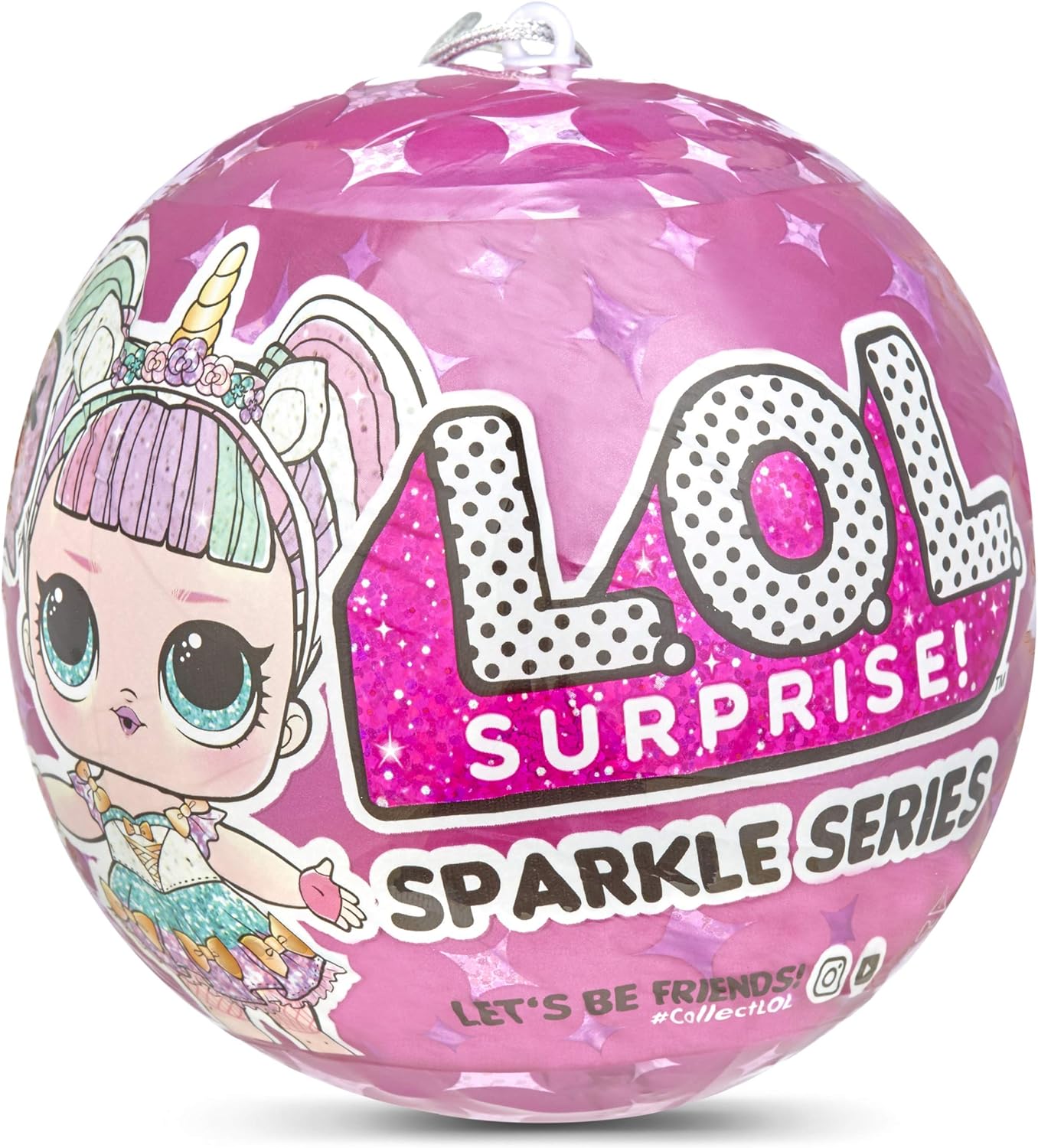
The parties compete in the toy business. Creative Impact makes 5 Surprise, while MGA makes a similar toy called L.O.L. Surprise! In July 2019, MGA sued plaintiff Zuru in California state court alleging state law trade dress and trademark infringement claims.


Six days later, MGA’s CEO posted several messages on LinkedIn, such as, “ZURU Toy Company #Thieves of the Year of others #IP. Just look at the pictures. WHY are retailers supporting these thieves? I don’t get it.” Plaintiffs then sued for false advertising under the Lanham Act and other claims based on these posts, as well as on the IP issues in the state court dispute.

Under the circumstances, the Lanham Act claim was a compulsory counterclaim in the earlier-filed state court action.  Under California law, a “related” cause of action has to be alleged in a cross-complaint. A claim is “related” if it “arises out of the same transaction, occurrence, or series of transactions or occurrences” as the claims asserted in the earlier-filed complaint; this is to be “liberally construed” to accomplish the statute’s purpose “of avoiding a multiplicity of actions” through “piecemeal” litigation.

Here, the thrust of the state court complaint was that plaintiffs’ 5 Surprise toys infringe MGA’s trademark and trade dress in L.O.L. Surprise! Toys. The false advertising claim was “logically interrelated” because it was based on statements that “reiterate the core allegations of Defendant’s state court complaint—namely, that Plaintiffs are infringing on Defendant’s trademark and trade dress rights.” There were some additional relevant facts, but perfect factual overlap isn’t necessary. The Lanham Act claim “shares enough of a logical relationship with Defendant’s state law claims to be considered part of the same series of transactions or occurrences,” especially given the proximity in time between the state court suit and the statements and given that Creative can only win its false advertising claim by also defeating MGA’s infringement claim; otherwise the challenged statements aren’t false. That legal relationship speaks directly to the purpose of avoiding piecemeal litigation.

The presence of an additional plaintiff didn’t help in these circumstances, where the two plaintiffs were part of the same group of companies and constitute a single larger entity together. Fortunately for plaintiffs, they probably can still add a counterclaim, given California’s liberal approach to amending to add compulsory counterclaims.

Friday, February 14, 2020

when you buy a business whose mark is the owner's photo, make sure you get all the rights


Minott v. Wichita Water Conditioning, Inc., No. 18-cv-01656-MSK-SKC, 2020 WL 616359 (D. Colo. Feb. 7, 2020)

Minott used to own Fluid, which operated a water conditioning business under the trade name Chuck, The Water Man. Fluid made extensive use of a photograph of Minott’s face as “a sort of logo,” displaying it prominently in its promotional materials, on billboards, on the side of trucks, on customer-facing equipment, and so on. In 2016 defendant WWC bought Fluid, including “all of [Fluid’s] right, title and interest in and to the assets owned by [Fluid] and used in connection with [the Chuck business]” and specifically including all “trade names (including ‘Chuck, the Water Man’) [and] trademarks” held by Fluid.

Minott alleged that during negotiations over the Asset Purchase Agreement, he explained to WWC that Fluid held only a license to use the photo of his face, not ownership of that likeness, and that therefore, “use of my personal likeness was not included in Fluid’s” assets. He offered a one-year license for a separate payment of $100,000, which WWC allegedly rejected. “Notwithstanding that discussion, the Asset Purchase Agreement contained no language excluding Mr. Minott’s likeness – to the extent it was used as a trademark – from the terms of the sale.”

WWC eventually merged Chuck with its Culligan brand (e.g. referring to the business as “Chuck’s Culligan” or “Chuck the Culligan Man”). In 2017, WWC prepared a promotional image that used the photo of. Minott’s face, edited onto the body of another model (who wore a Culligan-branded shirt), alongside the statement “Chuck The Water Man is now Chuck The CULLIGAN Man.” WWC sent a version of the image to Minott and “invited comment,” and Minott responded, “unless [you’re] hiring me as a professional model (very expensive) NO...Our discussion was a verbal chat. We discussed that you could use that one picture of my face as the logo for one year from acquisition date...You dismissed those discussions without conclusion...I do appreciate you asking and I like the fact that you see value in my name & face being attached to the company, but NO.”

Nonetheless, and perhaps as a result of a slip-up, WWC sent out a series of mailers to its customers, using the photo of Mr. Minott’s face (and the model’s body). In response to Minott’s complaint, WWC responded that it had instructed its marketing vendor to “change all future mailers to not use your picture,” but also advised that “there may be some [existing mailers] in the system to be mailed but it has been changed.” The relevant employee also e-mailed WWC’s marketing vendor to determine how many mailers featuring Minott had already been printed; since the December mailers had been printed, he instructed the vendor to “leave it.”

Minott sued for misappropriation of likeness under Colorado common law, false endorsement under the Lanham Act, and deceptive advertising under in violation of the Colorado Consumer Protection Act.

WWC argued, among other things, that (1) the photo was a trademark that was transferred, (2) the mailers lacked an effect on interstate commerce so there was no Lanham Act claim, (3) because of the noncompete Minott signed, he couldn’t experience cognizable harm from the mailers, and (4) there was no evidence of deceptiveness.

Misappropriation: consent is an affirmative defense; WWC has the burden of proof. Here, this requires proof that: (i) Minott, by words or conduct, led WWC reasonably to believe that he had authorized WWC to make use of his photograph as a trademark; and (ii) WWC acted in a manner and for a purpose to which Minott agreed. It’s true that Fluid established a use of Minott’s photograph as a trademark, but that didn’t “overcome all other intellectual property rights that might attach” to the photo.  [I think it’s pretty sharp dealing, at best, on these facts where he’s also the owner of the company doing the transfer of rights. But:] Minott testified that Fluid never owned the image and was only a licensee, and the record didn’t disclose the terms of the license. “WWC acquired nothing more than Fluid had. WWC did not acquire rights to the photograph itself, nor the right to depict Mr. Minott’s likeness.”  If anyone wants to use a photo as a mark, they have to be sure that neither copyright nor the right of publicity preclude such use. There was at least a disputed issue of fact on whether there was a terminable-at-will license (apparently both for the copyright and for the right of publicity) that was terminated on transfer of Fluid. There was also at least a disputed issue whether Minott specifically told WWC at the time of the purchase that Fluid didn’t own rights to his likeness. Likewise, WWC failed to establish that its use was consistent with the scope of any consent that WWC reasonably believed Minott had given, given the parties’ emails.

JA Apparel Corp. v. Abboud, 682 F. Supp. 2d 294 (S.D.N.Y. 2010), was not to the contrary. There, Abboud was a party to the sale of his clothing business and its trademarks; here, Minott was not a party to the Fluid-WWC transaction.

False endorsement under the Lanham Act:  The rare lack of use in interstate commerce! It was undisputed that Chuck’s only provided service in Colorado. Minott didn’t claim to have trademark rights extending outside of Colorado, so there was no effect on interstate commerce that way. Though WWC itself operated interestate, “the record is so scant as to how WWC’s mailers here may have advanced WWC’s business interests outside of Colorado as to preclude a finding of an effect on interstate commerce simply because WWC has interstate operations.”

In terms of interstate effects, Minott argued only that, of the roughly 3,600 relevant mailers WWC sent out, 9 went to addresses in Wyoming, South Dakota, or New Jersey. That wasn’t a “substantial” effect on interstate commerce. The recipients were “current customers” according to its billing software, and, given the geographic limits of service provision, the record suggests that out-of-state addresses were unintentional, erroneous, or forwarding addresses for final bills. “Given the minimal number of advertisements involved, and the clear indication that any stray mailings leaving Colorado were inadvertent oversights, the Court concludes that Mr. Minott has not come forward with evidence indicating that any false endorsements perpetrated by WWC occurred in interstate commerce.”

CCPA deceptive advertising: even assuming deception in the course of WWC’s business with an impact on the public, as required by state law, Minott failed to show the requisite injury. He was neither a deceived consumer nor a current competitor.

It was speculative to allege only a belief that his reputation has been harmed and that this harm may manifest when the noncompete expires in mid-2021, at which point he intends to return to Colorado and start another water conditioning business. He cited Yelp reviews, but even putting aside “substantial hearsay concerns as to whether such reviews are admissible as proof of the reviewer’s perception” of Minott, several of those made clear they were aware of and distinguished between the Minott iteration and WWC’s version, while other bad reviews related to the period Minott himself ran the business. Thus, the Yelp reviews could not show harm to his reputation resulting from WWC suggesting his affiliation with or endorsement of WWC.

Among other things, there was no evidence that the mailers caused harm to his reputation; there was no evidence that disgruntled WWC customers contacted him, or that surveys showed lost respect for “Chuck, the Water Man.” And his future plans merely highlighted the lack of present injury. Further, he testified that he didn’t intend to solicit past customers, which meant his prior reputation would be irrelevant. 

DMCA at 22: my notes from the Senate hearing


Senate Judiciary Committee, Intellectual Property Subcommittee, The Digital Millennium Copyright Act at 22: What is it, why was it enacted, and where are we now (archived video; apparently you have to wait 13 minutes before the hearing actually starts, though)

Sen. Tillis: DMCA was passed when Chumbawumba and Myspace were popular. Time to hear about modernization. Protection was given to new platforms in exchange for quick removal. Almost everything has changed in 22 years. Goal: introduce reform bill w/bicameral, bipartisan consensus. Top priority for him. Today: background and level-setitng.

Panel I
The Honorable Edward J. Damich, Senior Judge, United States Court of Federal Claims
Damich was chief IP counsel for Senate Judiciary at the time; not providing views of judiciary but recollections as staffer. Internet just coming into its own: 36 million web users in 1996. Highlights: (1) ISP liability for users’ infringement, (2) TPMs were key issues. Sen. Hatch didn’t want to disturb common law of secondary infringement; wanted to focus on practical reality of internet at the time: email, system caching. Hosting required more care: notice & takedown or actual knowledge requried action. Middle ground b/t duty to monitor and actual knowledge: red flag provision. ISPs should not ignore clear indications of infringement however discovered & should cooperate w/copyright owners. Anticircumvention: controlling access was becoming more important than making copies. Exceptions included periodic rulemaking for temporary exemptions.

Mr. Jonathan Band, Owner, Jonathan Band PLLC
TPM control appeared in EU Software Directive. Problem: legitimate reasons to unlock TPMs, including for interoperability; he worked on exceptions. Safe harbors for basic online functions: Yahoo provided the then-leading directory, but arguably fell outside the info location tool safe harbor, so negotiated legislative report language to make clear that it was covered. Database protection was also proposed by the DMCA House version, fortunately failed. DRM and safe harbors were a compromise: you can’t consider the effectiveness and fairness of either in isolation. Each industry believes its own section was successful; each title includes internal compromise, but that was a grand bargain between each one. Congress made policy choices w/open eyes and courts have generally complied with Congressional intent. Note also term extension at the same time: windfall to © owners.

Mr. Robert S. Schwartz, Partner, Constantine Cannon
Road began in 1981 with 9th Circuit’s ruling against VCRs. Even after the SCt overturned that, content industry proposed levies on tech. Consumer groups formed home recording rights organization. Negotiated serial copy management system designed to prevent impact on general computers—AHRA—which became a dead letter quickly. Computers have to be covered, so there was a copy protection working group.  Bad experience with mandatesàTPM provisions. Should have tied circumvention to copyright infringement; should be limited to expressive uses and allow for uses like vehicle repair. Trafficking provisions inhibit fair use and vehicle repair. Even with an exemption, user can’t get lawfully produced software to take advantage of exemption b/c of trafficking provisions.

Mr. Steve Metalitz, Partner, Mitchell, Silberberg & Knupp LLP
Speaking in personal capacity though represented © industries in negotiations. Implementing WIPO digital treaties: 1201 was for that. On the whole, remarkably successful: lots of access to content, due in large part to TPMs [now wait until he tells you about what the creative environment is like due to 512]—allowed creation of marketplace, not thieves’ bazaar. Congress got this right.  512 was a different story: politically necessary, not necessary for treaty compliance. Telcos wanted payback for the IP carveout in 230. Copyright owners didn’t need or want 512. Goal: provide incentives for © owners and services to work together. Infringement is pervasive and so are infringement-based business models. Close to blanket immunity for OSPs if they take relatively minimal steps out of scale with the infringement problem; can base their business models on infringement. Dominant online businesses have to shoulder responsibility for bad behavior, including IP theft. Increased volume of infringement, increased velocity, need for voluntary arrangements that haven’t yet materialized.

Sen. Coons: This is the most active subcommittee of Judiciary. Core © industries add $1 trillion to GDP. [And core OSP industries?]  Google didn’t exist in 1992. Digital piracy has exploded. Unauthorized copies are just a click away. [Yep, 1201 totally worked.] Digital video piracy costs $29 billion/year and 250,000 jobs.

Tillis: what areas are most contentious? Given where we are now, is there opportunity to bridge the gap with modernization?

Damich: Ethically can’t give opinions on future legislation.

Tillis: root causes of differences?

Damich: did try to compromise on 512 & 1201. Hatch broke impasse: made sure there was a core group of stakeholders then a larger group of interested parties like libraries, reverse engineering researchers, law enforcement were allowed to comment.

Band: 1201, 512, databases all happening together. Most of the focus was probably on safe harbors b/c players were bigger on both sides: telcos v. big content providers. Hard to get focus on 1201/databases. Hard to get researchers to believe 1201 would happen: encryption researchers insisted Congress would never do anything so stupid. More people are familiar now with 1201 and auto repair type problems.

Schwartz: Home Recording Rights Coalition was included up to a point, then excluded from negotiations. We were considered too tough to make a final deal with. Sen. Ashcroft worked with us to work on legislative history. Didn’t anticipate that at most recent triennial rulemaking we’d be there on behalf of farming bureaus. With short growing seasons + distant repair facilities run by manufacturers, a software-dependent equipment breakdown means a waiting list for authorized repair, while independents would do it if they could. It’s not trafficking to obtain and use software; the Copyright Office has gone as far as it thinks it can go in allowing repairers to act on behalf of owners but still needs guidance on trafficking.

Metalitz: also surprised to represent auto manufacturers at the triennial rulemaking. 1201 speaks in very general terms of all TPMs. Stood the test of time better than 512, which depended on the tech of the time. Storage at the direction of the user was straightforward at the time. Other functions were added: indexing, highlighting content for users. [This is ahistorical, albeit algorithmic discovery was in its infancy; indexing and highlighting were definitely known at the time.] Unfortunately courts said this was all ok but that wasn’t intended. Legislation in general terms (except for the exceptions in 1201, which are good) last longer v. tech-specific 512.

Panel II
Professor Sandra Aistars, Clinical Professor Senior Scholar and Director Copyright Research & Policy, Center for the Protection of IP, Antonin Scalia Law School, George Mason University

Informed by clients’ epxerience but views are her own. 512 hasn’t helped creators; the bargain Congress expected was not achieved. Twin goals of quick removal and support for innovation. No blind eye to infringement—red flag provisions have been misinterpreted and eviscerated, especially in 2d and 9th Circuits [those hotbeds of hostility to the © industries]. Perfect 10 v. CCBill—“illegal/stolen” label wasn’t a red flag [to credit card processors].  Viacom v. YouTube limited obligation to knowledge of specific infringing activity, and UMG v. Shelter Capital agreed. Capitol Records v. Vimeo: red flag not triggered by full length copies of © works, even when leaders winkingly encouraged infringement. Notice and takedown alone isn’t enough. Representative list requirement isn’t enforced. Works with artists and small businesses; even trained and coached, students found removal frustrating and time consuming; searches led to phishing sites [note that this is already illegal; these sites aren’t likely to be complying with the DMCA and it has yet to be explained to me why they’d comply with DMCA-Plus.] CASE Act would allow recipients of bad notices to sue in small claims court.  Cox is a good case: they failed to enforce even a toothless repeat infringer policy.

Professor Rebecca Tushnet, Frank Stanton Professor of the First Amendment, Harvard Law School
I would like to start with some perhaps surprising numbers that illustrate what §512 has meant for creativity and innovation online.  I work with a nonprofit, the Organization for Transformative Works (OTW), that doesn’t have a single paid employee. With a budget of under $400,000 per year, it operates a website for user-generated content that currently has over four million creative works from over a million registered users. Those millions of works attract 1.12 billion page views per month. That’s more than double what it was only three years ago, and rapid growth continues. Last year we were honored by the World Science Fiction Society with a Hugo Award for our service to the global community of fans.

Despite the large numbers of works posted on our site, we get less than one DMCA notice per month. Most of those notices are invalid, such as attempts to claim rights in a title or name. At the cost of significant amounts of volunteer lawyer time—something very few services can afford—we carefully review each notice and explain to the senders of the invalid notices why their claim is mistaken. Unfortunately, our experiences with mistaken and abusive notices designed to suppress noninfringing and critical speech are common among service providers.

Empirical research reveals that most of the internet service providers who rely on §512 are like us: Most service providers receive relatively few notices and handle them individually. Only a few entities receive millions of notices. While market pressures and business decisions have led a few large sites like YouTube to rely on automated systems and sometimes on filters, it is important not to treat YouTube as a model for the internet at large. If we did, the only online service to survive would be YouTube.

If there is one message I would ask the members of the Committee to take away today, it is that most beneficiaries of §512 are not like Google or Facebook. Big or small, most sites that use §512 don’t need and couldn’t survive a requirement to use technologically complex mechanisms to filter out the relatively rare infringements.

There are serious problems of market concentration in the content and telecommunications industries, and §512 has been vital to preserving the competition that exists. If Congress changes §512 to target Google and Facebook, or because of rogue overseas sites that already ignore the law, it will ensure that only Facebook, Google and pirate sites survive, making the problem of market concentration even worse without protecting creators. A mandate for filtering, whether called “staydown” or something else, would destroy the small and medium entities that are vital to innovation, creativity, and competition on the internet.

The system is by no means perfect—there remain persistent problems with invalid takedown notices used to extort creators or suppress political speech—but, like democracy, it’s better than the alternatives that have been tried.  The numbers of independent creators and the amount of money spent on legitimate content are growing every year. Changes to §512 would be likely to make things much worse.

My written testimony addresses some other specific issues, including section 1201. Section 1201 is broken: it is mostly used to suppress competition rather than protect copyrighted works from infringement. It would benefit from requiring a nexus between circumvention and copyright infringement. Otherwise it will continue to be used to prevent diabetics from getting information from their own medical devices and researchers from investigating security vulnerabilities in voting machines.

Professor Jessica Litman, John F. Nickoll Professor of Law, University of Michigan Law School
Three points: (1) In 22 years since DMCA, anticircumvention hasn’t lived up to its promise. Immense symbolic value, not effective v. piracy. No additional deterrent to people who are already infringing. DRM is not impregnable and it is buggy—prevents licensed uses. Americans believe that if they buy a copy, they should get to use it. If they need to repair it, they often try to find fixes and usually succeed. Circumvention tools are widely available. Meanwhile, businesses that embed software have harmed aftermarket parts and independent repair. It’s unreasonable to tell a farmer who wants to repair a tractor to petition the Librarian of Congress for permission to do so. That has nothing to do with © piracy.

(2) 512 safe harbor tradeoff worked well for longer than we had any right to expect. Courts have been good at interpreting it. Principal weakness: imagined human judgment applied in good faith to send and receive notices. That didn’t scale for large © owners and [some] large services.  Automated solutions are buggy with false positives/wrongness. Larger © owners and services have negotiated private deals, but smaller services without the ability to strike private deals still find 512 essential.

(3) © owners complain about “value gap” based on market power of ISPs leading to lower license fees. I get why © owners are upset, but this is a bargaining power/competition problem, not a © problem. Antitrust would be a better solution.

Professor Mark F. Schultz, Goodyear Tire & Rubber Company Chair in Intellectual Property Law Director, Intellectual Property and Technology Law Program, University of Akron School of Law
Good intentions—sought to shield infant industry, which is grown up now into world’s most wealthy and powerful businesses; outdated assumptions. Courts narrowed service providers’ responsibility too much. Congress assumed ISPs would be indifferent to infringement, not supportive of it. Infringement notices in billions, files spread fast. Not just one upload, nonstop uploading by many users. Finding one copy is worthless. Many online services profit from availability of infringing material. [I always wish they’d name names. Lots of services that did profit in this way have been sued out of existence, and also Veoh, which didn’t; who exactly do they think, other than Google, is an illegitimate business that survives only because the DMCA doesn’t have a filtering mandate?]  Courts have excused businesses from many duties intended by the DMCA even where they knew of and profited from infringement—not what laypeople would call knowledge. Red flag now meaningless. [This is the specific knowledge/general knowledge distinction: general knowledge that infringement is most likely occurring on your platform is not red flag knowledge.  I wonder whether he thinks the University of Akron has red flag knowledge, defined as he would like to redefine it.]

Solutions: (1) amend 512 to require notice and styadown. (2) Revise to define willful blindness; not encouraged to ignore infringement.

Sen. Tillis: What did you learn from panel 1?

Schultz: Metalitz is right: red flags.

Litman: 512(m) explicitly relieved sites of a duty to monitor; that was a good idea; courts have been really careful to limit knowledge so as not to interfere with 512(m).

RT: These red flag claims are not right. Viacom seeded YT with apparently leaked footage; what counts as red flag knowledge is appropriately determined case by case.  On the volume of infringement: Almost all the sites you’ve heard of, including Wikipedia and Amazon Kindle/digital, have very few problems with actual infringement. Most can’t afford and don’t need filtering.

Aistars: 1201 engendered cross industry cooperation; worked w/entertainment and computer industry to not burden consumers and build new businesses. 512 didn’t engender affordable tech to filter works before they were uploaded. Court decisions around 1201 have hewed to parties’ expectations. We didn’t expect printer cartridges and courts didn’t apply 1201 to them. Lacked same luck for 512.

Sen. Leahy: Success reflected a years long bipartisan process. To RT: is it working?

RT: Yes: Most sites don’t have problems.  Google receives billions of notices, but it is doing a lot/used to get other sites not searched.

Coons: Does 512 discourage sites from gaining knowledge?

RT: No, it encourages them to monitor for other bad things like terrorist content without fear that if they see something else they’ll be liable for infringement.

Litman: also encourages monitoring for ©: if they catch one infringement, 512 means they can’t be held liable for the ones they missed.

Coons for Schultz: is burden on rightsholders to police fair?

A: should be shared burden. YT had scroll showing one Comedy Central clip after another on homepage. Knows content owner objects; that’s wrong.

For Aistars: repeat infringers/whack a mole?

A: (1) isn’t a shared burden to find infringement; (2) there has been some success against ISPs that don’t implement their own extremely lenient policies, but that’s not much of a victory—14 notifications before action is taken, and customer can just start again; sets us up for bad actors trampling small businesses. Have to decide on creating v. sitting at home searching for infringement.

Coons: working together on voluntary measures?

Aistars: STMs are supposed to be accommodated, but there’s no process to ID tech though many could qualify, like Audible Magic. For a # of years, relatively inexpensive [$10,000/month for small websites, yay]. 1201 worked b/c there were incentives for cross industry cooperation. 512=no incentives for anyone. No requirement to work together.

Coons: are there easy modernizations to improve balance?

Aistars: red flag.

RT: (1) apply antitrust to © and telecom. (2) 1201 infringement nexus.

Litman: narrowing 1201 would help. 512: these are computers, they aren’t as smart as us. They don’t recognize what humans would. Can’t tell who uploaded content. Can’t simply assume that online services perceive as humans do.

Schultz: red flag. Willful blindness isn’t just computers; Vimeo says employees can interact w/famous content, but b/c they’re not © experts, can’t hold them to objective knowledge. Every layperson knows where to go to get infringing content. [Is it Vimeo?]

Sen. Tillis: What are decisions that are problematic?

Aistars: See her testimony: Perfect 10 v. CCBill, Viacom, UMG v. Shelter Capital, Capital Records v. Vimeo.

RT: those cases were rightly decided. Perfect 10 was specific to sexual content, Viacom had those “leaked” uploads.  The alternative, filtering via staydown is terrible. Google spent $60 million [correction: now $100 million] on a system that is 60% effective according to the major labels who use it, and we’re better at ID’ing music than at other types of works.

Litman: dislikes some results. In Cox, they lost the safe harbor for not terminating users, which could be right, but Cox was receiving automated takedown notices with thousands of dollar-demanding settlement letters attached. They wrote back refusing to forward the settlement letters. The court considered these to be notices that Cox ignored.

Schultz: dislikes same cases as Aistars. The understanding of what constitutes knowledge defies common sense/most other areas of law.

Staydown should only occur after notice. [I don’t know why people think this is an argument in favor of filtering. The primary problem with filtering is not that there’s no list, it’s the expensive and error-prone apparatus of filtering that most sites can’t afford and don’t need. It’s as if the police came to every business on Main Street and said, we’ll be sending you a list of our 10 most wanted, and if you don’t employ facial recognition at each entrance to catch them you’ll be breaking the law, but don’t worry, it won’t be burdensome because we’ll send you the pictures.]  Affordable filters exist but there’s no market demand; if there were a duty we’d see more systems [magic, or Audible Magic?]. Congress can make exceptions.

Tillis: infringement online is big; number of notices is difficult for new entrants [again, this is not true in the way he thinks—most entrants don’t get big numbers of notices, but quality screening can be a big deal]. Neither is wrong but the DMCA is not working in every case.

Tuesday, February 11, 2020

False advertising of flanges leads to rare recall and some disgorgement


Followup on the multimillion-dollar verdict in this false advertising case. A jury found that defendants falsely advertised their carbon steel flanges as being normalized and/or in compliance with ASTM A105, A961, and A941. “Normalizing a carbon steel flange improves the physical properties of the flange. … [This] is important, as flanges can be used in extreme high-temperature, high-pressure, corrosive environments.” Customers expect flanges marked “A105N” to be normalized in accordance with ASTM standards, but “have no easy, non-destructive, means of verifying whether or not the flange was actually heat treated.”

Still, “[n]ot all ASTM A105N flanges or flange manufacturers are created equally.” A hotly disputed issue at trial was whether the parties actually compete: plaintiffs are domestic manufacturers, and Ulma sells only foreign-made flanges.  “[D]omestic flanges are considered by some to be superior to foreign flanges and command a price premium. Indeed, testimony suggested that certain companies would not accept foreign flanges and that distributors would therefore stock foreign and domestic flanges separately so as not to commingle the flanges—in order to comply with the domestic-only orders. Other consumers do not care about a flange’s origin and still others prefer foreign made.” Thus, Ulma argued that its false advertising hadn’t harmed Boltex.  Boltex contended that “many buyers—including pipeline companies—would accept both foreign and domestic flanges interchangeably for many jobs,” though it conceded that they weren’t head to head competitors in all markets.

Plaintiffs’ damages expert calculated Boltex’s damages by determining the hypothetical share of the market that they would have occupied if Ulma wasn’t a market participant. Defendants’ damages expert argued that there was no overlap between the two markets and showed that Boltex made virtually no sales to Ulma’s five customers (almost 85% of their sales), though the numbers changed once one considered Ulma’s top ten customers. The overlap was thus both “evident” and “somewhat small.”

The jury chose a middle ground, awarding $650,000 in damages to Boltex for the six years covered by the lawsuit, and $300,000 in damages to co-plaintiff Weldbend, much lower than the millions sought by plaintiffs. The court agreed that this was appropriate.

Although at least 95% of Ulma’s “A105” flanges weren’t normalized in compliance with ASTM A105, as they explicitly represented, Ulma argued that they were normalized according to Ulma’s “in-line normalization process.” The court declined to rule on “the chemical soundness of this process.” Ulma falsely advertised ASTM A105 normalization, and that’s that. 

This false advertising included a 2017 letter to customers sent the month that suit was filed, accusing Boltex of lying about the mislabeling and falsely reiterating that they did normalize their flanges in compliance with ASTM standards. Only in late 2018/early 2019 did Ulma admit to customers that it used two processes, and at trial Ulma just said it should have been more accurate. “These facts clearly influenced the jury with regard to their award of punitive damages and finding that disgorgement was appropriate.” The court agreed on its relevance.

The jury found that Boltex had lost profits of $250,000 from May 5, 2013 to May 4, 2015 and $400,000 from May 5, 2015 to May 31, 2019 [the dates are important because of a dispute about the limitations period for Lanham Act claims; the court chose four years] and that Weldbend had lost profits of $100,000 from May 5, 2013 to May 4, 2015 and $200,000 from May 5, 2015 to May 31, 2019. Under Texas law, they awarded punitive damages of $2 million to each plaintiff. The jury found that Ulma should disgorge $26 million from May 5, 2013 to May 31, 2019. This result was supported by the evidence, except that the amount of disgorgement was too high.

Disgorgement requires a court to consider: (1) whether the defendant had the intent to confuse or deceive, (2) whether sales have been diverted, (3) the adequacy of other remedies, (4) any unreasonable delay by the plaintiff in asserting his rights, (5) the public interest in making the misconduct unprofitable, and (6) whether it is a case of palming off. These are nonexclusive factors where equity would consider others. The jury was instructed on these factors, and made a reasonable finding, especially given that factors (1) and (5) soundly weighed in plaintiffs’ favor. The public interest was also significantly served by disgorgement because determining whether normalization had occurred can’t be checked without a test that destroys the product, making false advertising difficult to detect and requiring buyers to rely on the labeling (which includes purported test results). In addition, the false advertising here “relates to the integrity of pipelines carrying oil and gas,” and a crack “could result in leaks that severely harm the environment or cause damage to life or property.”  There was also some evidence of sales diversion, and other remedies were inadquate— “even the pursuit of this action did not dissuade the Defendants, considering they sent out the 2017 letter again falsely advertising that their products were ASTM compliant.” As to delay, “while this conduct had been ongoing for some time, the Plaintiffs moved promptly once they could confirm the misconduct by testing Defendants’ products.”

In assessing the appropriate amount, the court wanted to avoid over-compensation by awarding both damages for plaintiffs’ lost profits on diverted sales and the profits made by the infringer. Instead of the entire amount awarded by the jury, the court used plaintiffs’ expert’s numbers and awarded each plaintiff a percentage of Ulma’s profit commensurate with their respective market shares. For Boltex, who held a 11.6% market share, the Court added $3,016,000 in disgorgement. For Weldbend, who held a 10.4% market share, the Court added $2,704,000.

Plaintiffs sought reconsideration, citing a “plethora of cases holding that a court may award disgorgement even where a diversion of sales is not shown,” though those were TM cases. They also argued that it would be inequitable to allow any windfall to go to Ulma, which engaged in false advertising.  Comment: really the money should go to the absent market participants, but they aren’t in the case and, while they can probably use offensive collateral estoppel against Ulma on liability, they may face a very different limitations period. Deceived consumers who used non-normalized flanges and now may face a variety of consequences, regulatory and otherwise, may also have their own claims.

Anyway, the court declined to change its mind:

In trademark infringement cases, there is only one party that has been injured—the owner of the trademark. Where a trademark infringer enters into a market within the penumbra of a trademark holder’s business, but that the holder has not yet entered, there may be an injury without any actual lost sales. In those situations, disgorgement is necessary to remedy the harm that will not be covered by an award of lost profits. Further, awarding all of the disgorged profits to the trademark owner is not a windfall as the owner is the only one damaged (setting aside the theoretical damages to consumers).

In this false advertising case, “the harm the Lanham Act addresses is one shared by all competitors in the market—the encroachment on the ability to compete in a fair market.” Only a disgorgement award shared between all competitors in the market would serve the Lanham Act’s purpose of “achiev[ing] equity between or among the parties.” Here, the two companies weren’t even major Ulna competitors. The jury’s estimate of Ulma’s profits from its false advertising was reasonable, but that profit was gained at all competitors’ expense. A proportional share award was equitable as between defendants and these plaintiffs.

This wasn’t an exceptional case, given the hotly contested question of whether plaintiffs were even injured, and, “in a sister case filed against a different defendant, another court (obviously with a different record) actually granted summary judgment for the defendants due to a failure by Plaintiffs to show that they had been injured as a result of the alleged false advertisements.” See Boltex Manuf. Co., LP v. Galperti, Inc., H-17-1439, 2019 WL 2568338 (S.D. Tex. June 21, 2019). The intentionally false advertising, continued after the filing of suit, did not change this conclusion. Those actions justified punitive damages [which the court required plaintiffs to disclaim to get federal remedies] and disgorgement [which the court shrank], but not fees; the court noted that the jury cut the requested actual damages by 95%.

Plaintiffs argued that they should be allowed to recover state punitive damages in addition to Lanham Act damages, because that wasn’t double counting of, e.g., actual damages. Fifth Circuit precedent says that “picking and choosing from damage elements arising under different theories … is impermissible under Texas law.” [This necessarily implies that Texas common law doesn’t allow recovery of lost profits, disgorgement, and costs, though I haven’t followed all the arguments in the case.]  Given plaintiffs’ preference for the largest possible award, the court awarded over $3.7 million to Boltex and a bit over $3 million to Weldbend under the Lanham Act (including costs).  The court noted that Texas’s cap on punitive damages to twice actual damages meant that Boltex could only have gotten $800,000 and Weldbend $400,000 given the jury’s awards of actual damages.

Boltex Manufacturing Co. v. Ulma Piping USA Corp., 2020 WL 605321, No. 4:17-CV-01400 (S.D. Tex. Feb. 7, 2020)

Also, the court granted a permanent injunction. Ulma persisted in false advertising even after suit was filed, and that false advertising caused pecuniary harm, but if it continues those damages may be impossible to quantify, and potentially lost customers qualify as irreparable harm. (Interestingly, at least if market participation is pretty stable, this might be a rare case where the market is capable of penalizing Ulma. I know I wouldn’t want to take any risks on whether Ulma was really normalizing its “normalized” flanges, and I would also wonder what other private definitions of industry standard terms it had been using.)  The court calls lost market share “non-monetary damages” for purposes of finding irreparable injury, which seems weird, but that’s because we have no coherent concept of goodwill in Lanham Act law. It’s not non-monetary, but it can be hard to measure.


The court also granted a rare recall order, given the potential consequences of using a non-normalized flange: However, Ulma could avoid recalling those flanges if they “relabel/rebrand or otherwise redesignate (by some means that is either actually on the flange or accompanies the flange in question) those flanges so that they accurately reflect that they have not been normalized and are not compliant with the standards set out in ASTM A105.” The one untaken safety measure is informing the customers who actually bought the non-ASTM normalized flanges that the flanges weren’t in fact ASTM normalized.

Monday, February 10, 2020

WIPIP 2020, Day 2 panel 4

Panel 4: Copyright
Stephanie Bair, Copyright’s Hidden Costs
We’ve used the creativity literature to examine the benefits side of ©, but not necessarily the costs. The benefits of engaging in creative pursuits/having creative skills: being good at problem finding, being good at problem solving, being able to balance convergent and divergent thinking. These are talents but also skills that can benefit from exercise and practice. People who score higher on creativity measures enjoy a range of surprising life benefits, including better relationships, more relationship satisfaction, better ability to handle life challenges big & small, and even lower suicide rates/lower rates of suicide ideation. When you have creative skills, you employ that not just when you’re writing a book or working on a song, but when your partner does something surprising.

Downstream creative activities like home produced YT video using other music; fan fiction; Baby Yoda memes: if fair use is more available to you if you are a celebrity than if you are not, that has implications. Suppression of activities might be more costly than we previously thought b/c these are the types of activities that give people the opportunity to be creative in everyday life, work their creative muscles.

Q: is this lumpily distributed? Are some people just creative in only one domain and not in others? If so, should that inform IP?

A: not thinking yet about doctrine, though for fair use it doesn’t matter what the subject matter is.

Ochoa: benefits of ©: not really about incentivizing creation, but about incentivizing distribution: publishers want exclusivity. Similarly on the cost side, © isn’t inhibiting everyday activities but it is inhibiting commercialization/distribution of these products b/c people are doing these things every day by and large despite the law/b/c of tolerated use; © isn’t costing us creation but it is costing us distribution.

A: that is relevant b/c creation is at the heart of what she’s doing, not distribution.

Charles Duan: similar to The Cathedral and the Bazaar, two different models for developing software.

RT: OTW NTIA report on the benefits at issue—and it is clear that creating a community has huge positive effects; distribution does matter a lot.

Rub: agrees w/ Ochoa, but chilling might be an issue. Also questions of limits on access to source material.

Ochoa: chilling effects come from C&D [or Content ID/DMCA].

Amanda Reid, Social Utility of Music: A Case for a Copyright Exemption for Therapeutic Uses
High transaction costs, low revenues, high benefits: matches the case for other statutory carveouts like face to face teaching. Long history of using music to heal and soothe, likely related to innate properties of musicality; no culture so far found lacks music.  Can help people bypass injured areas of the brain.

Can use song choice & lyric analysis for therapy; can help preterm infants learn to feed by helping them suck in rhythm; improvisation and singalong can be therapeutic; so can song transformation/changing the words to make them more meaningful personally; music legacy and collage to help deal with the end of life: being able to leave behind an artifact is important. Teenager w/inoperable concert wanted to sing Rudolph, the Red Nosed Reindeer for her family—mad scramble for a license, but music therapist served as gatekeeper telling family not to create this artifact w/o a license.  The music licensors are a nightmare for therapeutic purposes, e.g. they may want to hand out sheet music or create a mix tape or change the lyrics—all of these are different rights holders. ASCAP license won’t suffice.

Music therapy has prosocial functional use. Fair use is too unpredictable/ad hoc.

Eric Goldman: the paper is the foundation of advocacy, and it justifies that additional work.

A: heavy responsibility to do no damage, not put it under the microscope for rights holders.

Ramsey: they will oppose. Consider a compulsory license with a small payment?

A: it’s just not much money, in line with the existing exemptions, and even small payment is a big hurdle.

Q: would you reduce the incentive to create therapeutic music?

A: those rhythms are for the nutritive sucking, it’s not an expressive creation. No diminution of creation.

Q: but you can buy relaxation music on iTunes. What about that?

A: will consider. Biggest barrier is establishing a limiting principle: a therapeutic relationship with a therapist who has a health goal. Can discuss licensing/credentialling. Not just music that makes a person happy.

Q: what do you think the hard cases are? Can Dr. Phil create a mix tape for everyone?

A: no, it has to be individualized. Sometimes a particular song reminds a person of an incident they’re working through. Therapists are worried they’re going to get in trouble—if it becomes known what they’re doing. They hear about schools getting C&D letters; they don’t feel they can rely on fair use.

Q: could a hospital then have a music therapist on staff?

A: yes, that seems right.

Ochoa: why are these people so risk averse?

A: they do, they just hope they don’t get caught. Statutory damages are scary.

Q: then we need to change the perception. Recent issue with Disney billing a PTA: there was a huge backlash. Maybe you really need to attack the fear. Music industry is likely to try to reduce any statutory exemption to a useless, dead letter. An exemption that’s too narrow may be less effective than teaching people to stop worrying.

A: even an exemption creates a bit of a bubble around it.

Q: sure [though fair use should do that too].

Duan: it’s a useful finding that the therapists are scared, in itself.

Rub: if they don’t trust fair use, why would they trust the kind of highly limited, technical provision that is likely to result from legislative bargaining?

A: Good question. context: heavy regulation, such as HIPAA—they’re wound tight for good reasons related to the regulation in general. Hospitals sometimes get nastygrams from ASCAP.

Q: good place for best practices.

A: doesn’t help risk aversion.

Q: yes, it does—that’s what they’re for—the documentarians have found best practices workable.

Q: as a non © person, it seems weird that we say “let’s have all these laws, but people should just ignore them.”

A: fair use isn’t an infringement.

Q: but lack of clarity means we’re not really sure. In patent law we don’t really care if a single person is doing something, but in © every act of an ordinary person implicates © law and we have a nebulous doctrine.

Bridy: are these even public performances, in therapy?

A: no, they aren’t. But there may be exceptions, such as a cabaret performance for special needs children organized by a therapist.

WIPIP 2020, Day 2 panel 3

Panel 3: Copyright
Sarah Polcz, Loyalties v. Royalties: Relational Roots in Joint Authorship
Relative reward (a pun!) and joint authorship. Our satisfaction for compensation is not just about absolutes, but about how fair the share is compared to the share of those alongside of whom we work. Default rules matter more where informality prevails, as in songwriting. Default rule scholarship hasn’t focused much on relative satisfaction. Maybe we have strong intuitions about preferences. People often feel that reward should roughly track contributions: pay proportionality/wage dispersion. German and English courts have awarded proportional shares, but US default is an equal split even with evidence of varying contributions. Proportional division is feasible as shown by Germany and UK. So why default to equality?

One possibility: penalty default. Lets courts avoid difficult judgments about contributions. But if parties are unlikely to be legally savvy, the penalty won’t work. Little actual empirical support for intuition about preference for proportional reward.

Band songwriting is a good case study b/c it’s not under work for hire. Parties are less likely to be thinking of legality at time of creation v. other types of creativity and likely to know very little about other bands’ practices. Joint authorship is common in songs. Songwriting royalties are economically important for bands. Publicly available data exist.

Study: gold record bands, perform mostly their own songs. 750 of them. Coded based on first released album, origin region, genre, number of band members, and members’ contribution to songwriting (done by coding interview data). Binary: split equally or not. Checked for media reports about how the band members think about royalty splits, with 84% agreement w/her results.

Bands have gone from primarily unequal to primarily equal splits. 24% of bands formed pre-1970 split equally, 70% post-2000. Increase in equal splits is true mostly for genres, regions, number of members.

12% of increase was due to band characteristics—decrease in size of bands. Smaller bands are more likely to prefer an equal split. More even contributions also are more likely to have an equal split. 24% increase can be attributed to other factors, possibly industry changes like increased royalties.

Equal split matches current preferences but is perceived as being at odds with them. Courts have therefore perceived it as being unfair and altered the standards to make it harder for minority contributors to receive a share.

A mark against any claim that common law rules are equally efficient.

RT: is there any reason to think that gold record bands are different?

A: interviews w/bands at multiple different stages, similar results across lifecycle. Experiments: found that split preference is generally driven by relationship characteristics.  People typically pick their split early in their careers and stick with it; renegotiation is difficult especially when there’s been success.

Tang: you mean groups of at least two members. Why choose bands? If you have that close a relationship, it seems that the split would have to be equal b/c how do you coexist on a tour bus and not split equally? Would seem to cause high tension/turnover. What about looking at it song by song? Those songwriters don’t have the same kind of extended relationship—e.g., songwriter and performer have splits based sometimes perhaps on the power of the performer, v. professional songwriters.

A: that’s an important category of music; for songs that have 3 or more writers in the entire ASCAP dataset, 70% are by musical groups that are typically performing them as well. It can change over time, too; typically bands are about 50%. Maybe what you’re talking about now is another time based trend.

Ochoa: you seem critical of the default presumption, but bands are getting closer to the default presumption. What’s wrong with the default presumption as a default rule?

A: not critical of it! Just trying to figure out if it’s a penalty default or reflects preferences. Showing that it does reflect preferences is an important result for judges to take into account when considering implications of a decision that affects other aspects of authorship attribution, like the intent standard.

Ochoa: then you run into the problem of whether bands are typical of other types of coauthorship.

A: I don’t have that data but I can say that they’re an important group of authors.

Ochoa: no reason to believe that music is typical of other types of coauthorship.

A: relationship is also supported by experiments w/nonmusicians: relationships are driving preferences in other coauthorship collaborations. Trend among smaller groups. Also relevant b/c other areas are more likely to be covered by WFH.

Guy Rub: You’re suggesting penalty default is not an explanation, but it could be one explanation out of several.

A: not making any claim about how often they’re contracting out; doesn’t know whether there is a contract that specifies. But if your theory is that a good reason to have this rule is that people should be induced to specify a share, this isn’t a good inducement for a lot/there are reasons that they do want an equal split.

Xiying Tang, Why Technopessimism Is Bad for Copyright Law: Technopessimism has bled over into © to its detriment.

What did early internet scholars like about the internet? The ability to have many creators with access to audiences, the ability to break down the fetishization of the original and acknowledge that things like sampling have inherent value. Section 512 helped these new technologies proliferate; Google Books decision, anti-SOPA/PIPA activism.

Is the tide turning? Most ominious example: Copyright Directive art. 15 & 17, specifically to address the so called “value gap”—big tech (US) is just too rich. A distributive justice allocation tool: Some of Big Tech’s money should be given to other people. Sunsetting of music consent decrees in the US. Assistant AG Delrahim has suggested pulling the protections of the consent decrees from the online services compared to Equinox or Starbucks.  Other examples: Cox jury verdict, one of the largest damage awards ever levied, against an ISP.

We still need technooptimism for copyright because of competition/antitrust concerns. Big Content still has most of the bargaining power/Judge Koh in the SDNY found ASCAP and BMI engaged in anticompetitive conduct in negotiations with Pandora. Without the protections of the safe harbor, consent decrees, fair use, what we will see is shutting down of competition on the internet, not just on Google/YT.

Lemley: what do we do about it?

A: working on it. Tell the DOJ not to sunset the consent decrees. Cox jury verdict. Because public sentiment is anti big tech, it’s bleeding over into these things.  Apple’s creepy spying shouldn’t translate into copyright policy.

Bridy: major broadband providers like telecoms/telcos are differently situated from Google, Apple, Netflix, Amazon, FB: the boogeyman tech companies. Telecoms/telcos are often politically opposed to “FAANG.” So is Cox a fit?

Jacob: there is also small tech, not just big content and big tech. There’s more collaboration b/t big content and big tech. Seem to have agreed to increase compulsory licensing rate to shut out small scale competitors. Maybe not that new: player piano company colluded w/© owners to shut out other player piano cos.

A: is it collaboration? They threatened to sue Spotify into oblivion if it didn’t support the Music Modernization Act. Sees that as another example of big content’s leverage: they can force tech companies to play by their rules or shut down.

Jacob: still interesting that Spotify gets a benefit of shutting out/down competition out of the deal.

Rub: Book industry: Amazon controls that industry now. [B/c it’s not as concentrated, even though it’s pretty concentrated! And maybe also b/c the gov’t exercised antitrust authority.]

A: Needs to look further into the Apple antitrust case about book price fixing.

Robert Kirk, Walker Breaking with Convention: The Many Failings of Scènes à Faire
A literary theory about audience expectations turns into a limiting theory alongside idea/expression. “Incidents, characters and settings which are as a practical matter indispensable or at least standard in the treatment of a given topic.” This makes intuitive sense on first look. But consider the use of Nazi imagery in The Producers: it uses the tropes but in a completely revolutionary/parodic way.  It’s all both original and highly stock/formulaic. How do we deal with this?  What does indispensable mean? Almost no elements are actually necessary; alternatives are regularly available. Courts are trying to get at the idea that some ways of expressing an idea are just more satisfying.

There are a wide variety of genres and microgenres: Netflix has 70,000 ways of grouping works. They’re unstable and change over time: true crime podcasts.  Morality plays.  They evolve based on audience taste and historical circumstance.

Another issue is aesthetic nondiscrimination tension. Should protect all “original” works regardless of artistic merit. Courts should thus avoid aesthetic judgments to prevent reading their own preferences into the law. But lots of places, they have to make aesthetic judgments and scenes a faire is one place they do: are similarities due to stock elements? What is the genre of the work? What are the standard elements of such a genre?

Also a Feist problem: scenes a faire doesn’t protect common elements even if minimal creativity is present. E.g., unconventional uses of conventional materials may not be protected.

Result: underprotects satire and unconventional uses. Underprotects expression that becomes standard over time: Sherlock Holmes was a novel character in English literature, but is now a standard character type. May underprotect works from marginalized communities misclassified as folk or traditional—history of appropriation from musical artists. Encourages over-claiming because it’s murky: No methods for deciding what conventions are relevant.

Time should matter: scenes a faire should consider what the standard was at the time the work was created. Claimant provides genre examples at registration as prima facie evidence, creating an ontological web.

RT: I feel like you’re not giving weight to scope v. protection. No one thinks that your book about a dinosaur island where dinosaurs made from fossilized amber roam around is unprotectable; we just think Jurassic Park doesn’t infringe it. It’s substantial similarity the standard that is our problem, forcing us to determine what parts of a work are protectable b/c protection goes beyond pure reproduction. And timing won’t help b/c the idea of reconstructing dinosaurs from DNA predates the dinosaur park book; you shouldn’t get a monopoly over that scenario by being the first to market that book.

A: he’s trying to create better guidance for scenes a faire, which right now operates like judicial notice, and isn’t as well defined as short words & phrases or idea/expression. Wants something more rigorous. If we allow certain types of creativity to be discarded as standard, it needs more heft. Not even convinced it should be a separate doctrine from idea/expression. But since we do have it, I want it to be better.

Ochoa: it’s not a separate doctrine, it’s an idea that helps make idea/expression more rigorous as a distinction. Cliches should no longer be protected. Tying a man to the railroad tracks was considered protected; now it’s a cliché. [RT: The first to do it should not get any monopoly over it—there was, objectively, a first work that had a person unable to make a phone call because of lack of cell service, but they should get no rights from that, an achievement made possible only by technological change.] Feist was not a 102(b) case, it was an originality case; there are original ideas that are unprotectable, like not being able to get cell service.

A: judges aren’t particularly trained in knowing it when they see it. This is an art historical question, and that’s what I’m asking for. Bring some rigor to the idea of genre conventions, just as courts try to specify merger.

Tang: it doesn’t make much sense to me to introduce rigor by having the claimant herself be the one to provide examples. It’s a prior art requirement of sorts but the CO is nowhere near as rigorous in examination as the PTO, and patent terms are much shorter. Applications are nearly rubber stamped; they are not good people to be policing the scope of protection. Rigor seems misplaced.

A: the point is not to give them a monopoly, but prior art is a useful concept. It’s not designed to prevent patentability but to present context for the new work, which would supply evidence for the court. Once you have genre change over time, and maybe Ochoa is right that this is a feature and not a bug, it becomes harder to stabilize the boundaries around the © work.

[But if you have substantial similarity as a standard, then there are a bunch of different works that might infringe—stabilizing the boundaries can only be done partially, by comparison with different works. This is Jeanne Fromer’s work on central claiming v. peripheral claiming.  The proposal for comparable works isn’t even peripheral claiming, though.]

Alfred Yen, Copying in Copyright: Res Ipsa, Expert Testimony, and the Creative Mind
Infringement is like res ipsa loquitor in tort: barrel hits you on the head, the only way that happens is negligence. Dark Horse case: look at these similarities, the only way that would happen is if Katy Perry copied. The analytical problem in tort cases: Gore v. Otis Elevator: an automatic door closing like a vice bespeaks negligence/product defect, but more is requried under REL: the evidence must support a reasonable inference that the D was at fault.

What if we said: we agree that similarity bespeaks copying, but we need evidence to support a reasonable inference that D copied. If negligence is more likely than no negligence, then an inference is justified. How do we get there? Copyright: done by lay intuition and by expert testimony that similarity makes copying more likely than not. Res ipsa: done by lay intuition and expert testimony that defendant’s injury means that negligence was more likely than not. Sometimes we doubt that the jury has enough information to construct a reasonable probability space—that’s where expert testimony matters/is vital.

In REL, courts are not necessarily receptive to expert testimony. It’s not necessarily good enough for a doctor to give the opinion that injuries were caused by D’s negligence. Instead, the required basis for REL is that the medical community recognizes such a result doesn’t occur w/o negligence. Especially useful in cases where there is evidence tha the type of result experienced by P occurs in a small percentage of cases, and with no known case.

What works: establish background probability from medical literature associating injury with negligence, or even with personal experience w/the phenomenon: I have supervised 100s of these operations and seen that this untoward result is associated with this kind of negligence. Or we could alter the background by ruling out benign causes: show that instrument fails less than 1% of time, or directly examine instrument to rule out failure of instrument as cause ofdamage.

In © expert opinions: we have no such literature studying instances of surreptitious copying being able to identify this level of similarity with dishonest copying. Nor have we people who’ve personally supervised copying and found that this kind of similarity typically results from copying. It’s impossible to examine the inside of Perry’s mind. The grave risk of overestimation and handwaving, e.g., Selle v. Gibb where the expert just asserts that the striking similarities were such that they couldn’t have been written independently.

RT: base rate issue: how often do similarities of this type pop up between songs in general? We have no idea about that, but we actually could get information about it.

A: agrees that appropriate expert testimony would not be about the expert’s analysis of two texts, but of large numbers of texts. What about the next step: even given the similarities, what is the likelihood that they result from copying?

Tang: the access prong has always bothered her. In most cases, it will be accepted that there was access (these days/for popular songs). Perry swore that she never heard the song, but we still go to the substantial similarity prong because the jury gets to disbelieve her.

A: purpose is neither to criticize nor accept the present division b/t access and copying. Wants to critique treatment of similarities that could be the result of accident/innocence or could be the result of plagiaristic/wrongful copying.

Lemley: what role does REL play here? Wouldn’t it be basically the same argument even without comparison to tort? The question is whether expert testimony is about a relevant thing, so does tort comparison even matter?  Relatedly: Are you comparing this to an idealized vision of what experts do in other areas? We don’t often have an expert who’s studied 1000 cases; we often have a doctor with anecdata. Maybe we need higher standards across the board.

A: going to common law doesn’t necessarily tell you something you couldn’t have found from inside ©, but the journey outside makes it easier to see. © doctrine is very favorable to bringing experts in. Looking at other areas where the problems are analytically similar but the treatment of experts is different can give insights. Re: idealized vision of experts, yes, that’s a reasonable question. But he does think that even if other kinds of experts are not as well grounded as we would hope, having a more serious discussion of where you get expertise from is worthwhile. Forensic musicologists who diagnose copying have less to stand on than the doctors, in his opinion.

Lemley: what is the alternative? Expert testimony has been viewed as relatively defense-friendly. Are you thinking courts will dismiss the cases w/o a good enough plaintiff expert? What if the alternative is just punting the whole thing to the jury?

A: that might be right, which would be consistent w/any number of other cases saying the expert can’t testify about the ultimate issue. If the focus of expert testimony was on base rates of commonality/similarity, that might actually give juries the ability to make better decisions.

Chris Buccafusco: small changes in base rates make a huge difference in REL cases: a 40 year old paper on this. If you think REL is hard to prove and Ds too often escape liability, the answer in tort liability was strict liability. If we can’t actually determine probabilities, maybe we should just stop.

A: could imagine a © system that was like patent, and we didn’t care about actual copying. [aka subconscious copying] But © has never been willing to go there.

Q: aren’t you just saying that current experts shouldn’t be allowed in under Daubert.

A: maybe that they can be qualified and render an opinion on something, but not on the thing they’re currently being allowed to tell the jury/it’s not enough for the jury to render a verdict in favor of the plaintiff.

Ochoa: This is a special case of circumstantial evidence: we don’t have direct evidence. We talk about access & probative similarity, but it’s a continuum. The ultimate case: access seems impossible, but it’s the exact same work, what then? We have an intuition about the scope of © based on our experience; the only thing an expert has that a jury doesn’t is exposure to more works in the genre.