Friday, October 19, 2012

Critical site's name doesn't cause initial interest confusion

Jenzabar, Inc. v. Long Bow Group, Inc., No. 11-P-1533. (Mass. Ct. App. Oct. 18, 2012)

Long Bow has a website with information critical of Jenzabar.  These results showed up high in Google searches for “Jenzabar.”  Jenzabar sued, though it quickly dropped its defamation claims, and pursued its meritless trademark claims instead.  The court of appeals affirmed a grant of summary judgment in Long Bow’s favor.  As others have noted, the decision is a mixed one: it affirms what is obvious, that critical uses aren’t infringing—even using the doctrine of initial interest confusion—but it fails to make clear that this is a case that shouldn’t have survived a motion to dismiss, even assuming that a multifactor confusion analysis (as opposed to a nominative fair use or straight-up First Amendment defense) applied.  And there’s a dissent that seems to think that trademark is for controlling what other people say about you.

Jenzabar makes educational software for colleges and universities (who might well consider how much they want to contract with a business willing to sue those who speak ill of it for trademark infringement).  Its founder, Ling Chai, also was involved in the 1989 Tiananmen Square protests, about which Long Bow made a documentary.  Long Bow created a related website with background information, with over 2000 pages of text, an interactive map of Tiananmen Square, and a media library with photos, music, and video clips.  One section contains information about 16 key characters, including Chai.  There’s a short bio of her, noting that she declined to be interviewed for the film and containing exceprts from her criticism of the film.  After Long Bow learned that she’d founded a software company, Long Bow added a link from the bio to a new page with information about Jenzabar, titled “Jenzabar.”

A Google search for “Jenzabar” would find Long Bow’s page on the first result page, in the form:

"Jenzabar

The information on these pages about Chai Ling and Jenzabar, the software company she runs with her husband, Robert Maginn, contains excerpts from and links ...

www.tsquare.tv/film/jenzabar.html--Cached--Similar "

The title came from the title metatag, and the description came from the opening text on the page. The court treated as true Jenzabar’s claim that Long Bow could improve its page ranking through keyword metatags, even though Google and other sources say that’s not true.  Long Bow used Jenzabar as a keyword metatag on its Jenzabar page and “several subsidiary pages linked to it,” though only the Jenzabar page showed up in the searches.

Jenzabar complained to Long Bow, alleging that some of the information on the site was false.  Long Bow altered the site somewhat, including making clear that Jenzabar disputed the accuracy of some of the claims and adding prominent disclaimers of affiliation, but kept the URL, title, and metatags.  Jenzabar sued for defamation, trade libel, trademark infringement, state and federal dilution, and unfair competition, but pretty soon all that was left was infringement (and equally ridiculous state dilution).

The court of appeals noted Long Bow’s argument that its use was not “in connection with the sale, offering for sale, distribution, or advertising of any goods or services” but decided to resolve the issue on other grounds, given that there was some support in the case law for the idea that, because there was contact information for distributors elsewhere on the Long Bow site, any use on the site was “in connection with” the sale of the films.  (This strikes me as unnoticed web exceptionalism.  Open the nearest mass-published book of your choice: can you find information about how to get more from the same publisher?  By this logic, every mention of a trademark in the book's text is "in connection with" the sale of the publisher's books.)

Jenzabar didn’t even try to claim real confusion or confusion that would persist past the moment a visitor read the site (and the court noted that a confusion claim would be “untenable” even without the disclaimers), only initial interest confusion.  Someone searching for Jenzabar allegedly might click Long Bow’s link “under the mistaken belief that the linked page is officially sponsored by Jenzabar,” and that was enough to be actionable. 

Sadly, the court didn’t just say that this was bunk, or say that initial interest was limited to pure “bait and switch” by a competitor, though it noted that the doctrine has its foundation in bait and switch.  (In a footnote, it also declined to rely on yet another rational limit on the doctrine, that its application should require financial benefit from the confusion.)  Instead, it identified six relevant factors: (1) the relatedness of the parties' goods or services; (2) the level of care exercised by the relevant consumers; (3) the strength of the plaintiff's mark; (4) the defendant's intent in using the plaintiff's mark; (5) evidence of actual consumer confusion; and (6) the visual appearance of the link/ad in the context on the screen. No single factor was dispositive, but the first two were especially important.  Without them, confusion would have little or no meaningful effect in the market.

Here, there was no similarity between the parties’ goods: complex software and documentaries about China.  Some overlap in the “education” field was completely insufficient, strongly suggesting that there was no actionable confusion.  Jenzabar claimed that it might expand its business to educational content, but provided no evidence and also conceded the contrary in deposition.

Also, Jenzabar’s consumers were quite sophisticated; the software was expensive and its purchase was a matter of careful consideration.  “It is not sufficient for Jenzabar to suggest that a careless Web user might be confused by Long Bow's search result. To defeat summary judgment, Jenzabar must instead produce evidence from which a jury could conclude that Jenzabar's actual or potential customers were substantially likely to be confused.”

Next, Jenzabar’s mark was strong, but in the context of a referential use that factor was less important.  “An Internet user who runs a search even for an extremely strong trademark may be searching for information about the mark's holder rather than for the mark holder's official Web site. A search result leading to a third-party Web site that contains such information thus may not be confusing at all.”  (In a footnote, the court noted that having one factor in Jenzabar’s favor was insufficient to defeat summary judgment.)

On intent, Jenzabar had zip, zero, nada in the way of evidence of intent to confuse, which is the only intent that matters.  Its claim (which the dissent, preposterously, accepted) was that the use of the mark in the title/metatags was itself evidence of an intent to confuse.  But evidence of intent to use was not enough.  Even assuming that Long Bow’s intent was to improve its Google rank for Jenzabar searches, that wasn’t intent to confuse.  “Given that Long Bow's site actually contains information about Jenzabar and does not sell goods that compete with Jenzabar, the most natural inference arising from Long Bow's use of the word ‘Jenzabar’ is not of intent to confuse but rather of intent to accurately describe the page's contents, and to bring it to the attention of Internet users searching for information about Jenzabar, who would find it relevant to their search.”

The undisputed evidence also cut against intent in that Long Bow used only the word Jenzabar, which was necessary to describe the site’s contents, without imitating Jenzabar’s logo or website.  Likewise, Long Bow only used Jenzabar as a keyword for Jenzabar-relevant pages.  (This is an incorporation of nominative fair use concepts into the modified multifactor confusion test the court is using; courts did and do that without using nominative fair use, but nominative fair use seems a lot cleaner and cheaper to me.)  And when Jenzabar complained, Long Bow conscientiously posted Jenzabar’s objections on its site so visitors could judge for themselves, along with adding prominent disclaimers.  It also added a metatag so that the description in Google now reads “Jenzabar has tried to censor this web page because it carries critical information about the software company that Chai Ling started with her husband.”  There was no legally sufficient evidence to create a factual dispute on Long Bow’s intent.

Nor was there any evidence of actual confusion.  There was evidence that a number of visitors reached Long Bow’s site via a Jenzabar search, but that’s not evidence of confusion.  Quoting McCarthy, himself quoting Eric Goldman’s wisdom: “[I]t is improper to assume that using a trademarked keyword means that the searcher wanted to find the trademark owner.... Finding searcher 'diversion' is not possible until one knows where searchers were heading in the first place.”  The court commented that “[t]his is especially true because, as Jenzabar concedes, the types of consumers most likely to be running a Google search for Jenzabar would be inclined to do ‘extensive due diligence’ on the company.”

Finally, the court examined what the Google search results actually looked like.  Jenzabar always held the top result, so a searcher would find Jenzabar “exactly where she expected to.”  “There would be no reason to continue down the list of search results unless she was looking for further information about Jenzabar, in which case the Long Bow site would be relevant and helpful rather than confusing.”  In a footnote, the court said that this situation wouldn’t insulate against all confusion claims; for example, the result might be different if the parties directly competed (though presumably one could easily make clear that one is engaged in comparative advertising).  But if the defendant’s site were the top result, that “might be suggestive of a likelihood of confusion even in a case such as this one, where the balance of factors otherwise tilts so strongly against such a finding.”  Sigh.  So I guess if the NYT does a story—whether critical or laudatory—about a small company, and the NYT’s Google juice puts it ahead of the company’s own site, it now has to worry about a trademark infringement claim?  Another reason that a clean defense would be better.

In addition, the court commented, the Long Bow site’s listing “did little affirmatively to suggest official endorsement by Jenzabar. The description was an accurate summary of the page's contents, and was phrased in a neutral manner that did not suggest official sponsorship by Jenzabar.”  The prominently displayed URL was “visibly different” from the official Jenzabar URLs that also showed up.  “The only aspect of the listing that was even potentially confusing was its single-word title: ‘Jenzabar.’ Although Jenzabar may be correct that it is unusual for a Web page's title to be the unadorned trade name of an entity unaffiliated with the page, the title does little affirmatively to suggest official sponsorship by or affiliation with Jenzabar.”  By contrast, the court suggested, a title like “Jenzabar—Official” would actively suggest official sponsorship as well as an intent to deceive.

The court returned to the topic of sophistication: internet users, especially the relevant consumers here, “understand that a Google search returns a list of pages of varying relevance from a wide range of sources.”  Tabari says that they expect some uncertainty, and don’t form firm expectations about sponsorship until they hit the landing page, if then.  (If this is true, then this case should have been dismissed before summary judgment, because at most Jenzabar could plead initial interest uncertainty, not initial interest confusion.)  Thus, “an Internet user searching for Jenzabar's products who came across the listing for Long Bow's Web site (after already having found Jenzabar's official site) perhaps might be uncertain about this additional site's relationship to Jenzabar. However, Jenzabar has not shown how Long Bow would capitalize on any such uncertainty in a way that trades on Jenzabar's good will.”  Any uncertainty was the result of “sensible agnosticism, not consumer confusion,” Tabari.  Given the other factors strongly favoring Long Bow, such uncertainty couldn’t create a material factual dispute.

There was also no dilution, since Long Bow’s use couldn’t dilute the mark’s link in consumers’ minds to the mark’s source.  “Instead, Long Bow's use actually tends to reinforce that quality, since Long Bow uses the mark only to refer to Jenzabar itself.”  Any harm to Jenzabar comes from the critical content (and Jenzabar's own attempt to suppress critical speech), which isn’t a trademark harm.  And there was no separate violation of Chapter 93A, since Jenzabar failed to explain what that could be other than trademark infringement.

There’s a dissent; it’s physically painful to read.  Long Bow’s use apparently might confuse internet users to believe that Long Bow’s website “is somehow connected to, or affiliated with, Jenzabar.”  Even if the Lanham Act reaches “somehow connected to,” the dissent doesn’t engage with the point that the Long Bow pages are about Jenzabar.  The confusion was supposedly “crafted” through the “negative” omission of a Long Bow title and a “positive” singular reference to Jenzabar.  “The trade name Jenzabar is thus embedded within an Internet link, which actually belongs to Long Bow, not Jenzabar. The confusing and misleading link diverts the Internet user to the secondary Long Bow site by trading on the Jenzabar name.”  Ignoring the other parts of the search result, the dissent said that the search result “devised by Long Bow” (also untrue, since Google created it) “bears only the trademark ‘Jenzabar.’”  Well, if you’re wrong on the law, might as well be wrong on the facts, I guess.  (Next the court says Jenzabar was the “dominant” term in the result, which edges closer to reality.)  Anyway, the search result didn’t say “Long Bow.”  Thus, the use “trades on the name Jenzabar and, thereby, achieves immediate placement behind the trademark for Jenzabar and the Jenzabar primary Internet pages.”

Plus, Long Bow deliberately used Jenzabar’s trademark!  In the HTML, no less, so that search engines would notice!  This use of the “unadorned” name was evidence of intent to confuse.  (Or, perhaps, intent to communicate?)  The majority therefore erred by failing to weigh the strength of the Jenzabar mark in its favor (um, no, it didn’t, even though other courts have pointed out that it’s particularly easy to recognize critical uses of strong marks), by failing to recognize that the Google result was confusing, and by failing to hold Long Bow’s intent against it. 

Maybe a sophisticated internet user could figure this out, once s/he read the webpage.  But there’s already been initial interest confusion!  This was obviously confusing as a matter of law.  (Fortunately, in the real world, there’s a remand for Long Bow to seek its fees, which it should receive, since the Lanham Act does recognize certain anti-SLAPP principles.)  It doesn’t matter that Long Bow had a public, political, or nonprofit motive and didn’t compete with Jenzabar.

Indeed, the dissent thought, “this case implicates the usability of the Internet.”  (And there we do agree.)  Long Bow gets to “trade on any Internet good will earned by Jenzabar to divert Internet users, either directly or indirectly, to the Long Bow Internet site.”  (Since I’ve never quite understood what good will is, I will just express my extra uncertainty about what Internet good will is.  I must say, this supposed diversion scheme reminds me of the internet meme, “Step 1, collect underpants, Step 2 ?, Step 3, profit.”  Only without the profit.)  

We don’t want people using SEO “when ambiguous title tags or poorly labeled text describe the search result link or the displayed advertisement, as is the case here…. This is wrong.”  Mark Lemley says that many trademark owners think that the phrase “unfair competition” is redundant.  Here we don’t even have the competition—a grin without a cat, as it were—but an equally powerful sense that it’s just wrong to show up in search results about a trademark just because you have something to say about the trademark owner.  I don’t really know what to say to that intuition, because it seems so unreasonable to me.  The thought that a trademark owner suffers actionable harm because someone might, even for a short time, see criticism of that trademark owner, seems so contrary to our system of free expression that I can only think that the incantations of “good will” and “confusion” cause people like the dissenting judge to lose sight of what trademark is for. 

Thursday, October 18, 2012

Lanham Act claim doesn't require allegation that specific individuals saw or relied on falsity

American Specialty Health Group, Inc. v. Healthways, Inc., 2012 WL 4863779 (S.D. Cal.)

Healthways moved for leave to file amended counterclaims, including a Lanham Act claim.  Plaintiff ASH sued Healthways for tortious interference, unfair competition, and violations of the Sherman Act.  Healthways counterclaimed for tortious interference and unfair competition.

Healthways’ proposed amended counterclaims alleged that the parties compete in the senior fitness benefits market: both contract with fitness facilities to provide a network for their health plan customers to offer programs to the plans’ senior members.  Healthways’ program is SilverSneakers and ASH’s is Silver & Fit.  Health plans choose senior fitness programs based mainly on the size and composition of the network.

ASH’s Silver & Fit site advertises that users can search to find facilities in their areas, though the search says “you may not have access to all of the facility types listed,” and that “Information in this directory is updated daily and subject to change without notice.”  In mid-2012, Healthways contacted 366 of its fitness facilities listed in the online directory as “Silver & Fit facilities,” and 62 confirmed that they weren’t in the Silver & Fit network.  Some reported unfamiliarity with Silver & Fit, some reported unsuccessful attempts to enlist them, and 20 said they’d been in Silver & Fit but left it, and some of those reported previous requests that ASH remove them from its website.

Leave to amend is freely given when justice so requires; a motion can be denied as futile or legally insufficient.  ASH argued that the Lanham Act counterclaims were futile because of lack of standing, failure to state a claim, and failure to satisfy Rule 9(b).

The 9th Circuit generally presumes commercial injury in cases of direct competition plus misleading claims.  Though conclusory allegations of injury can be insufficient, a direct competitor can more easily/plausibly allege competitive injury.  Given that the alleged false statements relate to the network, which ASH itself alleged was the most significant criterion for health plan consumers, it was plausible that this would draw health plan customers away from Healthways by making them believe that ASH offers a more attractive network of facilities.

This result on standing presaged the result on failure to state a claim.  Healthways sufficiently alleged materiality, despite ASH’s argument that there was no allegation that health plans were aware of or had ever seen ASH’s online directory, let alone relied on it.  Healthways alleged that ASH maintained a publicly accessible marketing website for its products, including Silver & Fit, which directed visitors to the Silver & Fit website for details.  Materiality can be shown without proof that health plans and seniors have actually seen the online directory; the issue is whether the misrepresentation goes to the nature of the product/would affect purchasing decisions, and this misrepresentation plausibly would do so.

ASH argued that it wasn’t engaged in advertising or promotion, because the site was intended to provide information for existing Silver & Fit members.  But anyone could see it without logging in as a member, and ASH’s marketing website for actual and potential consumers directs them to the Silver & Fit website.  “Because of the clear promotional character of the online directory, Healthways has plausibly alleged that the false statements were made in a commercial advertisement.”

ASH then argued that its disclaimers shielded it from a finding of falsity.  But disclaimers aren’t sufficient to avoid liability unless they’re sufficiently prominent and unambiguous to change the apparent meaning of the claims.  For purposes of the motion (which has the same standards as that for a motion to dismiss), ASH’s disclaimers couldn’t shield it.  The repeated statement “[i]nformation in this directory is updated daily and subject to change without notice” “suggests that the accuracy of the current listing of facilities is checked daily and corrected daily, not that the directory may include facilities that are not in fact within the Silver & fit network.”  The “you may not have access” statement only informs visitors that they might not have access to a particular club type, not that a facility in the directory might not actually be within the network.  The additional disclaimers in the Terms and Conditions (linked on the bottom left of every page) provides that ASH “does not make any warranty, express or implied, ... for the accuracy or quality of any information present on this Web Site.”  Healthways argued that this was too tiny and distant, and that was a question of fact.

ASH finally argued that Healthways failed to allege likely injury in more than conclusory fashion.  No.  Because they’re direct competitors, and because the information about a key service feature was allegedly false, Healthways could lose business to ASH.

Likewise, the court concluded ASH’s Rule 9(b) objection failed.  The 9th Circuit hasn’t ruled on the matter, but many district courts have applied Rule 9(b) to Lanham Act false advertising claims as “grounded in fraud” (why not trademark claims when neither claim requires intent? Because trademark is just different despite having virtually the same statutory foundation, world without end, amen).  Anyway, the court agreed that Rule 9(b) applied, but Healthways had satisfied it. Healthways was not required to identify the improperly listed facilities one by one; Healthways provided ASH enough infomration to put it on notice of the specific conduct complained of.  Likewise, Healthways wasn’t required to name individuals who’d seen or been misled by ASH’s statements.  Literal falsity doesn’t require evidence of consumer deception, and this was a literal falsity claim.  (And even if it hadn’t been, I have to say, I can’t imagine you’d have to plead who participated in your survey, if you even have to allege that you conducted one, which I doubt.)

Wednesday, October 17, 2012

I love this quote just for the concept

From Where do music collections come from?, from the Media Piracy in Emerging Economies blog:
Have we already hit peak music file?  Almost certainly not, as collections measured in the 10s or 100s of gigabytes continue to wash through the music ecosystem.  But, at this point, this slow loss of control of the catalog should simply be viewed as the new baseline.  We are past peak music file relevance to decisions about audiences, business models, and enforcement. 
I am, apparently, old school given how much music I own ripped from my CDs; I even ask my students whether my collection meets the statutory standards for a compilation or collective work.

Sign advertising TV show was commercial speech under sign regulation

Charles v. City of Los Angeles, --- F.3d ---, 2012 WL 4857194 (9th Cir.)

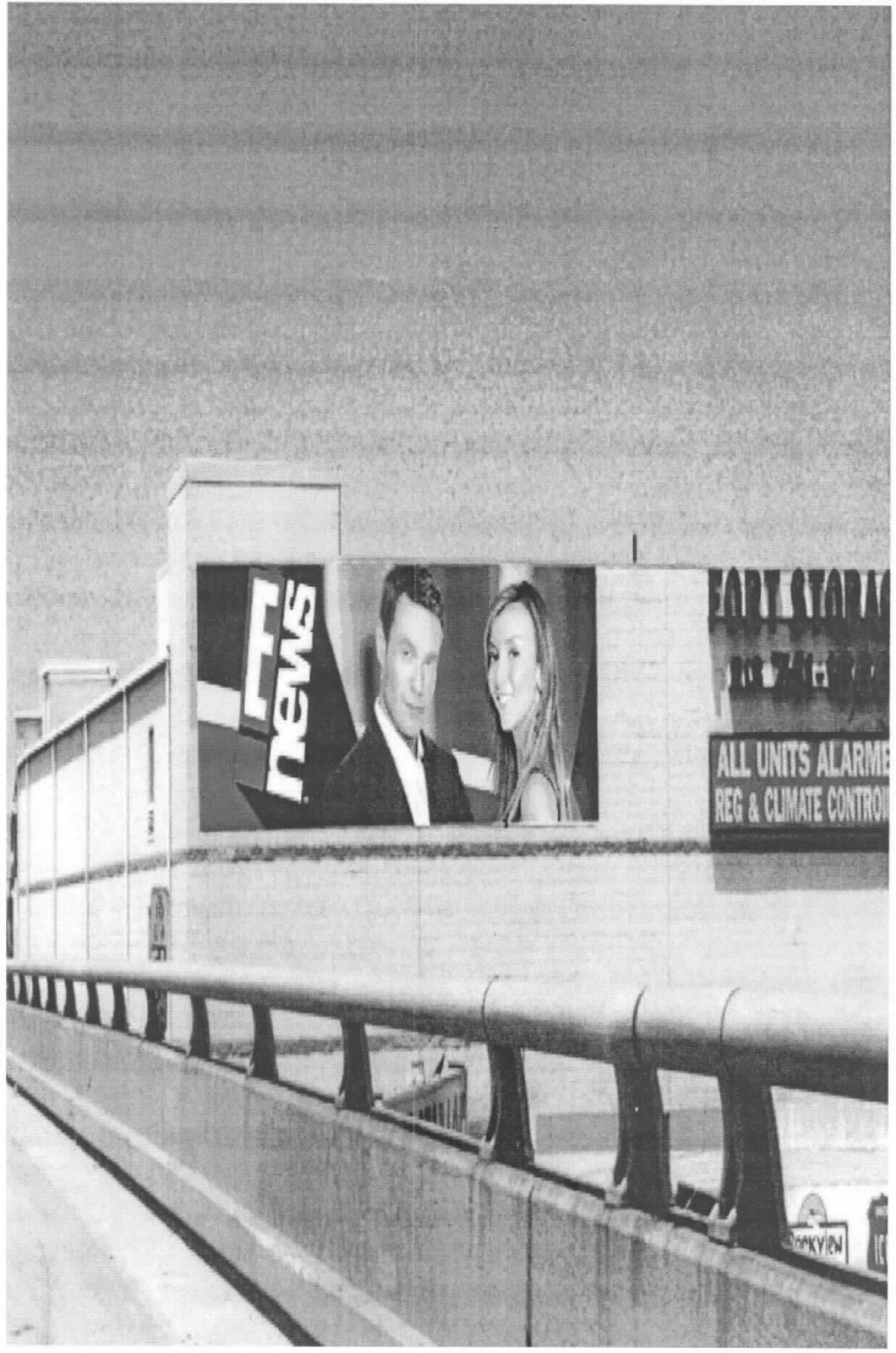
LA’s sign ordinance requires a building permit for all temporary signs other than those containing “a political, ideological or other noncommercial message.”  Plaintiffs sought to install a temporary offsite sign advertising the TV program E! News without a permit.  The question was whether ads for expressive works were noncommercial speech within the meaning of the ordinance and protected as noncommercial under the First Amendment.  Justice Stevens advocated for a commercial speech doctrine that looked to the purpose of a regulation to determine the level of protection—regulation devoted to preserving a fair bargaining process would be treated deferentially, while other kinds of regulation would be more strictly scrutinized. 

This opinion doesn’t take the Stevens approach, but it does look at the purpose of the regulation.  For purposes of regulating where signs can be, though not for other purposes (e.g., where the plaintiff attacks the advertising as a way of attacking the underlying content, as with a right of publicity claim), this ad was commercial speech and thus could be regulated by LA’s sign ordinance.  I think this makes plenty of sense: commercial speech regulation should be sensitive to the reasons underlying the regulation.  The definition of commercial speech can thus depend on the thing in the speech that the government is trying to regulate: here, merely its placement and not its content. 

The ordinance was deliberately written to track the First Amendment commercial/noncommercial distinction.  Plaintiff-appellants also deliberately attempted to work around the ordinance: Fort Self Storage agreed to lease exterior wall space to Charles for signs advertising movies, music, books, etc.  They wanted to display an ad showing the logo for E! News and photos of the show’s hosts:

The court of appeals framed the question as “whether truthful advertisements for expressive works protected by the First Amendment are inherently noncommercial in nature.”  The proposed sign was an ad for a specific “cultural product,” and appellants had an economic motivation in running the ad.  They argued, though, that such ads always go beyond a simple proposal for a commercial transation because they promote the content of the expressive work.

“The test for commercial speech is not so lacking in nuance.”  Certain ads for noncommercial works might contain both an invitation to engage in a commercial transaction (which watching E! News concededly was) and “some amount of noncommercial expression entitled to heightened First Amendment protection.”  If nothing in the nature of things requires the commercial and noncommercial messages to be combined, then the government can restrict the commercial message even despite its proximity to noncommercial messages.  Here, the billboard was not “inextricably intertwined” speech.  It was just photos of the hosts and the program’s name, with no other message.  (This explanation is potentially in tension with my preferred interpretation: pure photos might be protected against right of publicity claims—but I think the court’s other statements make that sufficiently clear.)

Though the underlying program was entitled to full First Amendment protection, “speech inviting the public to watch E! News is not inherently identical to the speech that constitutes the program itself.”  It’s true that the Supreme Court has noted that ads for content itself protected by the First Amendment can be different.  But the Supreme Court’s concern was “the possibility that under certain circumstances, a mechanical application of the test for commercial speech might permit state action that impermissibly restricted political, religious or other protected noncommercial speech.” 

Appellants also cited a series of California state right of publicity cases to argue that truthful ads for expressive works are noncommercial and thus get the same First Amendment protection as the underlying work.  “But the cases Appellants rely on concern only liability for particular state law torts, not regulations of general application, such as the Sign Ordinance here. We agree that in the circumscribed context of specific tort actions, such a rule may apply. We decline, however, to extend this limited exception.”  As Chief Justice Bird noted, it would be illogical and speech-chilling to protect an expressive work against a right of publicity claim but not allow the proprietor to advertise it.  Similar principles apply in false advertising claims based on ads for books: if the ad merely repeats the content of the book, full First Amendment protection applies.  But this rule is aimed at avoiding a chill of the underlying noncommercial speech.  That doesn’t mean that there’s a categorical rule for ads for expressive works.  “Doctrines extending noncommercial status from a protected work to advertising for that work are justified only to the extent necessary to safeguard the ability to truthfully promote protected speech.”  Appellants didn’t show any threat to the ability to advertise protected speech; LA wasn’t seeking to regulate the content of the underlying program or to single out E! News ads, “but only to enforce broadly applicable guidelines that govern the placement of all commercial advertising.”

Though the city wasn’t entitled to deference in defining commercial speech (as opposed to deference about identifying the factual harms of billboard creep), here it was right according to the court’s de novo review.

What should copyright incentivize?

You might have thought that Americans were at the forefront of merging and overlapping copyright and trademark in order to create protection greater than the sum of its parts.  But check out this bit from a WIPO report on enhancing copyright protection in China: 

At the same time, copyright protection promotes brand protection. The key to optimize and enhance a brand is to foster the formation of a particular style for the enterprise’ s products. In branding strategies, there is generally an emphasis on originality, diversity and innovativeness. Since copyright protection increases the return on product originality, diversity and innovativeness, copyright protection enhances branding strategies. 

Is anyone worried that this isn’t what copyright is supposed to be for?  Why isn’t stopping piracy of specific infringing designs the right metric?  See also Deven R. Desai, From Trademarks to Brands, 64 Fla. L. Rev. 981 (2012).

Tuesday, October 16, 2012

Best typo I've seen in a while

From Westlaw's summary: Plaintiff alleged that defendants sold videogames that "caus[ed] older versions of counsel to overheat and become permanently inoperable during normal game play."  Well, I should definitely stay away from those videogames! 

(I should note that the opinion itself uses "console."  Also, it found that the complaint didn't plausibly state a claim of deceptiveness merely because the games were branded PS3 and similar terms even if the games made older PS3 consoles overheat; there have been so many PS3s over the years that a reasonable consumer wouldn't think that PS3 branding meant full compatibility; I'm not sure why that would be so, since it's certainly possible to limit one's claims to 'compatible with recent models' or the like.)  Garcia v. Sony Computer Entertainment America, LLC, 859 F. Supp. 2d 1056 (N.D. Cal. 2012).

Remix of the day

This is so well-done it's eerie, and may have hit the uncanny valley for me.  Can one parody Lady Gaga?

Political TM use of the day

Romneytaxplan.com. Note the use of the logo (just slightly altered.) 

Monday, October 15, 2012

Failure to indicate non-US country of origin is literally false

Ira Green, Inc. v. J.L. Darling, Corp., No. 11-05796, 2012 WL 4793005 (W.D. Wash. Oct. 9, 2012)

Darling sells all-weather paper, Rite in the Rain (RITR) paper, and holds a patent on it.  Darling produced STORM SAF all-weather paper notebooks for Brigade.  Darling put the STORM SAF label on the notebook covers, with RITR paper inside, and printed the patent marking on the back of the notebook cover, although its patent covered sheets of paper rather than notebooks.  Brigade then sold the notebooks to the quasi-government entity that runs retail outlets on military bases.  Brigade’s financial difficulties led the relationship to break down.  Green bought Brigade and switched paper suppliers, procuring waterproof paper from China.  Green didn’t put “made in China” labels on its notebooks for at least a year, when a Customs agent ordered the labeling.

The parties sued each other for, among other things, false patent marking, defamation (these two brought by Green), false advertising/unfair competition, and trademark infringement in the STORM SAF mark (both).  Defamation: Darling sent emails to military personnel claiming that another firm had “done their best to create products that are confusingly similar to ours”  and that “lives could depend on the tactical notes that they couldn’t record or turned illegible into mush.”  Another statement claimed that Green’s product “has such substandard  qualities, that it can be considered dysfunctional,” and that “failure to secure such notes can lead to compromising a mission.”  A sales script said that “offering this knockoff product to the troops can potentially compromise a mission and virtually put lives at risk.”  (There were, however, questions about Darling’s responsibility for some statements, since they came from an intermediary.)  Darling’s co-president stated that “(o)ur feedback from soldiers, officers and our own testing is that the Chinese product significantly underperforms and will result in-situ field failure and that Green’s paper “begins to degrade” after a few minutes after soaking in water.  Darling’s internal tests concluded that Green’s paper wasn’t weatherproof or waterproof, while Green’s independent lab found that the writing on all tests was legible and no tearing was noted when  exposed to water.  Meanwhile, the military retailer’s tests found Darling’s paper “acceptable” and Green’s Chinese paper “swollen, frayed, and appeared fragile to the touch.”  Eventually, it switched to Darling’s notebooks.

The parties disputed whether it was false to mark the notebooks rather than each individual sheet and whether, if that was false, Darling had the requisite intent.  Green argued that Darling knew of the falsity because Darling had been denied a patent on books and notebooks containing weatherproof sheets, but Darling claimed that it used business judgment and legal advice to decide to mark the notebooks.  The new AIA “competitive injury” standard is as yet undefined by the Federal Circuit, but the court adopted a causation standard: a plaintiff must show that the false marking caused lost sales, lost reputation, or inability to freely market or price products.  Green couldn’t satisfy that standard.  However, the Lanham Act claim based on the same facts survived because there was a fact question on literal falsity, as well as on Darling’s knowledge and Green’s likely injury.  So, basically, it’s impossible to bring a false marking claim any more, but you can still try your hand at a Lanham Act claim on the same facts.

There were also factual issues on the disparagement claim, even though Darling didn’t contest falsity for these purposes.  Among other questions, loss causation was unclear, given that the retailer’s own internal testing of Green’s products had bad results.  Likewise, Darling’s false advertising claims raised their own questions of fact, such as whether Green falsely marketed its products as waterproof; the court noted that literal falsity would also allow presumptions of causation and damages.  And there were fact issues on ownership of the unregistered trademark.

Country of origin claims: Green argued that any “mistaken” marking (the notebooks apparently bore Green’s corporate address, in the US) was moot because it had been fixed.  There was a fact issue about when and how many notebooks were correctly marked, but no dispute that Green didn’t put the proper country of origin on the notebooks when they were first distributed.  This was a “literally false omission,” meaning that causation and damages would be presumed unless rebutted, and Green didn’t do so.  An interesting result, especially since the court didn't cite the other country of origin cases.  See, e.g., Alto Prods. Corp. v. Tri Component Prods. Corp., 1994 WL 689418 (S.D.N.Y. Dec. 8, 1994). The court granted summary judgment on liability only for Darling.  Because Washington’s consumer protection law had no presumptions on causation or damages (someday, someone should really catalog “state laws are just like the Lanham Act except when they aren’t”), summary judgment for Darling on the state law claim was inappropriate.

Organization for Transformative Works membership drive

It’s OTW membership drive time—supporting the coders and servers that provide the Archive of Our Own, and Fanlore and Transformative Works & Cultures, and Vidding History, and legal projects like a DMCA exemption for vidders. I love the Archive (and eagerly await the return of tag filters!), and I want to help it grow.  Though fandom cultures are largely, and necessarily, informal, the OTW provides a space for policy/legal advocacy on behalf of fan creators as well as nonprofit preservation and access projects in an increasingly commercialized online world.  I can’t lie though, a significant reason I’m donating now is also to get a kudos bottle.  Please join me and donate!

If unauthorized use of TM falsely advertises functionality, is the term generic?

FLIR Systems, Inc. v. Sierra Media, Inc., 2012 WL 4792397 (D. Or.)

FLIR, which makes thermal imaging cameras, sued its competitor Fluke and Fluke’s media/marketing company Sierra for false advertising and related claims, while Fluke counterclaimed for false advertising, trademark infringement, and related claims.  The parties consented to having a magistrate judge deal with the case, and got a slightly quirky but careful opinion on the summary judgment cross-motions.

Fluke introduced the Ti10 and Ti25 models as its lowest-price cameras, and FLIR then introduced the ix series at an even lower price, marketed as “entry level” cameras.  Since at least 2008, FLIR used images captured by higher resolution thermal imaging cameras superimposed on the display of lower resolution cameras depicted in its ads.  In a deposition, FLIR’s VP of marketing admitted that, “[i]f a customer purchased an i3 based on the belief that the images shown in the advertisement for the i3 were in fact from an i3 thermal imaging camera or another 60 by 60 thermal imaging camera, that customer would be mistaken[.]”

In late 2009, Fluke and Sierra created a video comparing “drop test” results for equipment manufactured by Fluke to four competing products, including the FLIR i7, FLIR i60, and FLIR T400.  The video claimed to have tested the cameras by dropping them two meters onto a concrete floor.  The video shows the Fluke Ti32 bouncing and appearing to remain intact (five times).  The video also shows each FLIR camera dropping multiple times, including at least one drop where no visible damage results, but also shows drops that cause exterior damage.  Text in the video included “2 meter drop”; “Solid concrete floor”; “All products subjected to identical tests by third party”; “Fluke Ti32 ... 17 drops and counting”; “The ONLY rugged thermal imager”; “Why waste money on tools that break?”

After setting out the doctrine, the judge concluded that “establishment claim” falsity is a subset of falsity by necessary implication, and set out to determine whether FLIR’s ads were literally false.  FLIR was using images from higher resolution, more expensive cameras on the displays of cheaper, lower resolution cameras.  For example, a 2008 brochure for the FLIR i5, which has an 80x80 pixel resolution, showed a picture of the i5 with a thermal image on its screen; this image was undisputedly taken by a camera with a 320x240 pixel resolution, and thus of a better image quality than the i5 could ever produce.  Thus, Fluke argued, FLIR misrepresented that the i5 creates an image of 320 x 240 quality.

FLIR disagreed.  It knew that the advertised cameras couldn’t reach the image quality of the displayed images, but its intention was merely to show how the images were displayed, not to present precise representations of the cameras’ capabilities.  (Interesting defense.  I wonder why they didn’t tell consumers that?)

The court declined to grant summary judgment, since a reasonable jury could conclude that the ads weren’t literally false, even though Fluke’s arguments were “well-taken.”  The issue was that thermal imaging cameras, even high-resolution ones, produce “somewhat cloudy” images, and the vast majority of images in FLIR’s ads were extremely small, “which means it may not always be practical to use images produced by FLIR's lowest resolution thermal imagers.”  The court cited Nikkal Indus., Ltd. v. Salton, Inc., 735 F.Supp. 1127 (S.D.N.Y.1990) (mashed potatoes and food shortening used instead of actual ice cream because the heat generated by the lights needed to photograph the product made use of actual ice cream impractical).  This is a limitation on the classic case FTC v. Colgate-Palmolive Co., 380 U.S. 374 (1965), which made a distinction between visuals used as evidence and visuals not used as evidence:

In the ice cream case the mashed potato prop is not being used for additional proof of the product claim, while the purpose of the Rapid Shave commercial is to give the viewer objective proof of the claims made. If in the ice cream hypothetical the focus of the commercial becomes the undisclosed potato prop and the viewer is invited, explicitly or by implication, to see for himself the truth of the claims about the ice cream's rich texture and full color, and perhaps compare it to a "rival product," then the commercial has become similar to the one now before us. Clearly, however, a commercial which depicts happy actors delightedly eating ice cream that is in fact mashed potatoes or drinking a product appearing to be coffee but which is in fact some other substance is not covered by the present order.

So the question becomes what kind of evidence Fluke would need to present to the jury to show that consumers are “invited” to see for themselves the qualities of the camera.  If a survey is required, then it’s not a literal falsity case; if it could be a literal falsity case, then there’s at least the possibility that expert testimony about the relevant market could get the job done, on which see below. 

The judge also remarked that “it is not entirely clear how much of an impact the size, file type, and image editing software utilized had on an image's quality (i.e., perhaps a dramatic reduction in the size of, say, a 320 x 240 image renders it the equivalent clarity of an image produced by a lower resolution camera, depending on the circumstances).”  This might be better understood as materiality rather than falsity, especially since the court noted that all the ads specified the advertised cameras’ resolution.

In addition, the ads didn’t show the actual size of the camera’s display; they were shrunk, affecting their resolution.  The judge noted that the largest image of the i5 screen in one brochure was “about the size of the first knuckle of my thumb.”  And the resolution of the print ad could also change the image quality, as could a customer’s graphics display for the internet ads.  Thus, there was a genuine issue of fact on literal falsity.  (Again, this seems like materiality, but ok.)

FLIR offered expert reports from: (1) Silverman, an advertising expert whose testimony was proffered to demonstrate “how customers perceive and respond to images in print and on-line advertising and traditional catalog environment” and whether “FLIR's use of so-called ‘cut-andpaste images' in their printed and on-line promotional materials were in any way likely to deceive or confuse potential customers”; (2) Madding, a technical industry expert whose testimony was proffered to demonstrate that Fluke did the same thing in its own ads; and (3) Seffrin, an industry expert whose testimony was proffered to demonstrate that “[t]he practice of providing high resolution sample images in descriptive literature is customary within the infrared industry ... has been around for many years and is well known within the infrared community.”  The judge didn’t rule on admissibility at this point because summary judgment was denied on other grounds, but expected argument on the Daubert motions.

Fluke also moved for summary judgment on FLIR’s claims against the drop video.  Given that this was comparative advertising, summary judgment largely turned on whether there was enough evidence to go to a jury on literal falsity.  If there was, FLIR would be entitled to pyramiding presumptions in its favor on deception, reliance/materiality, and harm.  FLIR’s evidence centered on its expert witness, Bisenius, who testified that there were “numerous problems” with the drop test that rendered the results inconclusive and invalid.  Bisenius had extensive experience in compliance testing of products, and concluded that the drop test wasn’t conducted by an independent source and was conducted in numerous ways that rendered it invalid; he also concluded that there’d been deceptive editing of the video results and that the text in the video wasn’t accurate. 

As to whether the source wasn’t independent and whether the text was accurate, jurors “are just as well equipped to listen to the evidence and decide if Sierra is an independent source and if the embedded statements in the video are true. There is nothing about the training and experience of Bisenius that renders his opinion helpful to the jury on these issues.”  Counsel could make the arguments themselves.  But criticism of the testing method was within his expertise.  Fluke’s objections (such as his lack of expertise in drop testing thermal cameras specifically) could be raised to the jury.  He could also testify about whether the video had been “edited, enhanced or touched up,” since that was “something a jury may well be ill-equipped to discern depending on the facts.” 

That out of the way, a reasonable juror could find that the drop video was literally false because the tests were unreliable.  Bisenius criticized Sierra and Fluke for not using any test standard in developing their methodology, controlling the testing environment, and testing Fluke’s competitors using more precarious positions than used for Fluke’s own cameras.

Fluke did better getting rid of FLIR’s trade libel/commercial disparagement claim.  FLIR couldn’t show malice given Fluke’s legitimate business motives.  At most, Fluke “could have been more rigorous in conducting its drop test depicted in the video. That is not enough under Oregon law to establish malice.”  The judge concluded that trade libel required a showing that defendant’s false statement was made with the primary purpose of maliciously injurying the plaintiff, if not the sole purpose.  The record wouldn’t support such a conclusion here—Fluke wanted to make a more rugged camera that would compete well, and FLIR recognized that ruggedness was a legitimate competitive issue between the parties.  This also got rid of the civil conspiracy claim.  Fluke instructed Sierra's president to treat all of the thermal imagers tested “exactly the same” in an attempt to produce legitimate results.

Sierra sought summary judgment in its favor as well, and won it on Lanham Act standing grounds.  As a marketing company, it wasn’t in competition with FLIR, and the 9th Circuit requires “competitive” injury; standing exists “where misrepresentations about product quality could theoretically draw a consumer away from [a] competitor's product.”  FLIR argued that this caselaw didn’t deal with joint and several liability; other cases have found that a competitor’s marketing firm can be liable under the Lanham Act.  But those were primarily from the Second Circuit, which has a different standing test from the 9th Circuit’s categorical standing test.  (I’m not sure that the Second Circuit’s standing test, which was only articulated in its current form after the marketing-agency cases were decided and which like all standing inquiries has mutated in recent years under heavy defendant pressure, is really driving those decisions.  Why not ask whether there was contributory false advertising?)

FLIR also moved for summary judgment on Fluke's trademark infringement and unfair competition claims based on Fluke’s purported IR Fusion trademark.  The judge concluded that there was a genuine issue of fact on whether IR Fusion was generic, descriptive, or suggestive for the products.  IR Fusion was federally registered (but apparently not incontestable), but still arguably descriptive “insofar as it describes a feature of Fluke's thermal imager: its ability to blend thermal and visible light images.”  A descriptive mark can still be strengthened by market success, though, and Fluke submitted evidence of extensive advertising; this was enough to go to the jury.  A reasonable jury could also reject the genericness claim (FLIR apparently didn’t seek summary judgment in its favor on that).

FLIR argued that Fluke’s trademark-related claims were barred by laches, using the 2-year statute of limitations for fraud as an analogy as other courts in the district had done.  The facts were complicated, with a hiatus between Fluke’s initial C&D and its renewed claims over slightly over two years; this was the kind of thing that should go to a jury.

FLIR argued that Fluke lacked evidence that its use of “IR Fusion” and “fusion” was false or misleading, given that the ads plainly identified FLIR as the source of the advertised products/fusion functionality of those products.  But a reasonable jury could find literal falsity, at which point no further evidence of consumer reaction would be required.  This doesn’t square well with the now-standard multifactor confusion test, but might not be a bad description of the same mark/same goods rule that still applies in countries other than the US, and Fluke for whatever reason apparently asserted a “trademark-related false advertising counterclaim” and the court applied false advertising doctrine.  The idea was that FLIR was falsely representing that its product had fusion functionality equivalent to that of the Fluke IR Fusion. But the parties have different patents, making their features not the same.  Even if IR Fusion isn’t a valid mark, it could falsely necessarily imply that FLIR’s cameras had the same functionality as Fluke’s cameras. 

Comment: this argument strikes me as extremely dangerous to Fluke’s trademark claims.  It depends on the factual proposition that IR Fusion describes something specific in terms of functionality, which Kellogg would therefore make freely available for all competitors to use once the patent expires.  And the term would necessarily be generic now, too, even if others can’t yet use the patented functionality.  The false advertising claim, which will require a showing of materiality and possibly misleadingness—since it might be hard to prove that IR Fusion definitionally means a specific method of fusing thermal and visible light images to the relevant consumers—seems riskier than perhaps justified.

The court also refused to grant summary judgment on other assorted false advertising counterclaims.

Nominative fair use of trade dress

Aviva USA Corporation v. Vazirani, No. CV 11-0369-PHX-JAT (D. Ariz. Oct. 2, 2012)

In 2009, Aviva, an insurer, terminated Vazirani’s authorization to sell the life insurance and annuity products of Aviva’s issuing affiliates.  Vazirani, feeling ill-used, registered a number of domain names such as insideaviva.com, aviva-exposed.com, avivauncovered.com, aviva-lawsuit.com, aviva-problems.com, aviva-litigation.com, avivacomplaints.com, avivaplcsucks.com, and avivasucksusa.com.  He used an altered version of Aviva’s website trade dress.  His website had sections such as “Anil’s Background,” “Anil’s Case Against Aviva,” detailing his lawsuits against Aviva; “Aviva’s Class Action Settlement,” linking to a complaint alleging that Aviva deceptively marketed to elderly people; and “Tell us your story about Aviva.”


The court first found that Vazirani didn’t engage in the necessary use in connection with the sale of goods or services to sustain a trademark claim. Such noncommercial use can’t create liability under either §32 or §43(a).  “The distinction between commercial and noncommercial use is particularly important in the context of consumer or editorial criticism and commentary.”  However, when criticism and unauthorized use occur in connection with the sale of goods or services, a successful Lanham Act claim is at least possible. 

Comment: This doctrinal dance would be a lot simpler if the courts admitted that this scenario only makes a false advertising claim potentially successful, where there’s a false factual claim; it remains implausible that consumers would be confused by unauthorized use of a trademark to criticize the owner.  Thus, the court cites cases in which competitors disparaged other competitors, even anonymously or in disguise, and are found to have engaged in commercial speech.  Those cases—which seem to me plainly correct—do create a little bit of trouble for Vazirani in that there’s a commercial element to his vitriol, but the trouble shouldn’t be trademark-related.  The court will eventually get around to this in its nominative fair use analysis, but probably should have started there, because its commercial use analysis sets up a defense for concealed disparagement by a competitor.  (Or maybe, like Citizens United, the courts are just going to create this workaround for Lanham Act claims by allowing anonymous/pseudonymous touting/disparagement to escape the constraints of false advertising law—but I sure hope not.)

Anyway, the court here says that this case is like Bosley.  There was no evidence that Vazirani offered any goods or services for sale on the website, or linked to other sites that did.  Nor did defendants ever attempt to sell the site or domain names to anyone, including Aviva, for profit.  Aviva’s argument that the website attempted to inflict commercial harm on Aviva, and was thus commercial, contradicted 9th Circuit precedent (and good sense).

But what about the fact that the website touted Vazirani’s financial accomplishments and credentials as a seller of products that compete with Aviva’s affiliates?  This could lead them to do business with him (and a quick search would reveal his website).  Also, his avowed purpose was to get money from Aviva through settling his lawsuit and get his contracts with Aviva restored.  (The problem here is that Aviva has mixed an argument that should matter with an argument that shouldn’t—wanting to get money from Aviva isn’t a competitive purpose.)

The court disagreed.  There was no mention of Vazirani’s business website on the anti-Aviva website.  Thus, the court didn’t find it credible that Vazirani was trying to drive business to his other website.  And his demands for settlement etc. were no different than those in the dispute in Bosley, which also didn’t make a critical site into a commercial site.  He didn’t try to hold Aviva’s trademarks hostage; rather, he threatened to publicize information that he said would harm Aviva’s reputation.  His belief that he’d been injured by Aviva and deserved restitution was the same as Kremer’s belief that he’d been injured by Bosley Medical.

As to the argument that Vazirani was a competitor and that the website promoted competing goods or services, the court was equally unconvinced.  For purposes of summary judgment, the court accepted that the parties competed, though it wasn’t clear that this was so (since they appear to operate at different parts of the insurance chain) and anyway there were no references to competing products on the anti-Aviva website.  The only part of the website that could “even remotely be considered relevant to this argument” was in the “Anil’s Background” section:

I’m Anil Vazirani and by any measure I’m one of the most successful financial advisers in America.  I’m a “Top of the Table” member in the prestigious Million Dollar Round Table, I was a 2004 Hall of Fame Inductee into the Society of Senior Market Professionals, and I have been featured and interviewed in leading industry publications.  I’ve been a member of the National Association of Insurance and Financial Advisors for nearly two decades.

And “Anil’s Case Against Aviva” said, “For many years Aviva’s products were among those I used to build diversified portfolios for my clients.”  The court concluded that “[t]o interpret these statements as advertising goods or services that compete with Aviva is not reasonable.”  None were identified on the website; at most there was an implication that Vazirani might currently sell competing products.  There was no contact information or any other information that would allow a visitor to determine whether this was true or how s/he might go about purchasing such products from him.  “To describe as attenuated this path from the Website to any potential offers by Mr. Vazirani to sell competing products is an understatement.”

Aviva argued that Vazirani sent out links to the website in emails sent to “an audience of hundreds of thousands of life insurance and annuity agents in the United States,” and thus some visitors would already be familiar with Vazirani’s offerings.  But Aviva also argued that the emails were materially misleading in that they didn’t reveal that they came from defendants.  (I don’t see how this matters to commerciality, as noted.)  Anyway, it wasn’t clear whether such recipients would be relevant consumers, since they compete with Vazirani.  But, because the emails didn’t contain any reference to or promotion of defendants’ products, the connection to commerciality was at least as “roundabout” as that in Bosley.

Aviva argued that gripe sites run by competitors satisfy the commercial use requirement.  But in the cited cases, HER, Inc. v. Re/Max First Choice, LLC, 468 F. Supp. 2d 964 (S.D. Ohio 2007) and Sunlight Saunas v. Sundance Saunas, 427 F. Supp. 2d 1032 (D. Kan. 2006), there was more evidence of self-promotion.  In HER, defendants directed consumers to their own website via email and rerouted allegedly infringing domain names to their own site.  In Sunlight Saunas, which I have criticized on similar grounds, the court found that the defendants “had no apparent reason to disparage [the plaintiff’s] products except to promote their own.” The court also noted that the gripe site temporarily included direct links to competitors and said that “other companies offer the same products without the fraudulent claims.”  By contrast, Vazirani’s website didn’t link to sites offering competing products or promote any such products.  Nor did the domain names reroute to other competing sites.  All the domain names went to the anti-Aviva site. 

Quoting Bosley, the court concluded, “Any harm to [Aviva] arises not from a competitor’s sale of a similar product under [Aviva’s] mark, but from [Defendants’] criticism of [Aviva].”  Which is why this isn’t a trademark case!

Though the court granted summary judgment on the infringement claims based on this analysis, it went on to evaluate likely confusion/nominative fair use, a slam dunk.  The only interesting part here is the trade dress bit.  The court concluded that Vazirani’s use of the trademark and the trade dress “was undoubtedly a nominative use—that is, the mark was used to refer to Aviva and its products and services rather than Defendants and their products and services.” Instead of being used to describe Vazirani’s goods/services, Aviva’s marks were used to identify the target of criticism.  “[T]here is no clear way for Defendants to convey their criticism for a specific entity, Aviva, without naming that specific entity.”  The third factor was also easily satisfied, using an abbreviated likely confusion analysis.  “[T]he entire website is concerned with criticizing Aviva and its business practices.  Therefore, it is not reasonable to conclude that Defendants have taken any actions that would suggest that Aviva supports or endorses the Website or the associated domain names in any way.”  (Of course, a better substitute for the confusion test, as the nominative fair use test purports to be in the 9th Circuit, wouldn’t incorporate a likely confusion analysis, but here the quick look makes the answer easy—and the other two elements of the test irrelevant—in the same way that a true “does nothing else to suggest endorsement” defense would.)

The second factor was merely “a closer question,” even though Vazirani imitated the Aviva website trade dress of a stylized blue font on a yellow background with rays of light in the background:

In certain cases, such distinctive stylizations might be considered more than is permitted under the Ninth Circuit’s nominative fair use test.  See New Kids on the Block, 971 F.2d at 308 n.7 (“Thus, a soft drink competitor would be entitled to compare its product to Coca-Cola or Coke, but would not be entitled to use Coca-Cola’s distinctive lettering.”). Here, however, the stylized logo and distinctive coloring were not used in a commercial or competitive manner, but rather were used solely to identify Aviva as the object of the Website’s criticism.  Further, Defendants embedded their own critical commentary within the logo, such that it read “Aviva Uncovered The Sad Truth About Aviva’s Business Practices.” 

Given that the purpose of nominative fair use is to address the true likelihood of confusion caused by a certain type of use, and that Tabari specifically identified the second factor as indirectly addressing the risk of confusion (“Consumers may reasonably infer sponsorship or endorsement if a company uses . . . ‘more’ of a mark than necessary.”), here the amount of the trade dress used was reasonable.  “In other words, Defendants’ use of the more distinctive colors and font, in light of the very obvious negative commentary directed toward Aviva that is included in the logo, could not reasonably lead to such confusion.”  So, nominative fair use.

On the one hand, obviously!  On the other, does nominative fair use advance the ball beyond (1) a robust defense for expressive uses such as in Rogers and (2) strong protection for comparative advertising/criticism?  Bill McGeveran has suggested that it doesn’t, and (I am paraphrasing, and he might well not endorse this description) that the weird role of quick-look confusion analysis in the practical application of the test shows its incoherence.  I see what he’s saying, but I’m not sure there are less incoherent alternatives out there. 

At some point we simply have to say: we are not interested in making the defendant spend $100,000 on developing a summary judgment record; on its face this is not the kind of activity likely to be found confusing, nor should we encourage plaintiffs to roll the dice and hope they can suppress critical speech on trademark grounds.  As in Wal-Mart, the error costs of case-by-case analysis are greater than the error costs of a blanket rule.  Speech that criticizes the trademark owner is not actionable on trademark grounds; relief if any must be found in the law of false advertising or, where that doesn’t apply, defamation/disparagement.  Properly applied, nominative fair use can do that work across many types of referential uses, and that’s at least a point in its favor compared to having to figure out what to do with something like this, which isn’t really comparative advertising but is kind of competitive.

Wednesday, October 10, 2012

... but nationwide class action against Pom proceeds

In re POM Wonderful LLC Marketing and Sales Pratices Litigation, 2012 WL 4490860 (C.D. Cal.)

Plaintiffs alleged that Pom’s health claims for its pomegranate juice products were false and misleading, alleging the usual California statutory claims.  They moved to certify a nationwide class, and the court granted the motion.  Pom argued that there couldn’t be predominance for a nationwide class under Mazza.  “To the extent that Pom argues that California law cannot be applied to consumers nationwide as a matter of law, Pom is incorrect. Mazza did not vacate the district court's class certification as a matter of law, but rather because defendant Honda met its burden to demonstrate material differences in state law and show that other states' interests outweighed California's.” 

Since Pom was headquartered and located solely in California, developed its marketing strategies in California, and produced all of its pomegranate juice products in California, application of California law would be constitutional; Pom had the burden of showing that foreign law would apply.  But Pom didn’t meet that burden.  It provided a chart summarizing each state’s consumer protection laws on elements such as scienter, reliance, and timeliness, as well as remedies and defenses. But it didn’t explain which of these foreign laws differ from California's laws.  And even assuming that Pom had identified specific differences, Pom didn’t apply them to the facts of this case to demonstrate a true conflict.  So California law would apply to a nationwide class.

Pom argued that common questions of fact didn’t predominate because 1) Pom disseminated several different advertisements, 2) class members may or may not have relied on the various advertisements, 3) class members bought Pom products for different reasons, and 4) class members' claims require individualized damages inquiries. Nope. 

The complaint alleged that Pom falsely promoted its products as having “special benefits relating to diseases and health-related conditions,” and as having tens of millions of dollars of medical research behind them. “[T]he mere fact that Pom used several different advertisements to convey its health message is not dispositive.”  Pom marketed pomegranate juice as “the magic elixir of our age,” that “helps all sorts of things in the body.”  It directed its marketing staff that Pom's “[m]ain messaging should be about heart health or longevity,” and that “pomegranate juice[ ] promotes health and prolongs life.”  Each member of the class need not hear the exact same words; the class action mechanism would be useless if a defendant could evade it by altering wording or format.  The court concluded:

Pom disseminated its message via radio, billboards, and national print media over a period of several years. Plaintiff has provided evidence that Pom succeeded in getting its message out, including Pom's co-owner's statement that “72% of people who buy pomegranate juice buy it for the health reason....“ Even Defendant's survey expert, Ravi Dhar, determined that a significant majority of respondents, in excess of 90%, cited health reasons as a motivating factor behind their purchase of Pom juice. The questions whether Pom's representations regarding the health benefits were material and deceived consumers predominate over individual questions regarding specific advertisements.

Pom argued that reliance would present predominantly individualized issues, material misrepresentations raise an inference of reliance as to the entire class, and materiality to a reasonable consumer is subject to common proof.  Individualized damage calculations can’t alone defeat class certification. 

Superiority also favored the class action.  “[T]he extent of Pom's contacts with California and the lack of any demonstrated material conflict with the law of other states weigh in favor of concentrating litigation of class members' claims in this forum. Any potential management difficulties are outweighed by the efficiencies to be gained by litigating class claims, which will almost certainly require detailed scientific and expert evidence, all at once.”  And there was no realistic alternative.  Pom noted that the FTC is currently litigating the truth of its claims, but that doesn’t necessarily provide the class with a remedy, and individual actions aren’t realistic.

No nationwide false advertising classes after Mazza, court rules

Schwartz v. Lights of America, 2012 WL 4497398 (C.D. Cal.)

The court denied Schwartz’s motion to certify a class under California’s FAL based on allegations that defendant LOA deceptively marketed its LED lamps by overstating their light output and lifetime, without substantiation, which resulted in an FTC action.  Previously, the court found that Schwartz was an inadequate representative for UCL and CLRA claims because he was a Florida resident who’d bought the products in Florida, and LOA had shown material differences in the states’ consumer protection laws as well as foreign state interests in applying their own laws to injured state plaintiffs that would be impaired by application of California law.  However, LOA didn’t show material differences between California's FAL and the laws of the foreign states. “Given the FAL's express prohibition against disseminating false advertisements across state lines, the Court reasoned that the FAL could, conceivably, be applied across a nationwide class where putative plaintiffs were harmed by false advertisements generated in California and disseminated throughout the country.”

But not here.  Plaintiffs satisfied numerosity, commonality, and typicality.  Adequacy turned on whether the court could apply the FAL nationwide.  But LOA subsequently presented evidence of a material conflict among the states’ false advertising laws.  Thus, foreign laws had to be applied to foreign plaintiffs, at least by way of subclassing.  Because the California and Florida false advertising laws were materially different, Schwartz couldn’t claim under the FAL.

That took care of Rule 23(a), but there was still Rule 23(b)(3).  Still, the same problems defeated a finding of predominance.  Schwartz urged the court to apply the FAL nationwide, which required a choice of law analysis under Mazza.  LOA’s headquarters was located in California, it made its products only in California, and all its ads were created in California.  This was enough to shift the burden to LOA to show that foreign law should apply to class claims.  LOA provided “comprehensive examples” of potentially outcome-determinative state differences in scienter, reliance, availability of private class actions, and remedies.  Schwartz argued that the differences weren’t material because plaintiffs could readily satisfy even the most stringent standards for scienter and reliance, but that required merits judgments that the court wasn’t willing to make at this stage.  Dukes gives courts some leeway in assessing the merits at the class certification phase, but the court wasn’t willing to use that to make a finding on scienter.  And those foreign states had important interests in what conduct was permitted or banned within its own borders.

Schwartz argued that California’s interest in applying the FAL was still greater because LOA was a California corporation conducting its business exclusively in California.  The language of the FAL offered support: it prohibits the dissemination of false or misleading advertisements “from this state before the public in any state.” But federalism still had a role to play.  “Although the California legislature has every right to regulate business within its borders, the 49 other state legislatures have the same right, and California cannot exercise its power in a manner that encroaches on other states' authority.… California cannot create laws that reach conduct occurring in other states, even if a California corporation is the culprit.”  California law also generally acknowledges that the place of the wrong has the predominant interest in applying its own laws.  Schwartz argued that, because the false ads came from California, California was the place of the wrong, but that’s not right: it’s where the last event necessary to make the actor liable occurred, and that means it’s the place where the falsehoods were communicated to the class. The statutory language can be given effect through criminal prosecutions or a civil suit by an injured California competitor, even if it can’t be used in a class action.  (And that doesn’t raise federalism concerns because … ?)

Other states’ interests would be more impaired by failure to apply their laws, as in Mazza.  It didn’t matter that Mazza involved a multinational corporation and LOA was a California corporation conducting business exclusively in California.  Mazza also involved ads generated in California and disseminated nationwide.  The wrongs were still in the foreign states.  Also, Mazza’s federalism analysis is “broad and categorical.”  Defendants will love this line: “Thus, for false advertising claims--where the harm occurs in the state in which the advertisement is communicated--the interests of foreign states will invariably prevail over California's interest any time the advertisement is disseminated to foreign states” (emphasis added).  The court couldn’t find any post-Mazza case where a defendant successfully demonstrated a conflict but failed to show that another jurisdiction had a superior interest in applying its law.  Maybe there can be subclassing, though, the court suggested.  But here, applying 50 different consumer protection laws destroyed predominance.

This also meant there was no superiority: the task of instructing a jury on 50 different laws would be “terribly inefficient, confusing, time consuming, and a waste of judicial resources,” and the court didn’t think grouping would help.  However, plaintiff was given the opportunity to replead with subclasses.