Monday, May 24, 2021

Reading list: The Kids Don’t Stand a Chance: Unfair and Deceptive Advertising in Children’s Apps

 Mary Kate Fernandez,  The Kids Don’t Stand a Chance: Unfair and Deceptive Advertising in Children’s Apps, 66 Loy. L. Rev. 211 (2020)

Intro: 

The University of Michigan released a startling study (“the Michigan Study”) in October 2018 which unveiled that “manipulative and disruptive” advertisements are deceptively built into phone applications (“apps”) designed for children. The results of this study led members of the United States Senate and several public interest groups to petition the Federal Trade Commission (“FTC”) to investigate apps marketed specifically to children. The current federal administrative regime for regulating deceptive advertising targeted at children, however, falls far short of what is necessary to enable the FTC or any other federal agency to respond to the revelations in the Michigan Study with meaningful protections for children.

A striking passage on host selling:

This advertising practice, illegal during children’s television programming, is fundamentally unfair to child consumers. Yet, multiple apps designed for children heavily employ host-selling.

 For example, in PAW Patrol: Air and Sea Adventures, the commercial characters are not only the object of gameplay but also have interactions with the user. Characters make faces indicating feelings of disappointment when the user does not click on locked items that require payment. App characters also show disapproval when the player is unable to accomplish a certain mission because he did not make a required purchase. The Michigan Study stated that such tactics “could be characterized as social pressure or validation” and “may also lead children to feel an emotionally charged need to make purchases.” In Doctor Kids, the main character bursts into tears if the player does not make an inapp  purchase. In Barbie Magical Fashion, Barbie narrates and specifically encourages users to use “locked” items that require making a purchase. 

Most problematic of the host-selling examples was Strawberry Shortcake Puppy Palace. In this app, Strawberry Shortcake instructs users to choose a puppy to play with, but only one out of eight puppies can be played with for free. Every other puppy is locked. If the child selects a locked puppy, Strawberry Shortcake says, “Oops. To play with [name of puppy], you’ll need to get the puppy pack. Or you can unlock everything and get the best deal.” Throughout the game, Strawberry Shortcake has thought bubbles. Some tell the user that the puppy is sad, and the user should give the puppy what it wants. But oftentimes the item that the puppy “wants” is locked, and when the child selects it, Strawberry Shortcake tells the child to buy “the activities pack to keep the puppy happy.”

Tuesday, May 11, 2021

Misinformation, Disinformation, and Media Literacy in a Less-Centralized Social Media Universe

Knight First Amendment Institute, Reimagine the Internet 

Great panel today; more to come the rest of the week and they will shortly post the video. 

Francesca Tripodi (UNC) shared her amazing research about how conservatives use textual interpretation techniques to interpret information and reject journalistic interventions. Conservatives then use and trust Google’s top results, believing that Google top results reflect reality, which seems a bit contradictory to me. The problem is that our keywords are ideological, so Google searches confirm one’s worldview: searching for “illegal aliens” gets you right-wing sites that confirm what they already believe, while “undocumented workers” produces very different results. And it’s not just Google—DuckDuckGo is better for your privacy but returns the same type of results based on ideological keywords. Google suggestions create the possibility of parallel internets that are invisible to outsiders. “Data void”: limited/no content is available, so it’s easy to coordinate around keywords to guarantee that future searches are directed to content that includes these terms—this is what happened to “crisis actor.” Search engines are not designed to guide us through existential crises or challenge our beliefs—the notion of relevance is subjective and idiosyncratic as well as unstable and exploitable. Knowing/understanding audience concerns and amplifying key phrases allows conservative media to drive users to search where their beliefs will be reinforced. Like Council of Conservative Citizens reaching Dylann Root in his searches for black on white crime. They encourage viewers to “do the research” while highlighting phrases that lead to the preferred sources. So Google started autofilling “Russian collusion” with “delusion,” a phrase promoted by Roger Stone. In impeachment proceedings, Rep. Nunes used his opening remarks to repeat a few names/phrases and tell us that we should be paying attention to those—which, when searched in Google, linked to Fox, Daily Caller, and even more right-wing sources. Urged constituents to do their own research. Nelly Ohr: a perfect data void/litmus test. She used to work for Fusion GPS and is part of a conspiracy theory about Russia investigation—the search exists in a vacuum and was curated by conservatives as a dogwhistle about election fraud.

What can we do? How can Google fix this? It’s important to stop thinking about a fix and focusing on Google. Misinformation is not a bug in the code but a sociological issue. The only way to circumvent misinformation traps is knowing the kinds of Qs people seek answers to, knowing how they interpret information, and knowing how political actors exploit those things. [Easy-peasy!]

Barbara Fister, Gustavus Adolphus College: In practice, students are treated as information consumers who need to be educated to examine claims. At universities, they are often treated as needing help finding information in the walled garden of the library, focusing on information that will help them satisfy professors. Libraries have felt compelled to emulate Google and create single-search boxes. But the results don’t help you navigate the results, so it’s no wonder that students come up with workarounds. Students have trouble getting themselves situated. They adopt a strategy and stick to it; look for “safe” sources; often don’t really care about the topic because it’s been assigned. Follow the news, but don’t trust it; don’t think college does much to prepare them to ask questions of their own. Feel both indignation and resignation about algorithmic systems invading their privacy. Students feel that they’re in a very different place than professors; they’re used to different sources. “We grew up with untrustworthy sources and it’s drilled into us you need to do the research because it can’t be trusted.” Students are already being taught “media literacy” but more of the same won’t necessarily help, because people who believe misinformation are actually quite “media literate” in that they understand how these systems work and are good at manipulating them. Qanons understand how media/info systems work; they interpret media messages critically; they feel passion for discovery and enjoy the research b/c they feel like they’re saving the world. Alternate authority structure: trust yourself and trust Trump/“the Plan.”

What is to be done? Deep-seated epistemological differences: if we can’t agree on how we know what’s true, hard to see common ground. So what’s next? Recognize the importance of learning to trust, not just to be skeptical; get at why to trust rather than what to trust—saying “peer-reviewed research” doesn’t help; explore underlying values of knowledge systems, institutions, and practices such as journalism’s values; frame learning about info systems as education for democracy: you have a role to play; you should have an ethics of what it is that you will share. Peer-to-peer learning: students are learning from each other how to protect privacy etc. Students are concerned about their grandparents and about their younger siblings—interested in helping other age groups understand information.

Ethan Zuckerman, moderator.

Fister: Further reading: Information Literacy in the Age of Algorithms—what students are interested in that doesn’t come up in class: knowing that Google works by using the words we use rather than as a neutral broker would be very important! Alison J. Head (January 5, 2016), Staying smart: How today’s graduates continue to learn once they complete college; Project Information Literacy Research Institute, Alison J. Head, John Wihbey, P. Takis Metaxas, Margy MacMillan, and Dan Cohen (October 16, 2018), How Students Engage with News: Five Takeaways for Educators, Journalists, and Librarians, Project Information Literacy Research Institute.

Tripodi: People would say “I don’t trust the news” and she’d ask where they got candidate info; they say “Google,” without acknowledging that Google is an aggregator of news/taking content directly from Wikipedia. We’re not in a new time of epistemological fissures or polarization—we have always been in a place of big differences in how we seek truth, what are sources of knowledge, how we validate knowledge. What’s changed: we can connect from further away and we have an immediate ability to determine what we think is right. Focus on keywords is something that work on filter bubbles hasn’t yet considered—it’s not the tech that keeps us in the filter bubbles; we are the starting point for that closure.

Zuckerman: the people who find hate speech on YouTube are the people with hateful racial attitudes—so the polarization argument may not work the way we thought.

Fister: the power to amplify and segment market messages is way more pronounced now. But it was deliberate fissure with the rise of Fox News, talk radio. Amplified by platforms that like this content b/c controversy drives attention. Far right white supremacists have always been good at tech—used film early, used radio; they are persuasion machines designed to sell stuff. They are earning money while using the platforms, which has changed the velocity/amplitude of the most hateful speech.

Tripodi: There may be ways to figure out the keywords that resonate with people’s deep stories, to find the data voids, by doing more ethnographic work. The narrative that conservatism is being silenced: trying to reshape objectivity as “equal balance.” Rebranding of objective to mean “both sides.” If your return doesn’t show equal weight, it’s somehow flawed/biased/manipulated [at least if your side isn’t dominant]—that’s leveraged in the rightwing media ecosystem to say “don’t use these platforms, use these curated platforms that won’t ‘suppress’ you.” That’s complicating notions of media literacy, which sometimes uses “look for both sides” as an indicator of bias. Propaganda campaigns are now leveraging the idea of “lateral reading”—looking for relevant phrases around the target of interest in a new window—these systems are being deliberately exploited. Thinking about keyword curation may help: you could put a bunch of “Nelly Ohr” all over mainstream coverage of the impeachment. Old fashioned SEO manipulation in a new light.

Fister: discussion of the tautology underneath this: you trust the sources you trust b/c you trust them. People create self-reinforcing webs of trust by consulting multiple sources of the same bent. Students are also interested in talking about how algorithms work, including for sentencing people to prison; tie that to traditional values/understanding of how we make knowledge.

Tripodi: in response to comment on similar dynamic on doctor/patient relations: when people search “autism treatment” they are more likely to see non-evidence-based treatments, because doctors with evidence-based treatments are not using YouTube. Has a student who is trying to create a lexicon for doctors to tell people “research these treatments”—you can’t tell them not to search, but you can give them phrases that will return good quality content. Also important to make good quality content for evidence-based treatments. People are looking on YT; have to be there.

Zuckerman: that requires auditing the platform; YT is not that hard to audit, but FB is when it directs you to content.


Tuesday, May 04, 2021

Today's IP artifact: Cuervo bottle with dripping red wax seal

 This decision remains one of my least favorite, but perhaps I will nonetheless get a bottle of Maker's Mark to pose beside it.


Monday, May 03, 2021

Tootsie Pups

 Acquired from a seller before the inevitable shutoff. The rare occasion where I see the harm story, since Tootsie Pops theoretically contain chocolate, which one would not want to give a dog.


Does Gordon v. Drape really mean what it says about explicit misleadingness?

Testing Gordon v. Drape with the paintings of Tom Sachs, some of which reproduce famous product labels in their entirety (or nearly so). The introduction to the coffee table book I just bought says,

From Reese’s Peanut Butter Cups and Snickers bars to images of American flags and Air Force One, Sachs takes familiar brands, symbols, and commodities as his subjects. He represents these iconic images in his deliberately imperfect and conspicuously handmade aesthetic, wanting us to see the uneven brushstrokes and roughly hewn surfaces that distinguish his “handmade paintings.” By drawing attention to how his objects are made, he deconstructs the formidable and complex systems that powerful logos and brands represent. In Tom’s words, “When I look at these paintings, to me they all speak about power. There is power in logos and there is power in good advertising.”

On Artsy, the description says:

Critiquing the speed and regularity with which a materialistic society replaces commodities, Sachs uses both a profusion of commercial icons in his work and builds his own functioning versions of consumer goods using re-purposed items, such as the glossy, black Prada Toilet (1997), a workable toilet constructed out of Prada’s up-market packaging, with the company’s logo prominently displayed on the sculpture. Sachs’s works are emphatically process-oriented, an expression of the artist’s DIY spirit, divulging even the flaws of his complex and labor-intensive projects.

So, are his works explicitly misleading? See below for some examples:


Note the detail on this painting:

If you think the "Tom Sachs" signature on the side helps, what about this one?


Reading list: race and GIs

Reading list:

Mathilde Cohen, The Whiteness of French Food: Law, Race, and Eating Culture in France (forthcoming in French Politics, Culture, and Society, 2021)

English Abstract:

Food is fundamental to French identity. So too is the denial of structural racism and racial identity. Both tenets are central to the nation’s self-definition, making them difficult, yet all the more important to think about together. This article purports to identify a form of French food Whiteness (blanchité alimentaire), that is, the use of food and eating practices to reify and reinforce Whiteness as the dominant racial identity. To do so, it develops four case studies of how law elevates a fiction of homogeneous French/White food as superior and normative at the expense of alternative ways of eating and their eaters—the law of geographical indications, school lunches, citizenship, and cultural heritage.

Really interesting perspective on GIs; if you believe that they were born in sin (racism/colonialism), do you think that they can be redeemed?

Friday, April 30, 2021

Amicus brief in rehearing petition for Warhol v. Goldsmith

 With Christine Farley and Pam Samuelson: our brief addresses the effect of Google v. Oracle, which the Second Circuit has explicitly asked for more briefing about. I would expect other amicus interest, including on Goldsmith's side, given the stakes of whether Gv.O is a software case or a fair use case at heart.

Wednesday, April 28, 2021

Nominative fair use (maybe) and Amazon

 I've recently seen two examples of the following phenomenon: off of Amazon, an advertiser uses images of its product with another well-known product, and they do go together, but on Amazon, the advertising is different. Anyone know if there's an Amazon policy driving this? For those circuits that require the advertiser to have a good reason to refer to the trademark owner in order to justify nominative fair use, the Amazon ads would seem to show it's possible to advertise without using the other mark. Special kudos to the Angelus paint for using an all-red shoe on Amazon, which isn’t a “use” of the Louboutin mark according to the 2d Circuit. Clever!

Angelus shoe paint off Amazon (and from some third party sellers on Amazon): 


Amazon product image:

Ka'Chava off Amazon (note Ball jars used to display product): 
Ka'Chava on Amazon:


Thursday, April 22, 2021

DoorDash invites users to get their grub on

Screenshot of mobile search results for "Grubhub." Note also "Great Grubs" in the DoorDash blurb. I don't think it's unlawful, but it's kind of tacky:


Monday, April 19, 2021

2020-2021 Georgetown Law Technology Review Student Writing Competition

 From the site:

2020-2021 TOPIC

Students are invited to submit papers addressing a legal or public policy question relating to emerging and sustained challenges to legal and political structures created by online platforms, digital services, and other emerging technologies. 

Example topics include: questions relating to the adequacy of federal and state agency regulatory and adjudication structures to address current and emerging technologies; the scope of current agency jurisdiction over digital technologies and practices; whether current legal structures effectively protect consumers and vulnerable populations. Students are invited to submit papers that examine proposed or newly-enacted laws related to these questions, or to propose novel legal structures to engage with current gaps. 

Preference will be given to papers that are relevant to current legal and public policy debates around technology or present an original perspective.

PRIZE

Up to three winners will be selected, with a First Prize of $4,000, a Second Prize of $2,000, and a Third Prize of $1,000.

Winning papers may be selected for publication in The Georgetown Law Technology Review.

COMPETITION RULES

Papers will be accepted from students enrolled at any ABA-accredited law school in the United States during the 2020-2021 academic year. The paper must be the author’s own work, although students may incorporate feedback received as part of an academic course or supervised writing project.

The paper must not have been published or committed for publication in another journal; The Georgetown Law Technology Review must have the first right of publication for any winning essay.

Papers will be evaluated based on thoroughness of research and analysis, relevance to the competition topic, relevance to current legal and/ or public policy debates, originality of thought, and clarity of expression.

Papers must be 4,000-7,500 words (not including footnotes) and be submitted in Times New Roman Size 12 font, double spaced. Footnotes must conform to the 20th edition of The Bluebook: A Uniform System of Citation. Papers must be in English.

COMPETITION DEADLINE

The deadline for submissions is 11:59 p.m. EST on May 31, 2021.

Papers must be submitted via email to TechInstitute@law.georgetown.edu with the email subject line “Writing Competition”.

The file must be submitted in Word format, with the file named in the format “LastName_FirstName_WritingCompetition”.

Papers must be preceded by a cover page (included in the same Word file) containing the following information:

  • Full Name of Author

  • Name of ABA-accredited Law School

  • Graduation Year

  • Email Address

  • Phone Number

  • Word Count

  • The following affirmation: “I affirm that this paper is an original work of scholarship authored by me. The paper (or any variation thereof authored by me) has not been published, or committed for publication, in any other publication. If this paper is selected as a winner, I grant The Georgetown Law Technology Review the right of first publication of the paper. I have read and agree to the Competition Rules set forth at www.georgetowntech.org/writingcompetition.”

Entrant’s name and law school shall only appear on the cover page. Papers shall contain no identifying information.

NOTIFICATION OF WINNER

The winner will be notified by phone or email on or before August 31, 2021.

FINE PRINT

The judges’ decisions are final.

Winners will be required to submit a completed W-9, affidavit of eligibility, tax acknowledgment and liability release for tax purposes as a condition to receiving the cash prize. All forms must be completed and returned via email within 14 days of receipt, or prizes will be considered forfeited and another winner may be named.

The authors of papers that are selected for publication will be required to sign an agreement warranting the entry’s originality and granting the GLTR first publication rights.

If a potential winner does not respond within 14 days of the first attempt to contact him or her, or if the contact is returned as non-deliverable, the potential winner forfeits all rights to be named as a winner or receive a prize, and an alternate winner may be chosen.

Entrants may submit multiple entries per year. Jointly authored papers are eligible, provided all authors meet the eligibility requirements for the competition. If a winning paper has more than one author, the prize will be split equally among the co-authors.

Winners will be solely responsible for all federal, state, local or other taxes, if any such taxes apply. Cash prizes will only be paid in US Dollars by way of check or bank transfer. Any fees that may be charged from time to time by the relevant bank will be deducted from the prize money.

Georgetown Law’s Institute for Technology Law & Policy, the Georgetown Technology Law Review and BSA | The Software Alliance (together “the Organizers”) are not responsible for incorrect or inaccurate entry information, late, lost or misdirected entries, or for computer errors or technical failures, including by reason of any bug, computer virus or other failure.

In the unlikely event that no entries are of sufficient quality to merit an award, the Organizers reserve the right not to award any prizes.

The Writing Competition is governed by U.S. law and all relevant federal, state and local rules and regulations apply. By entering, all entrants agree that the competition shall be governed by the laws of the District of Columbia and that the courts of the District of Columbia shall have exclusive jurisdiction for any dispute or litigation relating to or arising from the competition. Void where prohibited by law.

By participating, each entrant agrees to the rules of the Writing Competition and the decisions of the Organizers and releases, discharges and holds harmless the Organizers and each of their respective officers, directors, members, employees, independent contractors, agents, representatives, successors and assigns from any and all liability whatsoever in connection with the Writing Competition, including without limitation legal claims, costs, injuries, loss or damages, demands or actions of any kind.

This Writing Competition may be cancelled, modified or terminated for any reason.


Questions?

Email TechInstitute@law.georgetown.edu

Friday, April 16, 2021

The 4th Circuit makes trademark use more contextual

Combe Inc. v. Dr. August Wolff Gmbh & Co. Kg Arzneimittel, No. 19-1674 (4th Cir. Apr. 13, 2021)

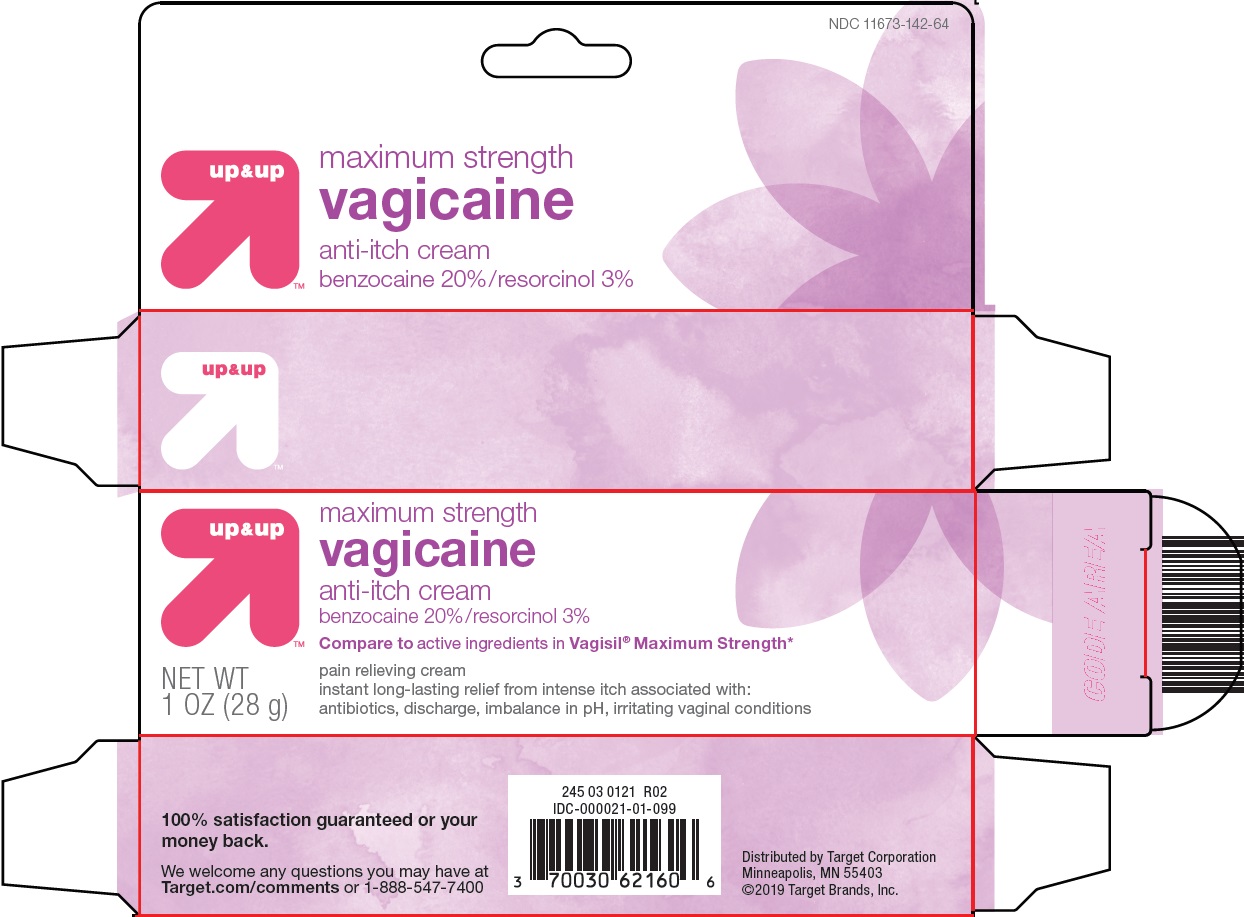
Not only is this case a good demonstration that courts are willing to give broad rights to marks based on similarities in descriptive elements (here the VAGI- formative in VAGISIL for preparations for use in the vagina), it also has relevance for the current discussion of “use as a mark.” As Grace McLaughlin argues in her recent Fanciful Failures, there are situations where putting something in the trademark “spot” for a product doesn’t necessarily mean that consumers will understand it as a mark. Perhaps surprisingly, the district court and the court of appeals endorse precisely that view here:


Further, the district court appropriately gave little weight to generic Vagicaine products sold by big-box retailers because consumers do not associate them “as a source-identifying brand,” but instead recognize them as the “generic product seek[ing] to imitate VAGISIL’s anti-itch cream.”


Wednesday, April 14, 2021

ICANN working group report on TM rights protection mechanisms in all gTLDs now open for comment

Link to report and comment mechanisms. The Working Group did not recommend expanding trademark claimants' preemptive/pre-registration notice rights to include broad matching or algorithmically generated close variants (misses a match by one letter, for example), but I expect that's still on the agenda for some proponents. One of the things that we found out in the process was that the most-searched-for "trademarks," of the set entered into the database maintained for the purpose of simplifying rights claims, were, in descending order: smart, forex, hotel, one, love, cloud, nyc, london, abc, luxury. That doesn't make the database all junk, but it does highlight that new rights protection mechanisms are always also new pathways to abusive claims, and those tradeoffs should be confronted head-on rather than assumed not to exist. The fact that the database is secret doesn't help (though much of its content could be inferred from registration attempts that receive claims notices).

Michael Jordan's ROP claims against ads in the SI special issue on him

 I just heard this discussed on a GALA (Global Advertising Lawyers Alliance, recommended for international updates) event, and fortuitously I'd decided to get my hands on a copy of the actual special issue. One thing I hadn't realized from the cases is that there were only three ads in the entire special issue. The carmaker must feel good about its choices, but I have to say that if I were the other advertisers I might feel betrayed by SI and the supposed special sponsorship opportunity offered. It must be a percentage-of-ads-triggering-lawsuits record!

cover
ad #1, inside front cover

ad #2, opposite table of contents

ad #3, inside back cover

Substantiation issues?

 This poster in a local dry cleaner's, produced by a larger association, gave me pause: I believe that dry cleaning likely destroys most viruses present ... but how many viruses are likely to be present? Does the claim of "effective, easier and safer" imply that this is a good way to decrease risks, especially covid-related risks now that we understand that most spread is aerosol-based?


Monday, April 12, 2021

Recent reading: on brands and sumptuary codes

Inspired by Kali Murray’s great comments at this past week’s Race and IP conference, some notes from recent reading:

Virginia DeJohn Anderson, Creatures of Empire: How Domestic Animals Transformed Early America

Relevant to TM and sumptuary laws (addressed in Barton Beebe's excellent work), Anderson recounts how in some places Native people were barred from marking their own livestock, but punished if they killed a marked animal. In other places/times, both Indians and colonists were required to use their own brands to identify animals, but who got away with violating the rules was unsurprisingly racialized.

Relevant quotes (footnotes omitted):

In the Chesapeake, as in England, livestock owners could protect their rights to mobile property by marking their animals. A few seventeenth-century planters branded cattle on the horn, but most colonists preferred to clip animals’ ears. Virtually every family had its own earmark, involving some combination of slits, holes, half-circles, forks, “fleur-de-lis,” or cropping. They registered their marks at the county court, where the information was recorded to help in identifying strays. Colonists regarded earmarks as a form of personal property to be handed down through the generations. In 1658 when Thomas Gerard neglected to register his earmark and William Evans then used it himself, an angry Gerard took the case to Maryland’s Provincial Court. Gerard protested that his mark was “of a long standing, although not heretofore recorded” and had been “injuriously taken” from him. Since Evans had not yet used it, Gerard argued, the earmark ought to be restored to its rightful, if negligent, owner. Far from finding this a frivolous proceeding, Maryland’s governor not only heard the case but, in an unusual move, polled the councillors for their individual opinions. Four of the five officials sided with Evans, noting his compliance with the law. The governor, however, found merit in Gerard’s emotional plea and asked Evans to relinquish his claim. Evans did so, and a chastened Gerard promptly recorded the mark in his own name….

The Bay Colony legislature tried to minimize contention with a 1634 measure stipulating that trespassing swine would be dealt with according to the rules of the town in which the animals had been found, but this did not help aggrieved parties discover where the beasts actually belonged. Thus in 1647 the General Court required owners to paint a symbol with pitch on the flanks of livestock designating the town where they lived. Just as earmarks labeled livestock as private property, these town marks, or in some cases brands, identified them as animal members of a community. Yet town marks also symbolized the attenuated control of each community over its animals’ whereabouts….

Natick’s herds had grown sufficiently numerous by 1670 that its inhabitants [“praying Indians”] petitioned the Massachusetts General Court to assign them a town brand to distinguish their animals from those belonging to neighboring settlements. Although some form of the initial letter of a town’s name customarily served as a brand mark for English communities, magistrates designated a bow and arrow for Natick—an ambiguous symbol at best, suggesting that no amount of acculturation would fully erase from English minds the sense that Indians remained fundamentally different from colonists….

Indians knew that colonists identified their animals by earmarks; whether native owners would be allowed to do the same remained an open question for several decades. A story that probably originated in Virginia and later circulated in England suggested that by the 1650s earmarks had at least become a topic of conversation between Indians and colonists. Informed by irate Englishmen that his followers had been stealing hogs, a sachem reportedly countered that colonists had been just as busy killing the Indians’ deer. The English reminded him that earmarks identified the hogs as private property but deer displayed no comparable sign of ownership. “Tis true indeed, none of my deer are marked,” the Indian coolly replied, “and by that [you] may know them to be mine: and when you meet with any that are marked, you may do with them what you please; for they are none of mine.” Possibly apocryphal, the anecdote nevertheless fairly represented Indian wit and addressed a topic of current interest to both parties….

Once Chesapeake-area Indians owned swine, the virtues of marking them became self-evident. Unmarked hogs offered tempting targets for colonial thieves, who needed only to clip the ears of such creatures to claim them as their own. Given the propensity of colonists to steal livestock from one another, this was no idle threat. Earmarks also distinguished Indian hogs from feral swine. Native owners could have marked their beasts at any time, but these marks would not provide genuine protection until colonial authorities recognized them as legitimate symbols of private property. Virginia’s legislature did not make such a concession until 1674 when, in a measure aimed at curbing Indian theft of English animals, it ordered county courts to designate “a perticuler marke” for inhabitants of each native town to use on their swine. Assigning a mark to towns instead of individuals may have indicated that Indians regarded swine as common property, or simply that the burgesses failed to make distinctions among native owners. Whether earmarks actually enabled Indians to defend their animal property is unclear.

Oddly enough, when faced with the same circumstances, New England magistrates adopted precisely the opposite tactic. Although there is evidence to suggest that some Indians in Rhode Island took the initiative to begin marking their swine, one by one New England legislatures moved to prohibit the practice. Between 1666 and 1672, Rhode Island, Plymouth, and Massachusetts all ordered that “noe Indian shall give any eare marke to his swine upon the penalty of the forfeiture of such swine.” Indian hogs brought to market had to have uncut ears; native sellers of pork likewise had to produce intact ears to prove ownership. The ostensible reason for this policy was to prevent Indians from profiting from stolen English swine, but its more obvious effects were to complicate Indians’ market activity and to render Indian animals vulnerable to unscrupulous colonists who merely had to mark the creatures’ uncut ears and claim possession. There was also no way for Indians to distinguish their swine from feral beasts that, if less numerous in New England than in the Chesapeake, still roamed the woods and were regarded by colonists as fair game. If Christian Indians in Natick, allowed to have a town brand for their animals, were exempted from the earmark prohibition in recognition of their efforts at acculturation, they would have been the exception that proved the rule. New England magistrates otherwise denied Indians use of the acknowledged symbol of legitimate ownership, as if it ought to signify their progress toward civility rather than their hogs’ status as private property.