Showing posts with label insurance. Show all posts

Monday, December 01, 2025

"unfair competition" CGL insurance exclusion applies only to competitor claims, not consumer claims

Athena Cosmetics, Inc. v. Great American E&S Ins. Co.,  2025 WL 3304392, No. 2:24-cv-08010-AH-AGRx (C.D. Cal. Nov. 24, 2025)

Three underlying putative class actions targeted Athena’s sale of “lash enhancement serums from Athena that contained compounds found in prescription drugs and were known to cause adverse side effects to the face and eye area.” They alleged “false, misleading, unfair, and deceptive sale of beauty products without disclosing dangerous risks and side effects of the products’ key ingredient” and “unfair competition or unfair or deceptive acts or practices” in violation of various states’ consumer protection statutes. Although the underlying complaints alleged that the plaintiffs experienced “physical impact” on their face and eye area, they explicitly did “not seek to recover for physical injuries.”

Great American denied a duty of coverage to its insured, Athena, under a Commercial General Liability Policy stating that Great American “will pay those sums that [Athena] becomes legally obligated to pay as damages because of ‘bodily injury’ ... to which this insurance applies” and “will have the right and duty to defend [Athena] against any ‘suit’ seeking those damages.” The Policy defines “bodily injury” to mean “injury, sickness, or disease sustained by a person, including death of a person,” as well as “mental anguish, mental injury, or shock, if directly resulting from physical injury, sickness, or disease to that person.” There’s also an exclusion for any “Claim or Suit Alleging Infringement of Intellectual Property or Violation of Laws Concerning Unfair Competition or Similar Laws,” which excludes coverage for bodily injury or property damage “alleged in any claim or ‘suit’ that also alleges any: ... (2) violation of any statute, common law, or other laws or regulations” “concerning unfair competition, antitrust, restraint of trade, piracy, unfair trade practices, or any similar laws or regulations.”

Two questions: First, did the underlying lawsuits create a duty to defend, or did they not claim “bodily injury”? The court’s answer: there was a duty to defend given that the underlying complaints alleged such injury, even though they disclaimed recovery for damages for physical injury (presumably to allow a bigger class). An “insured is entitled to a defense if the underlying complaint alleges the insured’s liability for damages potentially covered under the policy, or if the complaint might be amended to give rise to a liability that would be covered under the policy.” In other words, under California law, “the insurer’s duty is not measured by the technical legal cause of action pleaded in the underlying third-party complaint, but rather by the potential for liability under the policy’s coverage as revealed by the facts alleged in the complaint or otherwise known to the insurer.” The insurer cannot “duck coverage simply because the complainants sought the tactical advantage of bringing their claims through a class action.” In addition, the complaint also alleged mental distress, which was covered under the policy’s broad definition of physical injury.

Second, was a noncompetitor consumer protection suit one for “unfair competition” or “unfair trade practices”? The court’s answer: no. The exclusion, which must be interpreted narrowly, was focused on competitor-type behavior, got its tenor from “antitrust,” “restraint of trade,” and “piracy.” Consumer protection claims brought by consumers weren’t excluded. Great American argued that nothing in the exclusion limits its application to disputes among business competitors. But Standard Fire Ins. Co. v. Peoples Church of Fresno, 985 F.2d 446 (9th Cir. 1993), interpreted “unfair competition” in the context of a CGL policy and described common law unfair competition as “synonymous with the act of ‘passing off’ one’s goods as those of another,” limiting the term to “the common law tort which includes competitive injury as an element,” at least where it was listed alongside of “libel, slander, defamation, violation of right of privacy, piracy, misappropriation of idea, and infringement of copyright, title or slogan.” And “piracy” was also in the policy here. Thus, none of the “similar laws or regulations” listed along with “unfair competition” in this policy referred to conduct directed at consumers.

The “objectively reasonable expectations of the insured” would not consider “unfair competition” to broadly exclude consumer fraud-related claims.


Friday, July 25, 2025

court finds advertising injury insurance coverage in false association case despite consumer fraud and other exclusions

Illinois Casualty Co. v. Kladek, Inc., No. 22-3214 (DWF/DJF), 2025 WL 2071043 (D. Minn. Jul. 23, 2025)

ICC sought declaratory judgment that it didn’t have to defend (or indemnify) its insured in a Lanham Act false association lawsuit brought by models, and failed, at least as to defense.

In the underlying lawsuit, the models sued over a “Gentlemen’s Club” that used photos of them in social media ads. They alleged 43(a) false endorsement, unfair competition, and false advertising; right of publicity violations; negligence; violation of Minnesota’s Uniform Deceptive Trade Practices Act; and unjust enrichment.

ICC issued Kladek business liability coverage that included advertising injury and also issued an additional cyber protection endorsement. An arbitration panel concluded that the cyber protection endorsement created a duty to defend (but did not resolve the duty to indemnify), but the business liability coverage is broader and so still relevant.

Advertising injury covers, inter alia,

(4) Oral or written publication, in any manner, or material that slanders or libels a person or organization or disparages a person’s or organization’s good, products or services;

(5) The use of another’s advertising idea in your “advertisement”; or

(6) Infringing upon another’s copyright, trade dress or slogan in your “advertisement.”

But ICC contended that exclusions applied. Under Minnesota law, courts read policies in favor of finding coverage, construing words of inclusion broadly and words of exclusion narrowly.

First, ICC argued that it excluded coverage with the “law exclusion,” which covered liability “arising directly or indirectly out of any action or omission that violates or is alleged to violate … (12) Any federal, state, county, municipal or local consumer fraud protection law, regulation, ordinance, order, or directive barring fraud, unfair competition, and/or deceptive business practices.”

The court agreed with Kladek that the Lanham Act and MDTPA claims apply to various types of conduct, not all of which can be labeled “consumer fraud.” The exclusion does not apply to the statutory claims insofar as they do not implicate consumer fraud conduct:

Notably, the Models have not alleged that any “consumer” has been defrauded. Instead, the Models allege that they were wronged because their images were used without their authorization or compensation. These claims are not “consumer fraud” claims at their core, but rather commercial claims involving advertising injury.

“Because the core of the Models’ Lanham Act claim alleges an injury caused by the unauthorized use of their images without compensation by the Club, and not a consumer fraud claim, ICC has not demonstrated that the Law Exclusion applies to the Models’ Lanham Act claim.” Of course, injury to consumers is the method by which the harms of false advertising are inflicted, and courts have rejected models’ Lanham Act claims merely based on failure to pay, but that I suppose is a matter for the merits.

In a footnote, the court said that the duty to defend even one claim triggered the duty to defend in its entirety unless an additional exclusion applied, and that, in the alternative, ICC’s interpretation would render any insurance illusory. “[W]hen policy exclusions appear to be broader than the coverage, so as to ‘swallow up’ the coverage, rendering the insuring promise illusory, a court will avoid that unreasonable result.” The court found that logic compelling, “as it appears that the ICC’s broad interpretation of the policy exclusions would preclude coverage in most factual scenarios.”

Electronic chatroom exclusion: this excluded advertising injury “[a]rising out of any electronic chat room, bulletin board, or blog the insured hosts, owns, or over which any insured exercises control.” ICC argued that Facebook, Instagram, and Twitter, the platforms on which the models’ images were used, “all allow users to post or read messages and control or host their own bulletin boards” and therefore qualified for the exclusion. But the policy didn’t define “bulletin board” or “electronic chat room,” so the plain meanings of those terms applied. Chat rooms involve realtime communication, and a bulletin board is an “online communication system[ ] where one can share, request, or discuss information on just about any subject.” “In contrast, as commonly understood, Facebook, Instagram, and Twitter are social media platforms.” Kladek didn’t host, own, or exercise control over Facebook, Instagram, and Twitter, but rather used them to promote its business. “There is no evidence that it did so with any intention to generate any discussion among viewers. Indeed, the use of the Models’ images did not occur in a chat room, on a bulletin board, or on a blog.” The best description of where these images were was that they were on Kladek’s “social media accounts.”

ICC had one final try: its exclusion for “multimedia peril,” “the release or display of any ‘electronic media’ on your ‘internet’ site or ‘print media’ for which you are solely responsible, which directly results in any of the following”:

a. Any form of defamation or other tort related to the disparagement or harm to the reputation or character of any person or organization, including libel, slander, product disparagement, or trade libel;

b. Invasion, infringement or interference with an individual’s right of privacy including false light, intrusion upon seclusion, commercial misappropriation of name, person, or likeness, and public disclosure of private facts;

c. Plagiarism, piracy, or misappropriation of ideas under an implied contract ….

This exclusion applied unless the cyber endorsement applied—or maybe it did so if the cyber endorsement applied. “In essence, ICC appears to argue that because the ICC has a duty to defend claims under the Cyber Endorsement (as determined by the arbitration panel), all of the Models’ claims are now excluded from coverage under the Policy.” The court disagreed. The arbitration panel didn’t decide indemnification, or which claims in the underlying suit triggered the cyber endorsement duty to defend. Also, the cyber endorsement created several ambiguities, and was unclear on its relationship with the main liability policy. Basically, the endorsement was inconsistent about whether it amended or supplemented the main policy and stated that its coverage was “in addition to, and will not erode, the limits of insurance provided elsewhere under your Policy.” And the main form was written on a traditional “occurrence” basis, while the cyber endorsement was a claims made policy. Finally, “the wording of the Multimedia Exclusion is, itself, circular and facially contradictory” by excluding multimedia liability for advertising injury “except to the extent that coverage may be provided under the Cyber Endorsement.” The court found the language confusing, but one reading was that, once coverage exists under the cyber endorsement, it also exists under the basic liability policy. “Ambiguities are construed against the insurer and in favor of coverage.”


Tuesday, July 08, 2025

GIs can be indications of quality for purposes of applying failure-to-conform exclusion to advertising injury insurance policy

Allied World Nat’l Assur. Co. v. NHC, Inc., 2025 WL 1852789, No. 22-00469 MWJS-WRP (D. Haw. Jul. 3, 2025)

Nice to see good old-fashioned legal reasoning in these times.

In the underlying lawsuit, class plaintiffs alleged that MNS falsely advertised coffee products labeled as “Kona” that contained little to nothing of the real thing, thus capturing a price premium. MNS ultimately settled the lawsuit for $12 million and sought indemnification from its umbrella insurers. Interpreting the relevant policy’s advertising injury coverage, the court found that an exclusion barred coverage and granted summary judgment for the insurers.

The underlying lawsuit asserted Lanham Act violations. MNS and other named retailers sought the dismissal of the Lanham Act false advertising claim against them to the extent they had acted purely in their role as retailers. The court granted that motion, reasoning that a false advertising claim requires “a false statement of fact by the defendant in a commercial advertisement about its own or another’s product.” Although the court recognized that “[t]here is limited case law on this subject” and that “the Ninth Circuit has not weighed in on this issue,” it concluded that retailers are not liable for false advertising under the Lanham Act “because they do not make a false statement simply b[y] displaying or selling a product that was falsely labeled by another.” However, it cautioned that “[i]f, for example, a retailer controls or participates in the creation of the offending label or creates additional marketing materials for a product that amplify the manufacturer’s misrepresentations, imposition of liability for false advertising may be appropriate.”

As the case headed for trial, other defendants settled and MNS’s supplier filed for bankruptcy. Plaintiffs alleged that MNS was an active partner with that supplier: “MNS regularly collaborated with Mulvadi in developing marketing materials for Mulvadi coffee ... Mulvadi advertising commonly featured MNS’s logo and slogan ... [And] MNS’s 30(b)(6) deponent agreed that the company’s internal emails ‘demonstrat[ed] MNS’s involvement with Mulvadi and Mulvadi promotion.’ ” Then they settled.

The settled claims were defined as “any and all actions, claims, demands, rights, suits, or causes of action, whether asserted or not asserted, that arise from or relate to the allegations made or conduct described in” the last operative underlying complaint, “including but not limited to allegations related to the labeling, packaging, advertising, promotion, branding, marketing, manufacturing, design, formulation, distribution or sale of coffee labeled as ‘Kona,’ regardless of the statute, regulation, common law legal theory, or other legal basis on which the allegations may be asserted.”

Ultimately, Allied World alleged that it had no defense or indemnity coverage obligation under its policies because the settlement liability did not arise out of the “use of another’s advertising idea in [MNS’s] Advertisement” or “infringement upon another’s copyright, trade dress or slogan in [MNS’s] Advertisement.” In addition, it invoked the exclusion for advertising injury arising “out of the failure of goods, products or services to conform with any statement of quality or performance made in [MNS’s] Advertisement.”

The insured bears the burden of establishing that the coverage provisions apply, while the insurer bears the burden of establishing that an exclusion applies. Hawai‘i state law governed. Insurance policies “must be construed liberally in favor of the insured and [any] ambiguities [must be] resolved against the insurer.”

The settlement constituted a legal obligation, and it plainly covered the Lanham Act false advertising claims. Indemnification does not require a finding of liability or a finding that there would have been liability. “If insurance coverage in the settlement context were to turn on a prediction about whether a defendant would have been held liable if a case had gone to trial, the very uncertainty of that prediction—which is presumably one of the factors that would otherwise induce parties to settle—would encourage them instead to trudge on with the litigation.” True, the Hawai‘i Supreme Court’s has stated that an insurer’s indemnity obligation “depends upon the true state of facts surrounding the loss or injury.” But that case did not involve a settlement. “And in cases that do not involve settlements, it makes logical sense to say that an insurance company must defend the insured if there is a possibility of covered liability, but that it need only indemnify the insured if there actually is covered liability.” Settlements are different— “it is no longer a question of possible or potential liability.” Thus, to determine whether the legal liability created by settlement “flows from a covered claim, a court must inquire not into what has been or would have been resolved on the merits, but what claims the settlement has legitimately and reasonably been designed to cover.”

That doesn’t mean that insureds can insert frivolous or legally barred claims into a settlement just to get coverage; the court predicted that state law would agree that “an insurance company has the right to present evidence that some or all of a total settlement amount should be allocated to the settlement value of non-covered claims.” But there was no such argument here.

Allied World did argue that there was no possible liability for ad-related Lanham Act claims as a matter of law. But it didn’t show that the advertising-related Lanham Act claims were frivolous or meritless. The underlying plaintiffs made clear in their motion for summary judgment that their view of the evidence was that MNS did not merely act as a retailer, but also participated actively in its supplier’s advertising and marketing efforts. Moreover, the retailer-only liability claims were still appealable at the time of settlement, and the court acknowledged that there was no binding circuit precedent on the issue. Finally, joint and several liability for advertising conduct was still on the table at the time of settlement.

The court turned to the relevant part of the “Advertising Injury” provision, which defined it as an “injury arising out of your business ... arising out of one or more of the following offenses”: (i) “the use of another’s advertising idea in your Advertisement,” or (ii) “infringement upon another’s copyright, trade dress or slogan in your Advertisement.” The policies further define “Advertisement” as “a notice that is broadcast or published to the general public or specific market segments about your goods, products or services for the purpose of attracting customers or supporters,” including any “material placed on the internet or on similar electronic means of communication.” But “only that part of a web-site that is about your goods, products or services for the purposes of attracting customers or supporters is considered an Advertisement.”

The court rejected Allied World’s claim that the phrase “another’s advertising idea” should be understood narrowly as a “process or invention used to market one’s goods.” “[N]o reasonable layperson would anticipate such a stingy construction of the phrase. Instead, an “advertising idea” is better understood as, and construed in favor of the insured as being, “any idea or concept related to the promotion of a product to the public.” This is similar to the California interpretation of the term as covering the “manner or means” of advertising goods and services.

Allied World also argued that the word “another’s” in the phrase “another’s advertising idea” means that the injury must arise from the use of an “advertising idea” that another person owns or in which they hold a proprietary interest of some sort. But the Kona farmers, it argued, did not hold any legal property right in that term.

But nothing in the language of Allied World’s policies requires that the Kona farmers have the exclusive legal right to use an advertising idea. Indeed, nothing in the language of the policies requires them to have any legal right or property ownership at all in the advertising idea. The possessive term in the phrase “another’s advertising idea” is readily understood to refer to the factual question of whether another person uses something, rather than the legal question of whether they own it. …That broader meaning accords with how language is ordinarily used. For example, when trying to find a place to sit in a coffee shop, one might ask “is this your seat?” When doing so, one is not literally asking if that other person owns the seat. … In a similar vein, one would naturally say that Kona farmers—who advertise their coffee as “Kona” precisely to signal the high quality and special characteristics of their product—have hit on “Kona” as their advertising idea. They use it, and it is theirs in that significant sense. And it is theirs even though they have no property right in it.

While “some concepts are simply too common or too widely used to be considered anyone’s advertising idea,” this was not one of them.

Allied World also argued that the injury from the use of another’s advertising idea must come from that idea’s use in “your”—the insured’s—“Advertisement,” and that the underlying lawsuit plaintiffs did not challenge any of MNS’s own advertisements. But the underlying plaintiffs argued that the ads at issue were legally attributable to MNS.

The court did agree that “Kona” was not a “slogan,” as relevant to the separate definition of “Advertising Injury” as also covering injury from infringement on a copyright, trade dress, or slogan. The court agrees that “Kona” is not a “slogan,” that is, a “distinctive cry, phrase, or motto of any party, group, manufacturer, or person; catchword or catch phrase.” “Whether labeling products as ‘Kona’ might qualify as trade dress is a more difficult question.” But it didn’t matter because initial coverage was already established.

What about the exclusions? There, MNS faltered. The failure-to-conform exclusion provided that Allied World’s policy “does not provide coverage” for any “Advertising Injury ... arising out of the failure of goods, products or services to conform with any statement of quality or performance made in your Advertisement.” Although “exclusionary clauses are interpreted narrowly against the insurer,” Allied World would meet even a heightened standard for applying the exclusion.

When MNS settled claims that alleged MNS was making statements about the quality of their coffee products when they labeled those products as “Kona,” those claims amounted to a statement of quality for purposes of the policy. The underlying lawsuit plainly alleged that Kona coffee has a “distinctive flavor and aroma” resulting from its cultivation in the “volcanic soil, the elevation, and the humidity” of the Kona District of Hawai‘i island; that “Kona coffee is one of the rarest and most prized coffees in the world” and that a vendor of same is “tell[ing] consumers that the coffee has a distinctive flavor profile, and that the beans are of the highest quality.” By selling commodity coffee that did not contain much, if any, genuine Kona coffee, MNS allegedly sold a product that failed to conform with that statement of quality. The underlying complaint alleged that defendants damaged the goodwill and reputation of Kona coffee precisely because a “consumer who tries that inferior product, thinking it is Kona coffee, will conclude that Kona coffee is not worth a premium price” and “will be unwilling to pay a premium price for Kona in the future.” The alleged injury to the Kona coffee farmers “flowed directly and unambiguously from the alleged failure of MNS’s coffee products to conform with the quality expected of Kona coffee.”

MNS argued that “Kona” was merely a statement about the origin or source of the product, rather than a statement of quality. But the cited out-of-circuit district court decisions simply found, “in their own unique circumstances, that statements of source were predominantly about the provenance of products, rather than their quality.” (Citing cases about Native American origin claims and reasoning that “similar logic could be said to apply whenever a product is labeled as ‘Buy American’ or ‘Buy Local.’”) Although previously the court followed the logic of GIs, now it says: “When vendors label a wine as ‘Burgundy,’ they are not seeking to avail themselves of the peculiar interest of customers in supporting a region in central France; they mean to say to the customer that the wine will possess the features of a high-quality, and therefore more expensive, strain of the product.” [I often talk in class about casual empiricism in judicial reasoning; this is a good example.]

The underlying lawsuit didn’t just allege sales diversion, or that customers had a peculiar interest in paying premium prices to support Kona farmers. “Its allegations were that ‘Kona’ bespoke high quality, and by selling a product that failed to meet that standard of quality, MNS … undermined the premium market for Kona coffee by unfairly leading consumers to conclude that genuine Kona coffee did not meet the quality standard. Allegations of this nature are not predominantly about the source of a product; they are about the statement of quality that a vendor makes when it calls its coffee ‘Kona.’” [They are both?]

Nor need a statement use “express” representations about quality or performance to be excluded. “While the court recognizes that exclusions must be construed narrowly, it cannot adopt a construction at war with the language of the exclusion. And nothing in the language of the failure-to-conform exclusion would support an artificial ‘magic words’ approach.”

MNS argued that the underlying plaintiffs’ alleged injuries would exist regardless of the coffee’s quality; at least some of that is true because of the alleged driving down of prices for Kona-labeled coffee, but the court concluded otherwise. “If MNS … had sold coffee that conformed to the quality standards of Kona coffee—which, according to the allegations in the [underlying] lawsuit, they could only have done by selling the real thing—there would have been no injury at all.” Even if, at trial, the underlying plaintiffs wouldn’t have been able to prove the higher quality of Kona coffee, MNS did not identify anything in the record of the underlying lawsuit indicating that the plaintiffs there had abandoned or lacked the ability to prove their allegations about the superior quality of Kona coffee. Indeed, two expert reports in the underlying lawsuit “affirm[ed] that the use of the term ‘Kona’ reflected a statement of quality.” One specifically opined “on how the geographical location of production of a product ... is intended to signal quality,” and further noted that the Kona coffee “has historically carried a reputation for high quality.”


Thursday, March 28, 2024

adult venue's insurer did not successfully exclude ads from ad injury coverage

Princeton Excess & Surplus Lines Ins. Co. v. R.I. Cranston Entertainment Inc.; 2024 WL 1285631, C.A. No. 21-63-JJM-PAS (D.R.I. Mar. 26, 2024)

Defendant, d/b/a Wonderland, operated an adult entertainment club and was one of the many such sued by various models for using their images in advertising without their consent from 2015 to 2019. Princeton insured Wonderland from 2016-2018 (with a broad exclusion for defamation, invasion of privacy, and various forms of advertising injury in the second year called the Exhibitions and Related Marketing Exclusion), and agreed to defend the club but reserved the right to deny insurance coverage. After settlement negotiations (including Wonderland’s separate counsel), Wonderland agreed to a judgment for $1.895 million, with a covenant not to execute and an assignment of rights against Princeton to the models in lieu of payment. Princeton then sued Wonderland and the models, seeking a declaratory judgment that it has no obligations under the Consent Judgment. Defendants counterclaimed for payment and damages for breach of contract and bad faith.

If policy terms are “ambiguous or capable of more than one reasonable meaning, the policy will be strictly construed in favor of the insured and against the insurer.”

Princeton argued that (1) no coverage was available for claims during the 2017 to 18 Policy Period; (2) Wonderland breached the insurance contract by agreeing to the Consent Judgment in violation of the cooperation and non-assignment clauses; and (3) the Consent Judgment was unreasonable, and thus unenforceable, as a matter of law.

The consent judgment was a lump sum and, Princeton argued, included uncovered claims; most of the images fell within the 2017-18 period. The policy excluded personal and advertising injury, including “publication, in any manner, of material that violates a person’s right of privacy,” disparagement, use of advertising ideas, and trade dress infringement, if such activities “arise out of or are part of ‘exhibitions and related marketing,’ ” which are broadly defined.

The underlying claim alleged false advertising and false association under the Lanham Act, misappropriation, violation of the Models’ common-law and statutory privacy rights, and defamation, “all of which fall squarely under Personal and Advertising Injury. So the burden falls to Princeton to show that its exclusion is valid.”

The problem was that the policy and the exclusion were “clearly worded, specific, and directly contradictory to each other. Under Rhode Island law, policy exclusions must be unambiguous, and ‘contract provisions subject to more than one interpretation are construed strictly against the insurer.’” Also, “Rhode Island courts will not uphold an exclusion that leads to unreasonable results, particularly if doing so will make another part of the coverage illusory.” The court found that definition of “Exhibitions and Related Marketing” was so broad as to “preclude coverage in almost any circumstance.” The Fifth Circuit recently found that, even if all “advertising injury” was excluded by this exact policy language, “personal and advertising injury” was an umbrella provision and not illusory because there was still personal injury coverage. Princeton Excess & Surplus Lines Ins. Co. v. A.H.D. Houston, Inc., 84 F.4th 274 (5th Cir. 2023); but see Princeton Express v. DM Ventures USA LLC, 209 F. Supp. 3d 1252, 1258 (S.D. Fla. 2016) (declining to uphold a “field of entertainment” exclusion on the grounds that it would exclude “anything listed in (d) through (g) listed under Personal and Advertising Injuries” and would thus make the Policies illusory as to advertising coverage).

The court here disagreed with the Fifth Circuit. By its plain language, “exhibitions” encompass almost all forms of production and advertising: “motion pictures, television programs, commercials, web or internet productions, theatrical shows, sporting events, music, promotional events, celebrity image or likeness, literary works and similar productions or work ....” including social media, as well as material produced “in any medium including videos, phonographic recordings, tapes, compact discs, DVDs, memory cards, electronic software or media, books, magazines, social media, webcasts and websites”— “a broad-ranging definition that contradicts Princeton’s purported coverage” for “advertising” (defined as “a notice that is broadcast or published to the general public ... about your goods, products or services”). And the exclusion also withdrew coverage for all related forms of marketing. Rhode Island doesn’t allow insurers to make whole sections of a policy illusory.

It also didn’t save Princeton that exceptions purportedly restored coverage for advertising related to Wonderland’s food and liquor services. Princeton argued that these exceptions preserve coverage for “use of another’s advertising idea or infringement of copyright, slogan, or trade dress in an advertisement for any aspect of Wonderland’s business other than exhibitions or marketing for exhibitions (such as its food or liquor service).” “But the Exhibitions and Related Marketing Exclusion precludes coverage for any commercial, web production, or promotional event, regardless of whether the advertisement relates to a show, a theatrical performance, or purchase of a hamburger. It would exclude the advertising examples that Princeton cites to make its case.”

Thus, Princeton owed Wonderland a duty to indemnify for advertising injury arising out of Exhibitions and Related Marketing under the 2017 to 18 Policy. Moreover, there was no evidence that the consent judgment purported to settle claims outside the policy period; it was based on Princeton’s denial of claims for that period, and its plain language suggested that it was limited to that period.

The policy didn’t apply to “[a]ny punitive damages, exemplary damages, or the multiplied portion of any award, because of any ‘bodily injury’, ‘property damage’ or ‘personal and advertising injury’.” But again, there was no evidence that the consent judgment included these.

Princeton argued that Wonderland breached the terms of the insurance contract by interfering with its right to defend and settling the case in violation of the cooperation and non-assignment clauses. But it was uncontested that Princeton knew about the Models’ offer and took no steps to preserve its rights over the course of many months, so it waived any objection to the terms of the settlement. Also, there was a cooperation clause requiring cooperation in investigation and settlement; this is a reciprocal obligation, and no reasonable jury could look at Princeton’s conduct and find that it used “reasonable diligence” to obtain Wonderland’s cooperation.

Finally, Princeton waived its right to object based on the non-assignment clause:

We think the insured should be allowed, as soon as the insurer denies coverage, to protect its interest by negotiating a settlement. The only valuable asset the insured may have is its cause of action against the insurer and the insured should be able to assign this right to the injured party to protect itself from further liability.

Also, “because an insured’s rights to proceeds vests at the time of loss ... restrictions on the insured’s right to assign its proceeds are generally rendered void.”

Was the consent judgment collusive and unreasonable and thus unenforceable? No, there was no evidence of misconduct. (Princeton was bound because the judgment fixed Wonderland’s liability, triggering the duty to indemnify, and Wonderland properly assigned its claims to the models.) Princeton pointed to statements made by Wonderland’s manager, who stated that the offer of $10,000 per model was “crazy” and was upset that Princeton “did not want to fight it.” It argued that this was incompatible with Wonderland’s decision to settle all claims for $1.895 million, and that the manager hadn’t read the consent judgment so Wonderland could not have truthfully stated that it was reasonable.

“That a party may have opposed a settlement does not render a settlement fraudulent or collusive. And a party’s failure to read a contract does not render it unenforceable. A party may rely on their attorney in drafting settlement documents, and the attorney can be presumed to speak for them regardless of whether they have read the documents.” Any concerns about collusion were “further assuaged by the fact that the judgment was negotiated under the supervision and guidance of a seasoned Magistrate Judge and that other courts have repeatedly found liability on similar facts.”

But the complaint included other policy exclusions that were not yet before the court (exclusions for knowing falsity and the like), so defendants only got partial summary judgment.  They were entitled to summary judgment on liability for breach of contract (the duty to indemnify), but not on damages.

Wednesday, July 19, 2023

no duty to defend despite allegations of label copying; but insurers can't recoup defense costs already spent

Continental Casualty Company v. Winder Laboratories, LLC, --- F.4th ----, 2023 WL 4504183, No. 21-11758 (11th Cir. Jul. 13, 2023)

Winder, a generic pharma manufacturer, sought insurance coverage for a false advertising lawsuit. The court of appeals affirmed the finding that there was no coverage, but also that Winder didn’t have to pay the insurers back for the representation they offered during the coverage dispute.

As relevant “personal and advertising injury” was defined to include an injury “arising out of” either “[o]ral or written publication, in any manner, of material that slanders or libels a person or organization or disparages a person’s or organization’s goods, products or services” or “[t]he use of another’s advertising idea in [the insureds’] ‘advertisement.’ ”1 The policies also had a “failure to conform” provision that excluded coverage for injuries “[a]rising out of the failure of goods, products or services to conform with any statement of quality or performance made in [the insureds’] ‘advertisement.’ ” Neither policy at issue included a reimbursement provision allowing the insurers to recoup defense costs.

The underlying lawsuit by Concordia asserted various claims under the Lanham Act and Georgia law, focusing on the allegation that Winder “falsely or misleadingly advertised their B-Donna product, and subsequently their Phenohytro product, as generic [equivalents] to [Concordia’s product] DONNATAL directly to the pharmaceutical industry, including to potential purchasers.”

The insurers agreed to defend, subject to a reservation of rights to disclaim coverage, but also included a “not-so-standard reimbursement provision”: “VFI specifically reserves its right to seek reimbursement of defense costs incurred on [the insureds’] behalf for all claims which are not potentially covered by the VFI Policy.” The insurers also sued for a declaratory judgment that they had no duty to defend or indemnify.  The district court held that Concordia’s allegations were “squarely” excluded by the “failure to conform” provision because the “operative complaint [was] based entirely upon allegations that [Winder] misrepresented the quality” of Winder’s products.

Winder argued that Concordia’s complaint alleged a “personal and advertising injury” because it included allegations that Winder copied Concordia’s DONNATAL label inserts. But did the false advertising claim hinge on the alleged label copying? If so, there would be coverage; if not, and the claim rested on allegations that Winder actively misrepresented its drugs, then the alleged injury arose from the “failure of goods ... to conform with any statement of quality or performance made in [the insureds’] ‘advertisement,’ ” and the insurers were protected by the “failure to conform” exclusion.

The court of appeals agreed with the latter approach. The copying allegations were clearly in service of the misrepresentation of equivalence claim—copying was merely one of the means by which the misrepresentation was allegedly carried out. This was not a “personal and advertising injury” stemming from “[t]he use of another’s advertising idea”—i.e., Concordia’s labels. The specific allegation that Winder made “false or misleading” representations and statements about its products by “marketing the products as ‘generics’ that are comparable to and/or substitutable for [Concordia’s] DONNATAL,” was a “textbook” of failure-to-conform.

Also, Winder argued that Concordia’s false advertising claim relied on statements made by non-party drug databases for which Winder wasn’t responsible; but Concordia clearly alleged that Winder’s initial alleged misrepresentations were the but for cause of its injuries. Winder further alleged that it only made true statements which couldn’t “fail ... to conform with any statement of quality or performance ....” However, the underlying complaint, which determined coverage, alleged misrepresentations.

At least Winder wasn’t required to reimburse the insurers. “[B]ecause insurers under Georgia law have a broad duty to defend when there is ‘even arguably’ a covered claim, the insurers had an active duty to defend up until the point when the district court ruled otherwise. Simply put, under the facts of this case, the insurers were under a duty to defend until the district court ruled that they were not.” No new contract was created by the insurers’ reservation of rights letter, and just asserting a right to reimbursement in a reservation of rights letter isn’t enough if the insurance contract did not contemplate a right to recoupment.

There was no consideration for the reimbursement provision. Importantly, “a promise to perform a preexisting contractual obligation does not constitute consideration for a new agreement.” The parties’ contracts already required a defense against certain third-party lawsuits, so the letters were no more than a promise to perform an existing obligation. Further, the underlying contract didn’t provide which party would select legal counsel, so offering Winder the option to choose counsel didn’t give up anything on the insurers’ side.

Nor was Winder unjustly enriched by retaining “the benefit of an expensive defense to which they knew they were not entitled.” Even assuming this argument didn’t immediately fail due to the existence of a written contract, there was nothing “unjust” about requiring the insurers to fulfill their contractual obligations. “[W]e cannot say that an insured is unjustly enriched when its insurer tenders a defense in order to protect its own interests, even if it is later determined that the insurer did not owe a defense.”

Georgia law wouldn’t require this, the court predicted. “The duty to defend is extremely broad under Georgia law.” There was no majority rule favoring recoupment nationwide; the current case law “appears to be more-or-less in equipoise with the recent trend favoring the ‘no recoupment’ rule.” More importantly, in Georgia, the broad duty to defend is “foundational.” But a rule allowing for broadscale reimbursement without any contractual provision securing that right would collapse the duty to defend into the duty to indemnify. “That is, if the duty to defend required insurers to mount a defense but the defense was widely reimbursable upon a court’s determination that no ongoing duty to defend exists, the duty to defend would simply become the duty to indemnify.” [This seems technically untrue—you could have a rule separating the duty to defend from the duty to indemnify as long as a court agreed that the allegations of the complaint created the duty to defend but an ultimate finding/narrowing of the case could avoid the duty to indemnify—but that kind of distinction does at least push against the breadth of the duty to defend.]

Monday, June 26, 2023

Advertising injury policy's IP exclusion means ROP claims aren't covered

Covington Specialty Insurance Company v. Omega Restaurant & Bar, LLC, --- F.Supp.3d ----, 2023 WL 2720805, No. 2:21-cv-247 (E.D. Va. Mar. 30, 2023)

This is fallout from one of the many right of publicity etc. lawsuits against clubs for advertising them with images of models without those models’ consent. Omega was sued in state court by a group of such models; Covington sought a declaration that it had no duty to defend, which it secured on summary judgment.

The relevant policy provides coverage for bodily injury, property injury, and advertising injury, subject to certain conditions and exclusions. The underlying lawsuit asserted misappropriation of images and likenesses for advertising purposes under state law; violation of the Virginia business conspiracy statute; and violations of the Lanham Act for false advertising and false association.

In Virginia, insurance contracts are interpreted according to general principles of contract law; any ambiguity is construed against the insurer. “In deciding whether coverage applies, a court may consider only the underlying complaint and the relevant policy.” A duty to defend is triggered if there’s any possibility that a judgment against the insured will be covered.

Additionally, “[l]anguage in a policy purporting to exclude certain events from coverage will be construed most strongly against the insurer.”

Covered personal/advertising injury included

d. Oral or written publication, in any manner, of material that slanders or libels a person or organization or disparages a person’s or organization’s goods, products or services;

e. Oral or written publication, in any manner, of material that violates a person’s right of privacy;

f. The use of another’s advertising idea in your “advertisement”; or

g. Infringing upon another’s copyright, trade dress or slogan in your “advertisement”.

It excluded knowing violation of the rights of another, and injury “arising out of the infringement of copyright, patent, trademark, trade secret or other intellectual property rights. … However, this exclusion does not apply to infringement, in your ‘advertisement,’ of copyright, trade dress or slogan.”

Covington argued that the ROP claim was an intellectual property right; although Omega didn’t contest this, it’s not obviously true (see what’s going on in courts’ characterizations of the ROP for §230 purposes) and it’s probably past time to add ROP (or name, image and likeness if you prefer) to that list if insurers really want it excluded. However, given how ROP claims work, they really should be treated like copyright, trade dress, and slogan—they’re routinely connected to advertising and the advertising can regularly be distinguished from the underlying goods/services. Certainly insureds have at least as much reason to want such insurance, and given the extension of the right of publicity there is a set of claims that don’t involve knowing violations of rights.

Anyway, Omega also didn’t contest that the conspiracy allegation was an excluded “criminal act” and knowing violation of rights of another, or that the Lanham Act claims aren’t one of the enumerated offenses in the definition of personal/advertising injury. Instead, it argued that the underlying lawsuit alleged misappropriation of advertising ideas and slander/libel/disparagement.

The Virginia ROP “protects both a property interest and a right to privacy.” But it is generally known as the “right of publicity” as evolved from the right of privacy. The court concluded that the ROP is an intellectual property right. Black’s Law Dictionary defines “intellectual property” as “[a] category of intangible rights” including “trade-secret rights, publicity rights, moral rights, and rights against unfair competition.”  

“The distinction between the right of privacy and the right of publicity is critical to the coverage determination here because the Policy provides coverage for violation of one (the right of privacy) but excludes coverage for infringement of the other (as an intellectual property right).” But the exclusion didn’t swallow the coverage rendering the coverage meaningless, because other personal/advertising injury offenses were covered.

There was thus no duty to defend as to the ROP, and the court also found that the policy excluded the conspiracy claim and didn’t cover Lanham Act claims based on confusion about underlying plaintiffs’ employment at and/or endorsement of Omega. This was important because false endorsement/false advertising claims could succeed without the existence of intellectual property rights.

Omega’s arguments favoring coverage failed because the underlying complaint didn’t even implicitly allege misappropriation of advertising ideas, given that there’s no general common law right against misappropriation in Virginia. Nor did the underlying complaint state a potential claim for defamation by implication despite the fact that the underlying plaintiffs alleged that the false suggestion of association with Omega “would be highly offensive to a reasonable person.”

Courts have divided on whether similar allegations can actually found a defamation claim. Here, the underlying complaint didn’t “elaborate” on how such an association or affiliation would subject the underlying to “scorn, ridicule, or contempt” or render them “infamous, odious, or ridiculous.” Plus, the underlying complaint alleged that Omega used the images to promote and draw customers to their business—not to shame or disgrace the underlying plaintiffs.

Friday, December 16, 2022

Illinois court finds insurance coverage for alleged trade dress infringement

State Farm Fire & Cas. Co. v. Advanced Inventory Management, Inc., No. 1-22-0662, 2022 IL App (1st) 220662-U (Ill. Ct. App. Dec. 15, 2022)

The court of appeals reversed summary judgment in favor of an insurer, and ordered partial summary judgment for the insured, on the duty to defend in underlying litigation based on advertising injury coverage for trade dress infringement (depicting allegedly infringing products) in the insured’s advertising. The court of appeals remanded on whether State Farm had any duty to indemnify AIM for a settlement paid to resolve the underlying lawsuit.

The underlying suit was filed by Ethicon against AIM, alleging that AIM sold Ethicon surgical devices and other Ethicon devices that were either counterfeit, stolen, altered, expired, or misbranded. It alleged federal trademark infringement, false description, false advertising, and dilution and related state claims, including breach of an earlier settlement. It specifically alleged that AIM used Ethicon’s “Trademarks” and “Trade Dress” in “advertisements” and “in connection with the sale, offering for sale, distribution, or advertising” of Ethicon devices. The relevant policies provided liability coverage for personal and advertising injury. The exclusions excluded, inter alia, knowing violations, breach of contract, and advertising injury “[a]rising out of the infringement of copyright, patent, trademark, trade secret or other intellectual property rights. Under this exclusion, such other intellectual property rights do not include the use of another’s advertising idea in your ‘advertisement’. However, this exclusion does not apply to infringement, in your ‘advertisement’ of copyright, trade dress or slogan.”

The underlying complaint sufficiently alleged that at least some of the alleged infringement was of trade dress, and that some of the trade dress infringement occurred in advertising, which triggered the duty to defend. As usual, the exclusion for intentional acts didn’t apply to avoid the duty to defend, even though the underlying complaint was replete with allegations of intentional infringement, since liability could be established under the Lanham Act without intent.

Comment: The insurer's attempt is probably to distinguish the trade dress of an advertising format (a fairly natural coverage for advertising injury) from standard trademark infringement, but because--paging Mark McKenna--trademark has become so expansive and mushy, including allowing pretty much anything to be trade dress, and because it's pretty common for ads to depict the underlying product the defendant has to sell, writing that exclusion is very difficult.

Tuesday, September 13, 2022

"unfair trade practices" insurance exclusion covers antitrust, not consumer protection

G-New, Inc. DBA Godiva Chocolatier, Inc. v. Endurance Am. Ins. Co., C.A. No. N21C-10-100 MMJ CCLD, 2022 WL 4128608 (Del. Super. Ct. Sept. 12, 2022)

An insurance coverage case about a false advertising claim that doesn’t turn on “advertising injury”! Godiva had insurance from defendants when it was accused of misleading consumers with the “Belgium 1926” label on its products. The settlement, still pending final approval, in the underlying case obligated Godiva to pay: (i) a maximum of $15 million in monetary relief; (ii) a maximum of $5 million in attorneys’ fees; (iii) all settlement notice and administration costs; and (iv) up to $10,000 in class representative service awards. The insurers refused Godiva’s demand to cover the claim.

Other matters appear, but of most relevance: an exclusion for civil money penalties imposed for “knowing or willful” conduct did not apply in the absence of “evidence or admission that the violation of law was knowing or willful.” “[T]he Settlement Agreement is a covered loss within the meaning of the term ‘Loss’ as explicitly defined to include settlements in the Policy.”

There was also an exclusion covering claims “based upon, arising out of or attributable to an actual or alleged violation of the Sherman Anti-Trust Act, the Clayton Act or the Federal Trade Commission Act, as amended, or any other federal, state, local, common or foreign laws involving anti-trust, monopoly, price fixing, price discrimination, predatory pricing, restraint of trade, unfair trade practices or tortious interference with another’s actual or prospective business or contractual relationships or opportunities.”

Did the undefined term “unfair trade practices” include consumer protection and false advertising? No. “Generally, consumer protection involves violations of statutes, regulations, and common law standards. The Endurance Policy does not explicitly exclude consumer protection actions from coverage.” Other than the ambiguous term “unfair trade practices,” the rest of the terms in the exclusion were antitrust-based. “The Court questions whether unfair trade practices are the equivalent of consumer fraud. Defendant insurers have presented no authority demonstrating that these terms are interchangeable or legally equivalent.” Nor did the settlement specifically say that it provided monetary relief for “unfair trade practices,” though it was possible that some of the settlement could be covered.

A similar result occurred with an exclusion for “fines or penalties imposed by law, other than civil money penalties expressly referenced in the definition of Loss above....” Godiva argued that the settlement amount constituted restitution for the alleged price premium paid for Belgian chocolate, not a penalty; the court again found that at least some of the settlement could be covered.

Thursday, January 06, 2022

Advertising injury coverage may exist even when gravamen of underlying complaint is TM

Vitamin Energy, LLC v. Evanston Ins. Co., -- F.4th ---, 2022 WL 39839, No. 20-3461 (3d Cir. Jan. 5, 2022)

The court finds that, contrary to the district court’s holding, at least some of the underlying lawsuit’s allegations claimed that Vitamin Energy made disparaging statements about 5-hour Energy, thus triggering the insurer’s duty to defend under its “advertising injury” policy.

“Pennsylvania law imposes on insurers a broad duty to defend lawsuits brought against those they insure.” 5-hour Energy [a frequent litigant in this space] sued mainly over trademark infringement, but also alleged false advertising (and trademark dilution). “Read liberally in favor of coverage, as is required, the 5-hour Energy complaint and the insurance policy impose on Evanston a duty to defend Vitamin Energy in the underlying suit, at least until there is no possibility that 5-hour Energy could prevail against Vitamin Energy on a claim covered by the policy.”

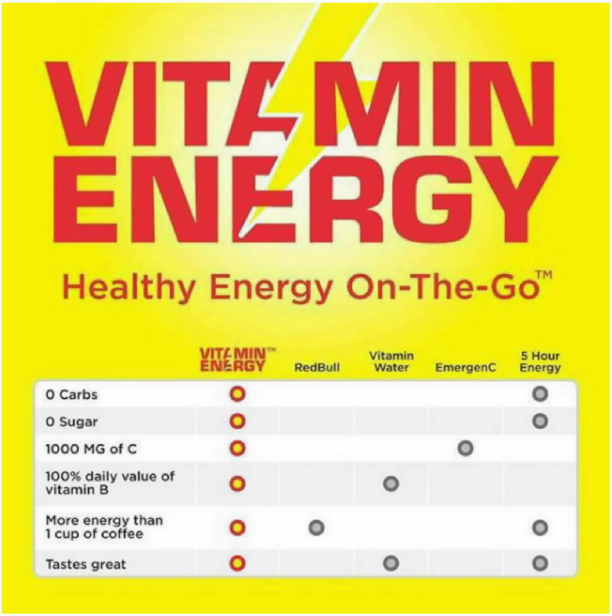
5-hour Energy alleged “false and misleading comparative advertising” about the benefits of Vitamin Energy’s products relative to competing products, including 5-hour Energy’s, as shown in the following chart from the underlying complaint:


This is allegedly false/misleading in representing that 5-hour Energy’s products don’t have 100% of the recommended daily value of Vitamin B. There were other alleged falsehoods about Vitamin Energy’s own products.

Under Pennsylvania law, “[a]n insurer’s duty to defend is broader than its duty to indemnify,” and potential coverage is determined “by comparing the four corners of the insurance contract to the four corners of the [underlying] complaint.” The Policy here defines Advertising Injury as an injury “arising out of oral or written publication of material that libels or slanders ... a person’s or organization’s products, goods or operations or other defamatory or disparaging material, occurring in the course of the Named Insured’s Advertisement.” This includes, at a minimum, an injurious false statement about another’s goods.

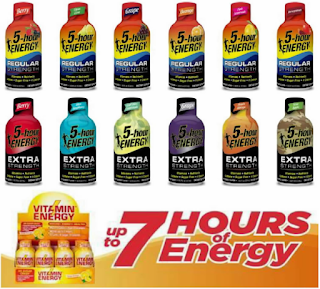
Even if all the other allegations in 5-hour Energy’s complaint pertain only to Vitamin Energy’s own products, the relevant allegations about the ad at issue “are best read as saying not only that Vitamin Energy’s own products contain 100% of the daily recommended value of vitamin B, but also that 5-hour Energy’s products do not. That latter representation is clearly about 5-hour Energy’s products, not Vitamin Energy’s, and 5-hour Energy asserts that it is false.” The underlying complaint need only contain “at least one allegation that falls within the scope of the policy’s coverage [for] the duty to defend [to be] triggered[.]” This is true even if the “gravamen” of the complaint is that the slogan promoting “up to 7 HOURS of Energy” is trademark infringement. The relevant question is “whether a claim against an insured is potentially covered[,]” “not whether the most salient claim is potentially covered.”

image illustrating the TM claim

The duty to defend “is not limited to meritorious actions; it even extends to actions that are groundless, false, or fraudulent as long as there exists the possibility that the allegations implicate coverage.”

Likewise, the exclusions were construed in favor of coverage. The IP exclusion for “Personal Injury or Advertising Injury arising out of piracy, unfair competition, the infringement of copyright, title, trade dress, slogan, service mark, service name or trademark, trade name, patent, trade secret or other intellectual property right,” was likewise inapplicable to the Vitamin B comparative advertising allegation. Although the exclusion listed “unfair competition,” that term “does not have a singular, unambiguous meaning.” In context, the other terms “refer narrowly and consistently to intellectual property rights, and so should ‘unfair competition.’” The court pointed out: “[I]f the exclusion did bar coverage because of allegations supporting a potential disparagement claim, it would arguably render the Policy’s coverage of injury from ‘disparaging material’ a nullity, which we doubt the parties intended.”

So too with the exclusions for the insured’s incorrect description/failure to conform with its own representations about its products’ own characteristics. And the exclusions for “knowing” personal/advertising injury didn’t apply because the complaint alleged knowing trademark infringement, not knowing disparagement.

In a footnote, the court said something that puzzled me: “Of course, had Vitamin Energy cabined its comparative advertising efforts to simple puffery, claims of relative superiority over other competitors, or claims about competitors that its competitors did not allege were false or misleading, then no duty to defend would arise because it is well established that such claims are not actionable.” It seems to me that until a court in the underlying action agrees that the comparative advertising is puffery, there’s still a duty to defend, because otherwise one court could say it’s not puffery and thus there is Lanham Act/disparagement exposure and another could say nonetheless there’s no duty to defend or indemnify, which seems wrong.

Tuesday, October 05, 2021

"advertising injury" insurance exclusion doesn't exclude false advertising claims

Luxottica, Inc. v. Allianz Global Risks US Ins. Co., 2021 WL 4226197, No. 1:20-cv-698 (S.D. Ohio Jul. 28, 2021)

Mostly this case is about other things, but the court finds a duty to defend in the underlying false advertising case. Luxottica was sued in a class action alleging that its AccuFit system for prescription eyeglasses was falsely advertised as more accurate. Allianz ultimately declined to defend under its policies, and the court found it had a duty to defend.

In a less insured-favorable move, the court was also persuaded that the list of what was excluded by the phrase “personal and advertising injury” in the exclusions (relevantly, slander/disparagement/privacy violations/© infringement/use of another’s advertising “idea”) was significant. “This specialized definition does not include any injuries arising out of false advertising or deceptive business practices.” Here, that meant that exclusions for “personal and advertising injury” didn’t apply, but it also suggests that actual “advertising injury” coverage is narrower than many insureds would like. I would expect insurers to be more often quoting the statement that insurers “could have included such claims in this specific and exhaustive list.” Here, “the fact that these claims are not included in the ‘personal and advertising injury’ exclusions furthers Luxottica’s arguable claim that Allianz owes it a duty to defend in the Underlying Lawsuit,” but my guess is that insurers will benefit more from limitations on advertising injury coverage they do sell.

Wednesday, September 29, 2021

CA prohibition of insurance coverage for certain consumer protection cases is constitutional

Adir Int’l, LLC v. Starr Indemnity & Liability Co., 994 F.3d 1032 (9th Cir. Apr. 15, 2021)

California’s AG sued Adir for violating state consumer protection laws based on conduct at its retail stores that allegedly exploited its mainly low-income, Spanish-speaking customer base. Adir asked its insurance carrier to pay its legal defense fees. Though the insurer agreed, the AG warned that the California Insurance Code forbade it from providing coverage in certain consumer protection cases brought by the state. The insurer reversed itself and Adir challenged the law’s constitutionality, arguing that the state unfairly stripped it of insurance defense coverage based on unproven allegations in the complaint. This, the court of appeals held, didn’t facially violate Adir’s due process right to retain counsel. “In civil cases, courts have recognized a denial of due process only if the government actively thwarts a party from obtaining a lawyer or prevents it from communicating with counsel. … While it cannot tap into its insurance coverage, Adir has managed to obtain and communicate with counsel.”

California’s law provides:

(a) No policy of insurance shall provide, or be construed to provide, any coverage or indemnity for the payment of any fine, penalty, or restitution in any criminal action or proceeding or in any action or proceeding brought pursuant to [the UCL or FAL] by the Attorney General ... notwithstanding whether the exclusion or exception regarding this type of coverage or indemnity is expressly stated in the policy.

(b) No policy of insurance shall provide, or be construed to provide, any duty to defend … any claim in any criminal action or proceeding or in any action or proceeding brought pursuant to [the UCL or FAL] in which the recovery of a fine, penalty, or restitution is sought by the Attorney General ... notwithstanding whether the exclusion or exception regarding the duty to defend this type of claim is expressly stated in the policy.

True, “California has stacked the deck against defendants facing these lawsuits filed by the state: Although the Attorney General has yet to prove any of the allegations in his lawsuit, he has invoked the power of the state to deny insurance coverage that Adir paid for to defend itself.” But that wasn’t enough of an interference to deny due process, especially given that there was no allegation that Adir cannot afford competent counsel absent coverage under the policy.  For comparison, “the right to retain counsel does not require the release of frozen assets so that a civil defendant can hire an attorney or otherwise defend his claim.” There was no “indirect right to fund and retain the counsel through an insurance contract.”


Monday, August 09, 2021

3 things that all mean the same thing: a slogan isn't a TM for ad injury insurance purposes

Travelers Indemnity Co. v. Luna Gourmet Coffee & Tea Co., 2021 WL 1293314, No. 19-cv-02039-RM-NYW (D. Colo. Apr. 7, 2021)

The underlying litigation involves class actions against coffee distributors, wholesalers, and retailers arising out of the allegedly misleading use of the name “Kona.” There was a Kona coffee farmer plaintiff class and a consumer plaintiff class. They alleged that the underlying defendants wrongly profited from the goodwill of Kona, which injured Kona farmers by having excessive supply which drives prices down and by causing consumers to conclude that Kona coffee is “nothing special.” As to defendant Boyer (the relevant defendant), the class actions alleged that it falsely designated the  geographic origin of its coffee with the intent to deceive, when the products actually contained little to no Kona coffee.

Travelers insured Boyer, which sought coverage.  The personal and advertising injury policy at issue bars coverage for knowing violation of rights; material published with knowledge of falsity; failure of goods to conform to quality/performance statements; infringement of ©/patent/TM/trade name/trade dress/trade secret/ “other IP rights or laws,” with the standard exception to the last for advertising injury “arising out of any actual or alleged infringement or violation of another’s copyright, ‘title’ or ‘slogan’ in your ‘advertisement.’”

There’s also an exclusion for material published prior to the policy period, which Travelers alleged applied, but Colorado law directs courts to look at the complaint itself, which doesn’t make that clear. Its evidence was from websites, and it didn’t request judicial notice.

The policies covered disparagement of people or products in ads, defined in the Policies as “a notice that is broadcast or published to the general public or specific market segments about your goods, products or services for the purpose of attracting customers or supporters.” Travelers argued that the underlying actions concerned product labels/packages, which aren’t ads. That seems wrong given the definition, but the court rejected this argument on the narrower ground that there were underlying allegations that Boyer’s also used marketing and advertising to tell consumers the packages contain coffee from Kona.

But did Boyer’s use of “Kona” disparage Kona farmers just because it allegedly harmed their goodwill? No. Implied disparagement was insufficient; the theory was “too remote to constitute disparagement within the meaning of the Policies or the element of the claim under Colorado or Washington law.” And it definitely didn’t disparage Kona consumers.

What about infringement of “slogan”? “Slogan” is defined in the Policies as “a phrase that others use for the purpose of attracting attention in their advertising” that “[d]oes not include a phrase used as, or in, the name of: (1) Any person or organization, other than you; or (2) Any business, or any of the premises, goods, products, services or work, of any person or organization, other than you.”

First, Travelers argued that a slogan can’t be a single word. “Priceless,” Boyer responded—and also pointed out that it was actually accused of using “Café Kona” and “Kona Blend.” The court agreed with the former argument, but not the latter, since those weren’t the accused matter, “Kona” was.

Second, Travelers argued that “Kona” was used in the name of the Kona coffee products and, by definition, a slogan does not cover phrases used in another company’s products. But there were Kona farmers who do not use “Kona” in their product names, such as “Rancho Aloha.”  

Finally, Travelers argued that “slogans are catchy stand-alone phrases or mottos, not brand names or product descriptions, relying on Laney Chiropractic & Sports Therapy, P.A. v. Nationwide Mut. Ins. Co., 866 F.3d 254 (5th Cir. 2017).” Relatedly, it claimed that neither “Kona” nor “Kona Coffee” or “Kona Café” are “used to attract attention” in advertising. Although the court here didn’t rely on Laney, it still agreed with Travelers, which is… a bit puzzling from a TM theory perspective.

The underlying complaint showed that the Kona farmers used “Kona,” “Kona Coffee,” and “Café Kona,” to describe the products or brand names used by Boyer’s, not as “a phrase that others use [here, Kona farmers] for the purpose of attracting attention to their advertisement.” Instead of use of Kona as a “slogan” or “advertising tagline,” they were seeking to protect Kona as a “source identifier.”

CJ Cregg is right

So, no coverage. Comment: A slogan can be a trademark, which is to say a source identifier--and a source identifier is definitely something used for purposes of attracting attention. But the insurance policies distinguish slogans from trademarks. It's something they certainly can do, but the language of trademark can't explain it. And in fact this interpretation seems to render coverage a null set: If a slogan is something used to get attention, but that doesn't work as a source identifier for the plaintiff, then the plaintiff will not be able to assert cognizable rights that could be infringed (setting aside copyright, separately listed in the exclusion to the exclusion). It would be more natural, from a TM perspective, to define a slogan as words distinct from the product name that are prominently used to sell the product. A slogan answers neither "who am I?" nor "what am I?" but provides an indication of "who."

Tuesday, January 12, 2021

American Merck and German Merck's TM battle doesn't involve covered "advertising injury"

EMD Millipore Corp. v. HDI-Gerling Am. Ins. Co., 2021 WL 66441, No. 20-cv-10244-ADB (D. Mass. Jan. 7, 2021)

Is trademark infringement (or similar) “advertising injury” because a trademark is an advertising idea? I’ve always thought that’s the core of what a trademark is, which makes many insurance policies seem conflicting to me, but the exclusions for trademark are often pretty clear. In this case growing out of underlying German Merck v. US Merck litigation, the court finds that the TM-like claims don’t involve covered advertising injury because the parties’ campaigns weren’t allegedly similar, only their names.

One of the plaintiffs here is Merck KGAA (aka MKGD), the German Merck (the US government split US Merck off in WWI). The relevant policies covered “personal and advertising injury,” including “[o]ral or written publication, in any manner, of material that slanders or libels a person or organization or disparages a person’s or organization’s goods, products or services” and “[t]he use of another’s advertising idea in [an insured’s] ‘advertisement.’ ” The policies didn’t define “disparage” or “advertising idea.” There was also an exclusion for “‘personal and advertising injury’ arising out of the infringement of copyright, patent, trademark, trade secret or other intellectual property rights.” The exlusion further states that “such other intellectual property rights do not include the use of another’s advertising idea in [an insured’s] ‘advertisement,’ ” and that the exclusion “does not apply to infringement, in [an insured’s] ‘advertisement,’ of copyright, trade dress or slogan.”

US Merck sued MKGD for trademark infringement, trademark dilution, unfair competition, false advertising, and cybersquatting, and New Jersey state law claims for trademark infringement, trademark dilution, unfair competition, deceptive trade practices, and breach of contract. The two Mercks have entered into coexistence agreements around the world, under which MKDG cannot use the trademark “MERCK,” or attempt to acquire rights in any trademark containing “MERCK,” in the United States or Canada. They’ve fought over this agreement for internet and other uses.

MKDG is permitted to use the word “Merck” as part of a firm or corporate name in the United States but only in the phrase “E. Merck, Darmstadt, Germany,” and only if the four words are given equal prominence. Nevertheless, MKDG allegedly used the trade names “MERCK,” “Merck KGaA,” and “Merck KGaA, Darmstadt, Germany” in the United States, including on a website and social media, and allegedly used “Merck KGaA” and “MERCK” in ways so “prominent and widespread that they function as a trademark.” This included promotion and sale of products called “SedalMerck®,” “Merckognost®,” and “MRCKβ Protein,” as well as signs at kiosks at multiple industry conferences.

Merck also alleged that MKDG engaged in two marketing campaigns “specifically intended to confuse consumers as to MKDG’s history”: MKDG’s “Original” campaign, referring to MKDG as “the Original Merck” and Merck as MKDG’s “younger brother/sister.” Likewise, its “125 Years” campaign allegedly touted that it has been in the United States for 125 years, even though, in reality, MKDG has been re-established in the United States only since 1971. Finally, MDKG allegedly registered a number of domain names virtually identical to Merck’s registered “THE MERCK MANUAL.”

Prior Massachusetts cases have interpreted “advertising idea” broadly, including use of the name of an athlete: A “wide variety of concepts, methods, and activities related to calling the public’s attention to a business, product, or service constitute advertising ideas.” Here, MKDG argued that the advertising idea was using the “MERCK” name, in connection with the “Original” and “125 Years” campaigns, to draw attention to the business and attract customers. But the court agreed with the insurer that Merck didn’t allege that it had used either “Original” or “125 Years,” and thus the advertising idea allegedly used was not “another’s.” “To the contrary, the few allegations in the NJ Litigation complaint about Merck’s advertising efforts are so vague that it is impossible to divine anything about the content of its advertisements or the style, manner, or method in which it advertises.”

Likewise, the underlying complaint didn’t plausibly allege disparagement. Most of the statements identified were about MKDG, not about Merck, and they didn’t say anything bad about Merck. A restaurant that advertised “fresh” and “delicious” food would not disparage competitors by implication. Even if “younger” was pejorative, that didn’t reference any specific good or service and thus wasn’t disparaging. Also, the policies could have included false advertising or publications that harmed another’s reputation if this kind of conduct was supposed to be covered, instead of using “disparage.” Anyway, the gravamen of the claim was false association: using Merck’s good reputation for itself. “While harm resulting from badmouthing would be an injury covered by the policies, harm resulting from falsely implying an affiliation is not.”


Wednesday, December 09, 2020

advertising injury insurance covers false advertising/patent case despite exclusions

In re Indian Harbor Ins. Co. v. SharkNinja Operating LLC, No. N20C-02-014 PRW CCLD (Del. Super. Ct. Nov. 19, 2020)

Indian Harbor provided SharkNinja with personal and advertising injury insurance; it was sued for false advertising and patent infringement by a competing vacuum manufacturer. Under Massachusetts law, Indian Harbor had a duty to defend. The relevant covered offenses:

(d) Oral or written publication, in any manner, of material that slanders or libels a person or organization or disparages a person’s or organization’s goods, products or services; ...

(f) The use of another’s advertising idea in your “advertisement”; or

(g) Infringing upon another’s copyright, trade dress or slogan in your “advertisement”[.]

There were also exclusions for failure to conform “with any statement of quality or performance made in your ‘advertisement’ ” and “infringement of copyright, patent, trademark or other intellectual property rights.”

 iRobot then sued, alleging that “SharkNinja deployed a smear campaign calculated to target, and to assert false advantages over, iRobot’s vacuum cleaners, and to mislead consumers about the legitimacy and fairness of iRobot’s pricing in comparison to its own pricing.”In Massachusetts, “[a]n insurer’s duty to defend is triggered where the allegations in the complaint ‘are reasonably susceptible of an interpretation that states or roughly sketches a claim covered by the policy terms,’” even if “the merits of the claim are weak or frivolous” or “the insurer could eventually be determined to have no duty to indemnify the insured.” A possibility of coverage is enough; the allegations of the underlying complaint need not “specifically and unequivocally” make out a covered claim. The manner in which the plaintiff presents her accusations need not “mirror the policy’s coverage language.”

The underlying claim “roughly sketche[d]” personal and advertising injury. For example, iRobot alleged that SharkNinja “directly targets iRobot’s Roomba vacuums ... [by] expressly and falsely claim[ing] that the Shark IQ offers the same technological advancements as iRobot, but at less than half the price;” makes “false comparisons to iRobot’s vacuums [that] threaten iRobot with ... reputational harm;” etc. This singling out of iRobot for negative advertising potentially “disparaged” iRobot for purposes of coverage.

So too with “use of another’s advertising idea” injury. This concept encompasses myriad meanings, including: “an idea about the solicitation of business and customers;” “ideas in connection with marketing and sales and for the purpose of gaining customers;” and “an idea for calling public attention to a product or business, especially by proclaiming desirable qualities so as to increase sales. ...” In the underlying complaint, iRobot provided a line-item chart detailing the ways in which SharkNinja “mimic[ked]” iRobot’s marketing claims about the Roomba’s “selected cleaning” and “recharge/resume” features to influence purchasing decisions.

Indian Harbor’s arguments failed because “Massachusetts courts routinely reject narrow, insurer-preferred interpretations of undefined policy terms that would winnow broad defense coverage.”

What about the failure to conform exclusion? Indian Harbor failed to meet its burden to show that the underlying complaint was really about SharkNinja’s own products, not iRobot’s products. At the very least, some of iRobot’s complaint was about negative things said about iRobot. Anyway, the failure to conform exclusion “cannot be fairly read also to bar coverage whenever SharkNinja couples those with misleading or disparaging statements about a competitor’s products. Otherwise, much of the personal and advertising injury coverage would be nullified—a result clearly contrary to SharkNinja’s reasonable expectations.”

And the IP exclusion may well plainly exclude any defense against the patent claims, but: “[T]he general rule in Massachusetts in the general liability insurance context is that the insurer must defend the entire lawsuit if it has a duty to defend any of the underlying counts in the complaint.”  

Monday, September 14, 2020

insurer must defend Expedia because its false advertising exclusion didn't cover false claims about hotels

National Union Fire Ins. Co. v. Expedia, Inc., 2020 WL 5369261, No. C19-0896RSL (W.D. Wash. Sept. 8, 2020)

While receiving bad news in the underlying false advertising claims (watch this space), Expedia did manage to keep its insurer involved in the defense, despite a false advertising exclusion that turns out not to have been broadly worded enough.

National Union provided Special Risk insurance to defendant Expedia which included “Special Professional Liability” and “Media Content” coverage. In 2016, a class action lawsuit was filed in the Northern District of California against Expedia by four hotel operators, accusing Expedia of “a bait and switch marketing scheme whereby it advertises deals at hotels with which it had no contractual relationship and, when a customer attempts to make a reservation at one of those hotels, Expedia gives the impression that there are no rooms available on the requested dates and drives the traffic to its contracting partners.” When Expedia tendered defense of the lawsuit to National Union, National Union agreed to defend while reserving its rights, then filed this action for a declaration of its obligations.

National Union didn’t dispute that the coverages applied; it had the burden of showing that an exclusion nonetheless bars coverage.

The underlying lawsuit alleges, that when customers search for their hotels on Google or one of Expedia’s websites, Expedia displays the hotels as if it the customer were able to make a reservation through its websites. But, because Expedia has no ability to book rooms at their hotels, it allegedly switches them to other hotels by falsely implying that the chosen hotel is sold out or that rooms are unavailable for the selected dates. The remaining claim is false advertising in violation of the Lanham Act: “Expedia made false or misleading statements in on-line travel and booking services which misrepresented the nature, characteristics, and qualities of the hotels’ services and commercial activities” (emphasis added).

“Exclusions from coverage are strictly construed against the insurer because they are contrary to the protective purpose of insurance.” The Media Content coverage covers “any act, error or omission, negligent supervision of employee, misstatement or misleading statement” in any form of media content which results in, among other things, an infringement of trademark or trade dress. There is an express exclusion for claims “alleging, arising out of, based upon or attributable to (1) false advertising or misrepresentation in advertising of an Insured’s products or services . . . or (3) any infringement of trademark or trade dress by any goods, products or services, including any goods or products displayed or contained” in any form of media content. (The Specialty Professional Liability policy covers “any negligent act, error or omission, misstatement or misleading statement in an Insured’s performance of Professional Services for others....” There are exclusions for claims “alleging, arising out of , based upon or attributable to any misappropriation of trade secret or infringement of patent, copyright, trademark, trade dress or any other intellectual property right....” and claims “alleging, arising out of, based upon or attributable to false advertising or misrepresentations in advertising.”)

For the Media Content exclusion, the parties disagreed about whether the phrase “of an Insured’s products or services” mattered. “National Union argues that anything and everything Expedia says in its advertising is in furtherance of its own business interests and is therefore uncovered.” Expedia argued that the exclusion was limited only to misrepresentations about its own products or services, not those of another, contrasting it with the SPL exclusion which had no such additional language.

The court agreed with Expedia. As written, the false advertising must be “of an Insured’s products or services,” and if National Union truly intended to exclude all false statements Expedia made in advertising, there would be no need to add the phrase “of an Insured’s products or services.” Citing a practice guide to insurance litigation, the court noted that the exclusion “is generally thought to refer to inaccurate and misleading representations...concerning the insured’s own product, rather than that of another entity.” “Otherwise, protections expressly granted, such as coverage for claims arising out of disparaging comments aimed at the another’s product, would be negated by the exclusion. Such an interpretation would be unreasonable.”

Nor did the trademark exclusion apply, given that “the hotel operators’ Lanham Act claim can succeed without having to show that they have a protectable trademark or that Expedia infringed on their intellectual property rights.”

Thursday, April 13, 2017

Ordinary false advertising isn't disparagement for insurance purposes

Vitamin Health, Inc. v. Hartford Casualty Ins. Co., --- Fed.Appx. ----, 2017 WL 1325263, No. 16-1724
 (6th Cir. Apr. 11, 2017)

Vitamin Health makes products intended to reduce the risk of developing age-related macular degeneration, advertising that its products contain the combination of vitamins recommended by the second Age-Related Eye Disease Study, a 2013 study conducted by the National Eye Institute for the National Institutes of Health.  Bausch & Lomb, a competitor, sued Vitamin Health for patent infringement and false advertising, alleging that that Vitamin Health’s product contained less zinc than what the AREDS 2 study recommended.  Because of the false advertising claim, Vitamin Health asked its insurer Hartford to defend it, and Hartford declined.  Here, the court upholds the district court’s finding that Hartford had no duty to defend.

Vitamin Health argued that the false advertising claim fell within the policy’s definition of “personal and advertising injury,” which covers, among other things, “Oral, written or electronic publication of material that slanders or libels a person or organization or disparages a person’s or organization’s goods, products or services.”  Vitamin Health argues that allegedly disparaged Bausch & Lomb by implication. But there can be no disparagement when the alleged misrepresentation was of the policy holder’s own product. Under Michigan law, “a disparagement claim requires a company to make false, derogatory, or disparaging communications about a competitor’s product.”  


Vitamin Health argued a theory of “implied disparagement,” which allegedly existed whenever one company claims its products are superior to all other products. But it wasn’t clear that Michigan law recognizes claims of disparagement by implication, and even if it did, Vitamin Health didn’t make claims about its own superiority; Bausch & Lomb was the one that claimed that its product was the only one that complied with the AREDS 2 formula.

Friday, October 23, 2015

Trademark infringement on hang tags is covered advertising injury

E.S.Y., Inc. v. Scottsdale Ins. Co., 2015 WL 6164666, No. 15–21349–CIV (S.D. Fla. Oct. 14, 2015)

Scottsdale insured ESY under a commercial general liability insurance policy, with coverage for advertising injury.  Exist, an apparel maker, later sued ESY for infringing its copyright and trademark in its Exist Shield Mark by using a “Liquid Energy Shield Mark” on labels and hang tags for its competing garments.  Exist further alleged that the use of the Liquid Energy Shield Mark was a false or misleading description of fact/false designation of origin, and that this also violated state law.

Advertising injury, under the policy, included:

d. Oral or written publication, in any manner, of material that slanders or libels a person or organization or disparages a person’s or organization’s goods, products or services;
* * *
f. The use of another’s advertising idea in your “advertisement”; or
g. Infringing upon another’s copyright, trade dress or slogan in your “advertisement”.

“Advertisement” was defined as “a notice that is broadcast or published to the general public or specific market segments about your goods, products or services for the purpose of attracting customers or supporters....” There were exclusions for knowing violation of the rights of another as well as for infringement of “copyright, patent, trademark, trade secret, or other intellectual property rights,” but the exclusion didn’t apply to infringement in an “advertisement” of copyright, trade dress or slogan.

In order to have coverage, the insured has to show that an alleged violation “gave rise to an ‘advertising injury,’ ” and that “there exists a ‘causal connection’ between that injury and the ‘advertising activity’ undertaken by” the insured.

ESY argued that the underlying complaint alleged disparagement, which could result from a false comparison suggesting another brand is inferior. But the allegedly infringing similarity here didn’t make any express comparison, nor did the implicit reference dishonor or denigrate Exist: “imitation is not disparagement as there was no comparison suggesting Exist’s brand was inferior to Plaintiffs’.”  Though Exist alleged it suffered reputational harm by being associated with ESY, that just means Exist thought itself superior to ESY; it doesn’t mean that ESY allegedly suggested that it was better than Exist.

ESY’s arguments about “[t]he use of another’s advertising idea in your ‘advertisement,’ ” and “[i]nfringing upon another’s copyright, trade dress or slogan in your ‘advertisement’ ” fared better.  The insurer argued that the accused hang tags were part of the garments themselves, not advertisements.  The court disagreed.  Though something that was part of the product might not be an ad, the hang tags were attached to the garments but not part of the garments themselves.  They provided information and also “presumably had the additional function of attracting consumers to the garments themselves and to the brand more generally. If the hang tags’ only purpose was to provide information, they would not need such a particular aesthetic.”  Indeed, many products don’t have “fanciful” hang tags; instead they have labels “lest they detract from the product’s appeal. The hang tags here presumably did the opposite—they attracted the consumer.”  Given the rule that ambiguities are resolved in favor of coverage, “advertisement” was broad enough to cover the hang tags.

Did they hang tags allegedly use another’s advertising idea?  “[T]he Eleventh Circuit, applying Florida law, has construed the term to mean ‘any idea or concept related to the promotion of a product to the public.’ ” So, for basically the same reasons a hang tag is an advertisement, it is also an advertising idea, and the complaint was also fairly read to allege that the hang tags were trade dress. 

Further, the underlying complaint alleged copyright infringement, which was concededly covered.

Was there “a causal connection between [the advertising] injury and the advertising activity undertaken by” ESY?  Selling an infringing product isn’t enough to create a causal connection: the alleged misconduct has to be committed in an advertisement.  Again, that was what the underlying complaint alleged here.


The infringement exclusion didn’t bar coverage because it expressly carved out infringement in an “advertisement,” as here.  The knowing violation also didn’t apply because, though the underlying complaint alleged a knowing violation, the underlying plaintiff could recover without showing intentional infringement.  There can’t be a duty to indemnify without a duty to defend, and under the insurer’s logic that the allegations sufficed to trigger the exclusion, it could end up after trial with a duty to indemnify—if the underlying plaintiff showed liability for non-willful infringement—without having had a duty to defend.