With Christine Farley and Pam Samuelson: our brief addresses the effect of Google v. Oracle, which the Second Circuit has explicitly asked for more briefing about. I would expect other amicus interest, including on Goldsmith's side, given the stakes of whether Gv.O is a software case or a fair use case at heart.
Friday, April 30, 2021


Wednesday, April 28, 2021
Nominative fair use (maybe) and Amazon
I've recently seen two examples of the following phenomenon: off of Amazon, an advertiser uses images of its product with another well-known product, and they do go together, but on Amazon, the advertising is different. Anyone know if there's an Amazon policy driving this? For those circuits that require the advertiser to have a good reason to refer to the trademark owner in order to justify nominative fair use, the Amazon ads would seem to show it's possible to advertise without using the other mark. Special kudos to the Angelus paint for using an all-red shoe on Amazon, which isn’t a “use” of the Louboutin mark according to the 2d Circuit. Clever!
Angelus shoe paint off Amazon (and from some third party sellers on Amazon):
 |

Ka'Chava off Amazon (note Ball jars used to display product):


Thursday, April 22, 2021
DoorDash invites users to get their grub on
Screenshot of mobile search results for "Grubhub." Note also "Great Grubs" in the DoorDash blurb. I don't think it's unlawful, but it's kind of tacky:

Monday, April 19, 2021
2020-2021 Georgetown Law Technology Review Student Writing Competition
2020-2021 TOPIC
Students are invited to submit papers addressing a legal or public policy question relating to emerging and sustained challenges to legal and political structures created by online platforms, digital services, and other emerging technologies.
Example topics include: questions relating to the adequacy of federal and state agency regulatory and adjudication structures to address current and emerging technologies; the scope of current agency jurisdiction over digital technologies and practices; whether current legal structures effectively protect consumers and vulnerable populations. Students are invited to submit papers that examine proposed or newly-enacted laws related to these questions, or to propose novel legal structures to engage with current gaps.
Preference will be given to papers that are relevant to current legal and public policy debates around technology or present an original perspective.
PRIZE
Up to three winners will be selected, with a First Prize of $4,000, a Second Prize of $2,000, and a Third Prize of $1,000.
Winning papers may be selected for publication in The Georgetown Law Technology Review.
COMPETITION RULES
Papers will be accepted from students enrolled at any ABA-accredited law school in the United States during the 2020-2021 academic year. The paper must be the author’s own work, although students may incorporate feedback received as part of an academic course or supervised writing project.
The paper must not have been published or committed for publication in another journal; The Georgetown Law Technology Review must have the first right of publication for any winning essay.
Papers will be evaluated based on thoroughness of research and analysis, relevance to the competition topic, relevance to current legal and/ or public policy debates, originality of thought, and clarity of expression.
Papers must be 4,000-7,500 words (not including footnotes) and be submitted in Times New Roman Size 12 font, double spaced. Footnotes must conform to the 20th edition of The Bluebook: A Uniform System of Citation. Papers must be in English.
COMPETITION DEADLINE
The deadline for submissions is 11:59 p.m. EST on May 31, 2021.
Papers must be submitted via email to TechInstitute@law.georgetown.edu with the email subject line “Writing Competition”.
The file must be submitted in Word format, with the file named in the format “LastName_FirstName_WritingCompetition”.
Papers must be preceded by a cover page (included in the same Word file) containing the following information:
Full Name of Author
Name of ABA-accredited Law School
Graduation Year
Email Address
Phone Number
Word Count
The following affirmation: “I affirm that this paper is an original work of scholarship authored by me. The paper (or any variation thereof authored by me) has not been published, or committed for publication, in any other publication. If this paper is selected as a winner, I grant The Georgetown Law Technology Review the right of first publication of the paper. I have read and agree to the Competition Rules set forth at www.georgetowntech.org/writingcompetition.”
Entrant’s name and law school shall only appear on the cover page. Papers shall contain no identifying information.
NOTIFICATION OF WINNER
The winner will be notified by phone or email on or before August 31, 2021.
FINE PRINT
The judges’ decisions are final.
Winners will be required to submit a completed W-9, affidavit of eligibility, tax acknowledgment and liability release for tax purposes as a condition to receiving the cash prize. All forms must be completed and returned via email within 14 days of receipt, or prizes will be considered forfeited and another winner may be named.
The authors of papers that are selected for publication will be required to sign an agreement warranting the entry’s originality and granting the GLTR first publication rights.
If a potential winner does not respond within 14 days of the first attempt to contact him or her, or if the contact is returned as non-deliverable, the potential winner forfeits all rights to be named as a winner or receive a prize, and an alternate winner may be chosen.
Entrants may submit multiple entries per year. Jointly authored papers are eligible, provided all authors meet the eligibility requirements for the competition. If a winning paper has more than one author, the prize will be split equally among the co-authors.
Winners will be solely responsible for all federal, state, local or other taxes, if any such taxes apply. Cash prizes will only be paid in US Dollars by way of check or bank transfer. Any fees that may be charged from time to time by the relevant bank will be deducted from the prize money.
Georgetown Law’s Institute for Technology Law & Policy, the Georgetown Technology Law Review and BSA | The Software Alliance (together “the Organizers”) are not responsible for incorrect or inaccurate entry information, late, lost or misdirected entries, or for computer errors or technical failures, including by reason of any bug, computer virus or other failure.
In the unlikely event that no entries are of sufficient quality to merit an award, the Organizers reserve the right not to award any prizes.
The Writing Competition is governed by U.S. law and all relevant federal, state and local rules and regulations apply. By entering, all entrants agree that the competition shall be governed by the laws of the District of Columbia and that the courts of the District of Columbia shall have exclusive jurisdiction for any dispute or litigation relating to or arising from the competition. Void where prohibited by law.
By participating, each entrant agrees to the rules of the Writing Competition and the decisions of the Organizers and releases, discharges and holds harmless the Organizers and each of their respective officers, directors, members, employees, independent contractors, agents, representatives, successors and assigns from any and all liability whatsoever in connection with the Writing Competition, including without limitation legal claims, costs, injuries, loss or damages, demands or actions of any kind.
This Writing Competition may be cancelled, modified or terminated for any reason.
Questions?
Friday, April 16, 2021
The 4th Circuit makes trademark use more contextual
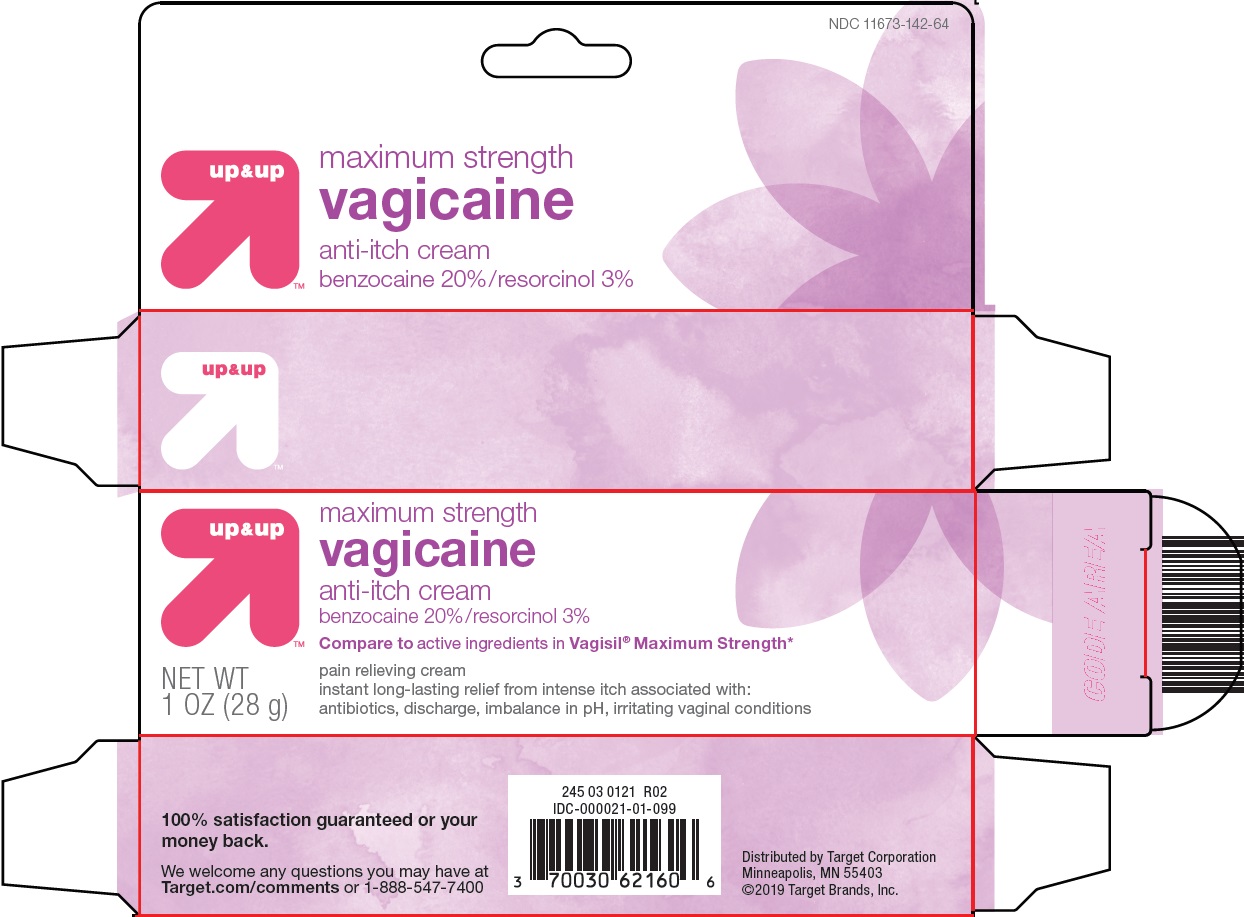
Combe Inc. v. Dr. August Wolff Gmbh & Co. Kg Arzneimittel, No. 19-1674 (4th Cir. Apr. 13, 2021)
Not only is this case a good demonstration that courts are willing
to give broad rights to marks based on similarities in descriptive elements (here the VAGI- formative in VAGISIL for preparations for use in the vagina), it
also has relevance for the current discussion of “use as a mark.” As Grace
McLaughlin argues in her recent Fanciful Failures, there are situations
where putting something in the trademark “spot” for a product doesn’t
necessarily mean that consumers will understand it as a mark. Perhaps
surprisingly, the district court and the court of appeals endorse precisely
that view here:
Further,
the district court appropriately gave little weight to generic Vagicaine products
sold by big-box retailers because consumers do not associate them “as a source-identifying
brand,” but instead recognize them as the “generic product seek[ing] to imitate
VAGISIL’s anti-itch cream.”



Wednesday, April 14, 2021
ICANN working group report on TM rights protection mechanisms in all gTLDs now open for comment
Link to report and comment mechanisms. The Working Group did not recommend expanding trademark claimants' preemptive/pre-registration notice rights to include broad matching or algorithmically generated close variants (misses a match by one letter, for example), but I expect that's still on the agenda for some proponents. One of the things that we found out in the process was that the most-searched-for "trademarks," of the set entered into the database maintained for the purpose of simplifying rights claims, were, in descending order: smart, forex, hotel, one, love, cloud, nyc, london, abc, luxury. That doesn't make the database all junk, but it does highlight that new rights protection mechanisms are always also new pathways to abusive claims, and those tradeoffs should be confronted head-on rather than assumed not to exist. The fact that the database is secret doesn't help (though much of its content could be inferred from registration attempts that receive claims notices).
Michael Jordan's ROP claims against ads in the SI special issue on him
I just heard this discussed on a GALA (Global Advertising Lawyers Alliance, recommended for international updates) event, and fortuitously I'd decided to get my hands on a copy of the actual special issue. One thing I hadn't realized from the cases is that there were only three ads in the entire special issue. The carmaker must feel good about its choices, but I have to say that if I were the other advertisers I might feel betrayed by SI and the supposed special sponsorship opportunity offered. It must be a percentage-of-ads-triggering-lawsuits record!
 |
| cover |

 |
| ad #2, opposite table of contents |
 |
| ad #3, inside back cover |
Substantiation issues?
This poster in a local dry cleaner's, produced by a larger association, gave me pause: I believe that dry cleaning likely destroys most viruses present ... but how many viruses are likely to be present? Does the claim of "effective, easier and safer" imply that this is a good way to decrease risks, especially covid-related risks now that we understand that most spread is aerosol-based?

Monday, April 12, 2021
Recent reading: on brands and sumptuary codes
Inspired by Kali Murray’s great comments at this past week’s Race and IP conference, some notes from recent reading:
Virginia DeJohn Anderson, Creatures of Empire: How Domestic
Animals Transformed Early America
Relevant to TM and sumptuary laws (addressed in Barton Beebe's excellent work), Anderson recounts how in
some places Native people were barred from marking their own livestock, but
punished if they killed a marked animal. In other places/times, both Indians
and colonists were required to use their own brands to identify animals, but
who got away with violating the rules was unsurprisingly racialized.
Relevant quotes (footnotes omitted):
In the Chesapeake, as in England,
livestock owners could protect their rights to mobile property by marking their
animals. A few seventeenth-century planters branded cattle on the horn, but
most colonists preferred to clip animals’ ears. Virtually every family had its
own earmark, involving some combination of slits, holes, half-circles, forks,
“fleur-de-lis,” or cropping. They registered their marks at the county court,
where the information was recorded to help in identifying strays. Colonists
regarded earmarks as a form of personal property to be handed down through the
generations. In 1658 when Thomas Gerard neglected to register his earmark and
William Evans then used it himself, an angry Gerard took the case to Maryland’s
Provincial Court. Gerard protested that his mark was “of a long standing,
although not heretofore recorded” and had been “injuriously taken” from him.
Since Evans had not yet used it, Gerard argued, the earmark ought to be
restored to its rightful, if negligent, owner. Far from finding this a
frivolous proceeding, Maryland’s governor not only heard the case but, in an
unusual move, polled the councillors for their individual opinions. Four of the
five officials sided with Evans, noting his compliance with the law. The
governor, however, found merit in Gerard’s emotional plea and asked Evans to
relinquish his claim. Evans did so, and a chastened Gerard promptly recorded
the mark in his own name….
The Bay Colony legislature tried to
minimize contention with a 1634 measure stipulating that trespassing swine
would be dealt with according to the rules of the town in which the animals had
been found, but this did not help aggrieved parties discover where the beasts
actually belonged. Thus in 1647 the General Court required owners to paint a
symbol with pitch on the flanks of livestock designating the town where they
lived. Just as earmarks labeled livestock as private property, these town
marks, or in some cases brands, identified them as animal members of a
community. Yet town marks also symbolized the attenuated control of each
community over its animals’ whereabouts….
Natick’s herds had grown sufficiently numerous by 1670 that its inhabitants [“praying Indians”] petitioned the Massachusetts General Court to assign them a town brand to distinguish their animals from those belonging to neighboring settlements. Although some form of the initial letter of a town’s name customarily served as a brand mark for English communities, magistrates designated a bow and arrow for Natick—an ambiguous symbol at best, suggesting that no amount of acculturation would fully erase from English minds the sense that Indians remained fundamentally different from colonists….
Indians knew that colonists
identified their animals by earmarks; whether native owners would be allowed to
do the same remained an open question for several decades. A story that
probably originated in Virginia and later circulated in England suggested that
by the 1650s earmarks had at least become a topic of conversation between
Indians and colonists. Informed by irate Englishmen that his followers had been
stealing hogs, a sachem reportedly countered that colonists had been just as
busy killing the Indians’ deer. The English reminded him that earmarks
identified the hogs as private property but deer displayed no comparable sign
of ownership. “Tis true indeed, none of my deer are marked,” the Indian coolly
replied, “and by that [you] may know them to be mine: and when you meet with
any that are marked, you may do with them what you please; for they are none of
mine.” Possibly apocryphal, the anecdote nevertheless fairly represented Indian
wit and addressed a topic of current interest to both parties….
Once Chesapeake-area Indians owned
swine, the virtues of marking them became self-evident. Unmarked hogs offered
tempting targets for colonial thieves, who needed only to clip the ears of such
creatures to claim them as their own. Given the propensity of colonists to
steal livestock from one another, this was no idle threat. Earmarks also
distinguished Indian hogs from feral swine. Native owners could have marked
their beasts at any time, but these marks would not provide genuine protection
until colonial authorities recognized them as legitimate symbols of private
property. Virginia’s legislature did not make such a concession until 1674
when, in a measure aimed at curbing Indian theft of English animals, it ordered
county courts to designate “a perticuler marke” for inhabitants of each native
town to use on their swine. Assigning a mark to towns instead of individuals
may have indicated that Indians regarded swine as common property, or simply
that the burgesses failed to make distinctions among native owners. Whether
earmarks actually enabled Indians to defend their animal property is unclear.
Oddly enough, when faced with the
same circumstances, New England magistrates adopted precisely the opposite
tactic. Although there is evidence to suggest that some Indians in Rhode Island
took the initiative to begin marking their swine, one by one New England legislatures
moved to prohibit the practice. Between 1666 and 1672, Rhode Island, Plymouth,
and Massachusetts all ordered that “noe Indian shall give any eare marke to his
swine upon the penalty of the forfeiture of such swine.” Indian hogs brought to
market had to have uncut ears; native sellers of pork likewise had to produce
intact ears to prove ownership. The ostensible reason for this policy was to
prevent Indians from profiting from stolen English swine, but its more obvious
effects were to complicate Indians’ market activity and to render Indian
animals vulnerable to unscrupulous colonists who merely had to mark the
creatures’ uncut ears and claim possession. There was also no way for Indians
to distinguish their swine from feral beasts that, if less numerous in New
England than in the Chesapeake, still roamed the woods and were regarded by
colonists as fair game. If Christian Indians in Natick, allowed to have a town
brand for their animals, were exempted from the earmark prohibition in
recognition of their efforts at acculturation, they would have been the
exception that proved the rule. New England magistrates otherwise denied
Indians use of the acknowledged symbol of legitimate ownership, as if it ought
to signify their progress toward civility rather than their hogs’ status as
private property.
Friday, April 09, 2021
Harvard Journal of Sports & Entertainment law seeking submissions
The Harvard Journal of Sports and Entertainment Law (JSEL) is accepting submissions for Volume 13, set to publish during AY21-22. Submissions for Issue 1 will be reviewed and accepted through August 2021. JSEL is looking for articles on topics related to sports and entertainment law, and especially encourages law professors to send in articles. We want to err on the side of encouraging submissions, so if you have a nearly completed draft that just needs to be fleshed out a bit more, we would prefer to be able to review it.
Submissions should not exceed 25,000 words, including footnotes. All manuscripts should be submitted in English with both text and footnotes typed and double-spaced. Footnotes must conform with The Bluebook: A Uniform System of Citation (21st ed.), and authors should be prepared to supply any cited sources upon request. All manuscripts submitted become the property of the JSEL and will not be returned to the author. In addition to the manuscript, authors must include an abstract of not more than 250 words, as well as a cover letter and resume or CV. Authors also must ensure that their submissions include a direct email address and phone number at which they can be reached throughout the review period. The journal strongly prefers electronic submissions through the Scholastica online submission system (or ExpressO if available). Submissions may also be sent via email to jselsubmissions@gmail.com.
Thursday, April 08, 2021
Reading list: native ad disclosures that work?
Eyal Peer & Dalia Shilian, Improving Consumers’ Ability To Detect Native AdvertisingUsing Identified Disclosure:
Native advertising of online content, such as articles embedded within news websites, is a covert attempt by marketers to affect consumer attitudes and behavior. Because such marketing can have detrimental consequences for consumers, regulators worldwide have begun mandating that disclosures accompany marketing content. Despite these mandated disclosures, studies repeatedly find that consumers still fail to detect native ads even when they include various disclosure labels. We argue that the failure of these and other such disclosures, (e.g., software licensing), results from consumers becoming so habituated to these notices that they fail to recognize or use them effectively. We propose an improved form of disclosure for native ads requiring explicit identification of the name of the company or marketing agent paying for the non-original content. Identified disclosure can be more effective because it is more salient and can vary between ads and platforms. In two studies, we show how adding identified disclosures to native advertising increases detection rates significantly and consistently. We also discuss important implications arising from using smart disclosures for consumer protection.
Payoff: at the end of the article, the authors note that
Israel’s consumer protection authority has adopted its recommendations as a
native advertising disclosure standard.
Wednesday, April 07, 2021
a handful of Google v. Oracle thoughts: categories, microworks, and market circularity
A couple of small Google v. Oracle thoughts: The majority clearly says that, as with other categories of protected works, distinctions can be made within the categories, drawing lines “among” computer programs, books, and films. Not all literary works are the same; Infinite Jest gets a different kind of copyright protection than my emails do. Likewise, while the recent Warhol case at times seems to imply that the derivative works right overrides fair use, the same GvO passage says that copyright provides both reproduction and derivative works rights, but also subjects all works to fair use.
One of my minor obsessions is “courts that reproduce the entire works in suit in the opinion”—whether they find for the plaintiff or the defendant, and whether they rule on substantial similarity or fair use, they never even consider whether it’s ok to do so. It’s obviously a good idea for purposes of understanding what the law is—a description of a song or picture will never allow a subsequent reader to understand what the protectable expression in the song or picture was—and I think obviously fair, but it’s amusing to me that it happens without anyone pointing out that this must be in reliance on fair use.
Anyway, in GvO, Justice Breyer instead reproduces an entire short story, which was just minding its own business and had nothing to do with the case, in two different languages no less. And he does so in the course of suggesting that the scope of fair use would be more limited with respect to that short story than to a sentence of the same length in a longer novel. I think that’s a troubling conclusion—Justin Hughes has written very well about the problem of “microworks” and the right result would probably be to say that the book of stories from which that story comes should be the proper unit of analysis for factor three. Update: based on the statutory language, any claim against the US could not be brought under the CASE Act but would have to proceed in the Court of Claims. But now I ask: Can casebook authors use this portion of the case without fear?
On factor four, it was nice to see acknowledgement that (1)
the licensing package Oracle offered was very different from what Google
ultimately copied, and thus didn’t show market harm from what Google
actually copied and (2) this was a circularity problem, which should be
avoided. Also, relevant to the “mixed question of law and fact” issue, the
majority says: “the jury’s fair use determination means that neither Sun’s
effort to obtain a license nor Oracle’s conflicting evidence can overcome
evidence indicating that, at a minimum, it would have been difficult for Sun to
enter the smartphone market, even had Google not used portions of the Sun Java
API.” I think that means that the jury verdict must be interpreted to have
favored Google on factor four, resolving the factual part of factor four in its
favor. I am not sure what that means for summary judgment in future cases,
especially if factor one remains more of a legal question.
Wednesday, March 10, 2021
Fanciful Failures: Keeping Nonsense Marks off the Trademark Register
I'm excited to announce the publication of this Note by my former student Grace McLaughlin, which addresses the fascinating topic of marks optimized to get into Amazon's system rather than to function as indications of source for humans. Highly recommended!
Wednesday, February 24, 2021
Global Advertising Lawyers Alliance (GALA) Webinar – “Hot Topics in Advertising Law in North America”
I always enjoy these and recommend the free GALA webinars to those interested in advertising law; I joined in progress due to some technical difficulties on my end.
Joseph Lewczak: FTC v. Teami ($15 million settlement, all
but $1 million suspended), where there were other bad things like fighting
cancer claims and also nondisclosure by influencers like Cardi B. FTC does not
want disclosure below the “more” expansion link, if any; it has to be above so
anyone will see it even if they don’t seek out more info.
Kelly Harris: In Canada, Competition Bureau brought
enforcement action against FB for misleading privacy representations even
though it’s a free service. New bill: regulating online programmers like
Netflix, though UGC will be excluded (but might be included if commissioned for
or developed by the service). Regulator will impose “conditions of service,”
though not quite traditional broadcaster licensing.
Jose Antonio Arochi: Mexico doesn’t have specific
regulations. Twitter reviews for Sephora where consumers were demanding money
for allegedly expired products and saying they couldn’t get refunds from
Sephora. Apparently Consumer protection agency called Sephora to clarify the situation—there
was no litigation.
Melissa Steinman: Shop Safe Act introduced trying to stop
fakes in ecommerce; didn’t go through (attempt to create contributory liability
for platforms) but will be reintroduced, so keep an eye out. Theme for this
year: platform liability.
Reviews: Vitamins Online v. Heartwise: Manipulation of reviews
actionable under Lanham Act, including manipulating “helpful” votes and giving
people free stuff for positive reviews.
Maryland: First ever digital advertising tax, on gross
receipts. Vetoed by governor but overridden; lawsuit brought by platforms like
FB and Google—wait and see. NY, DC, WA are considering similar taxes so it’s a
trend to watch.
Harris: In Canada, the provinces regulate consumer
agreements online. Certain procedural requirements: must be able to see &
save a copy of the disclosures/contract w/in 15 days, via email receipt for
example. Certain practices are limited: unilateral changes of material elements
like price. Failure to comply: right to rescind; damages, including on class
basis and class actions in Canada are rising, especially Quebec and B.C.
Competition Bureau is very interested in digital economy. Drip pricing (adding
fees after initial disclosure) is an area of significant interest: StubHub,
TicketMaster, car rental companies that charge “environmental” fees.
Substantiation of “regular” price claims is also a big issue.
Arochi: Again, Mexico has nothing specific to online shopping,
just consumer protection and COFEPRIS (Mexican FDA), which does regulate
advertising. Suspended 34,000 webpages during pandemic of people trying to
publicize products that are health-related or make health claims. Permits for
certain products are required in advance: health related, supplements,
food/beverage, pesticides, alcohol/tobacco. Also new disclosures for high-fat
etc. foods with big labels on the front of the package.
Jeff Greenbaum: Don’t assume that online disclosures are
clear and conspicuous, even if “everyone is using them.”
Harris: Canada: disclosures can clarify but can’t correct a
misleading main claim or contradict the main claim. One click away is likely
low risk of regulatory enforcement, but ensure disclosures travel across
platforms and ensure consistency in disclosures in multiple places and/or
media: that was at issue in recent self-regulatory competitor challenges. This
is an issue of coordinating teams that might be in charge of different media.
Arochi: Mexico enforcement is more likely to target different
products that become a problem. There aren’t as many cases day by day and that
lack of emphasis from the authorities affects behavior.
Lewczak: consider that disclosures need to be fit to medium
and consumer’s consumption thereof: disclosure in YT video description may not
be enough. Not a lot of US action on sweepstakes. Covid concerns: don’t be tone
deaf; giving away cruises, event tickets, and other in person prizes can be
risky and generate bad PR. Don’t require physical presence for entry or award
of prizes. Do your rules have a force majeure type limit that allows
covid-related flexibility? Avoid unintended sweepstakes with attempted
charitable giveaways to doctors, restaurant workers, etc.; may require
disclosures and charitable registration: Draper James teachers giveaway. Loot boxes
are on the horizon.
Harris: Winner of contest must complete test of skill; cases
vary on what’s enough, but 4-part, multi function math question with a time
limit. You can do it on entry or just for the winner; depends on structure of
promotion. Also: no forcing purchase to enter, but can say, “submit an original
essay.” Quebec: registration requirements (doesn’t apply below a certain
monetary threshold, and to non-advertising promotions like a contest for
employees) + French language availability. A minimum disclosure is required in
all advertising, adequate and fair disclosure: number and value of prizes and
other material facts—entry dates, eligibility requirements, geog. distribution of
prizes if any. Can be difficult depending on how contest structured.
Arochi: Interior Ministry and Consumer Protection Agency require
permits for some sweepstakes/contests. TV contest for example requires a
specific agency permit. Chance-based contests may not need a permit. Division
of authority may not be clear so may have to ask both agencies and then pick
one to apply to.
Steinman: Lots of US action on country of origin. NPRM, July
2020 on Made in USA claims, codifying current enforcement policy and adding
ability to seek civil penalties: need all or virtually all of manufacture, or
component parts/ingredients, to make Made in USA and related claims. This can
include use of flags, eagles. But can use qualifiers like “made in USA of
domestic and foreign components.” “Designed in US” can also work. California
has a 5% foreign content requirement. FTC also challenged “Danish cookies” that
weren’t made in Denmark.
FTC v. Williams-Sonoma: $1 million penalty and prohibition
on unqualified US origin claims without being able to substantiate them. FTC v.
Chemence, Feb. 2021: $1.2 million for violation of existing order, highest
monetary judgment ever for Made in USA case. Made in US: final
assembly/processing and all significant processing in the US, and all or
virtually all ingredients/components are made/sourced in the US. Assembled in
US: product is last substantially transformed in the US, its principal assembly
takes place in the US, and US assembly operations are substantial.
Harris: Made in Canada standards are similar: last
substantial transformation in Canada; at least 51% of total direct costs of
producing/manufacturing occurred in Canada, and accompanied with appropriate
qualifying statement (e.g. made in Canada with imported parts). Moose Knuckles
parka, 2016, lacked qualifying statement (made with Canadian and imported components);
settled for $750,000 donation. Product of Canada: like made in Canada, but all
or virtually all of the total direct costs (98%) must be Canadian.
Arochi: Mexico has one of the highest numbers of
Appellations of Origin; more than 8 processes for obtaining certification for GIs.
Hecho in Mexico is a certification; must be (majority) produced in Mexico, not
precisely corresponding to AOs or GIs, but permit coming from Mexican
government.
Greenbaum: Environmental marketing: Little FTC enforcement
but some states have enacted more stringent requirements or made Green Guides
into enforceable rules. Mattero v. Costco: class action over Costco’s “environmentally
responsible” claims for detergent: were claims sufficiently qualified/were
other benefits communicated: court denied motion to dismiss. New administration
and revision of Green Guides may be an opportunity for FTC to change its
approach.
Harris: Canada is similar; no specific green marketing laws,
just Competition Act/provincial statutes. Federal guidance on green claims like
recyclable exists, and self-regulatory code/guidance specific to environmental
claims. Ongoing consumer class actions regarding pesticide in supposedly “organic”
medical cannabis. All 2020 self-regulatory consumer complaints were upheld,
including against a joke about benefits of saving water, because water scarcity
is a serious issue and implication that product could help was found misleading—humor,
puffery defenses rejected. Also home fragrance claimed to have “natural”
ingredients—some ingredients were natural, but no evidence that all
scent components were. Exaggeration of environmental benefits also were
challenged. Grain Farmers of Ontario: depicted farms and farmers under stress, food
supply shortages, empty grocery stores: condemned as inappropriate
fearmongering.
Arochi: Also enforced by consumer protection agency
(PROFECO) and COFEPRIS. CONAR is the self-regulatory body.
Taste and cultural concerns:
Lewczak: BLM and #MeToo—but not clear that any regulator or
self-regulator will do anything. Major TV networks have their own guidelines
against violence, antisocial behavior, oversexualization, stereotyping. Third
party organizations also complain: PETA for animals, MADD for alcohol, other
rights groups. Frida Mom’s ads showing reality of postpartum recovery rejected
from 2020 Oscars for being too graphic—at least get some PR benefit from that.
Harris: significant Canadian regional differences. Claims
likely understood more literally by regulators. Supreme Court of Canada uses
the “credulous, hurried and inexperienced” standard. Can’t demean, denigrate,
disparage: one complaint can bring you before Ad Standards. Canadianisms to
watch out for: mostly metric except for height and weight of people; Celsius
for weather. French exists outside Quebec. Spelling is different: colour,
behaviour, honour, centre, etc.
Arochi: Spanish is the official language. Regional
differences are significant; a federation with 31 states and Mexico City. 10th
most populated country in world, most Spanish speakers. Measurements are always
metric/Celsius for weather. Can start claims before consumer protection agency
without disclosing identity, which allows competitors to bring claims strategically.
Covid enforcement
Steinman: FTC recorded more than 130,000 complaints in first
half of 2020; issued more than 300 warning letters with 95% compliance rate; has
brought some cases against covid treatments. Even Purell received a warning
letter. Also price gouging cases. Quality King raised prices for Clorox etc several
times and was forced to disgorge profits + penalty; 3M has also been active
against mask resellers (or counterfeiters). Privacy is also a hot topic: CCPA
in California is now effective [or as Eric Goldman might say, it’s in effect].
First class action under this has been filed, against Ring (plaintiffs include
people who were hacked which they found out when someone talked to their
daughter).
Harris: Canada is seeing new rights, Consumer Privacy Protection
Act—against automated decisionmaking, deidentified data; data portability/erasure;
Quebec is also updating his regime.
Arochi: New food labeling law in Mexico, against use of
cartoons on foods with excess fat etc. Black stamps on products that qualify;
also new guidelines on medical marijuana.
Monday, February 22, 2021
WIPIP SESSION 9.B. — Copyrights
Peter Lee, UC Davis School of Law
Autonomy, Copyright, and the Structure of Creative Production
Theory of the firm would suggest more consolidation within
the firm in creative industries than exists. But creative autonomy is one
reason that people would prefer not to be employees. © also has a role by
allowing credible transfers. Big caveat: © facilitates contractually mediated
vertical disintegration, but it does not guarantee creative autonomy; bargaining
power of artists matters a lot. As digital distribution increases, © will still
play an important role in promoting creative autonomy not by facilitating vertical
disintegration but by facilitating top-down vertical integration, bypassing
traditional intermediaries. But power disparities will continue to matter for creative
autonomy.
Derek Miller: Historically, where does © affect the firm?
How do you show the causal story? Not all works are vertically disintegrated—the
Marvel Universe is horizontally structured, controlled by WFH. Actors are
disintegrated from the Hollywood system they used to live under but have
basically no © power—so how do they fit in?
A: don’t have much historical lens. Some other work suggests
© leads to greater autonomy. Composers may have broadened composition styles in
response to ©/market participation. [In chat, Derek Miller finds those studies
unconvincing; © control by composers was difficult/complex, and they built
other forms of patronage, often by subscription.] Disney is an outlier. Did
acquire Marvel, which started independently. Actors: Justin Hughes has a really
nice piece on actors’ ©able contributions, but they don’t often leverage them to
enhance autonomy. There are other factors to autonomy, including powerful
guilds that can serve that function.
Eric Goldman: consider the entire distribution chain and
what’s going on in terms of vertical/horizontal integration in each element.
YouTubers: distributor/author relationship is entirely different than old
model, and not clear © is the driver.
Jessica Silbey: Consider whether Tasini expansion of author
rights led to more or less dis-integration. Different ideas of how private
ordering works in © may affect the story.
Betsy Rosenblatt: consider, e.g., how over the top TV
services are affecting industry structure. Relationship to social justice? Has
a piece on Nipsy Hustle and ©--creative autonomy piece would fit well into
that, particularly for musicians in the age of the 360 deal.
Lisa Macklem: Consider foreign distribution as well, and
Lemley’s piece on how Disney is creating new scarcity for the first time in a
while.
Giovanni Maria Riccio, University of Salerno (with Federica
Pezza)
Conservation and Restoration of Street Art: Striking the
Line Between Protectable Common Goods and Inadmissible Musealization of Urban
Spaces
Art in public spaces: Not “public art” a la totalitarian
regimes, but works in public spaces that are freely accessible to the public
regardless of the form of expression. Site specific, connected to local
communities, with political or social meaning. Questions: who owns ©? Who owns
the work? (Options: owner of the support, e.g. the building; the commissioning
party; the municipality; the people who “live” the work?) What are options for
conservation, restoration, and preservation? Should consider public space art,
in some circumstances, as a common good, with ownership interests at least in
part in people who live in the area. Focus on the work and its meaning more
than on the subjects and their rights.
Pezza: Civil law legal systems don’t require fixation; UK CDPA
requires works to be “recorded”; US requires fixation. Edge cases: makeup, assemblages
(Oasis cover photo shoot case), carved ice. UK has a closed list of subject
matter; you can’t protect something that isn’t on the list. The assemblage of
objects in Oasis—difficult to ID what the subject matter was.
Unclean hands? European theory: Commission of unlawful act
[like placing art w/o permission] may not result in loss of patrimonial
benefits deriving from exploitation of the work. Failure to grant © would
sanction the author 2x, in addition to the typical penalty for the crime
committed. US may apply unclean hands: Villa v. Pearson Education (N.D. Ill.
2003). But practical differences may be narrow.
Riccio: Consider Convention Concerning Protection of World
Cultural Heritage, UNESCO. Intangible cultural heritage includes artefacts and
cultural spaces associated therewith that communities, groups, and in some
cases individuals recognize as part of their cultural heritage—should not be
excluded from access. Is VARA the only possible solution? Time consuming for
owner, transaction costs are moved on owner though they didn’t commission the work;
often not easy to find author; all choices in authors’ hands. Proposal: before
proceeding with destruction or alteration of work, owner should communicate to
public authority which should have a period of time to decide whether the work
should be protected or not. Silence should be consent. Decisions should be made
by experts, art curators, artists, local residents. Public calls for street art
made by public entities should include information about
conservation/restoration.
Zvi Rosen: reminded him of riparian rights—not at all what you
propose, but might be interesting comparison.
Justin Koo, University of the West Indies, St Augustine
Protecting Works of Mas – Contemplating the Protection of
Carnival Costumes
Are Carnival costumes w/in scope of ©? “King” costumes are
the most elaborate and fanciful. More typical, esp. for women: a swimsuit with
decorations attached; can get more elaborate with feathers and design elements.
Crosses the originality threshold in many cases. But is it the right type of
subject matter for ©? © attaches without registration and endures for much
longer than design rights. Star Athletica: can it be conceived of as
something other than a costume?
Tyler Ochoa: Thinks that these were probably easily
registrable even pre-Star Athletica because of nonfunctionality. [But is
there separability?] But what is the problem we’re trying to solve here—what harm
will happen if we don’t protect these costumes with ©? Not sure he sees a huge
problem.
A: He’s interested in whether it meets the standard, and
also whether it would create a problem with future costumes/a licensing culture.
Rosenblatt: worth asking who © would benefit, which might
not be anyone in Trinidad—the risks you discuss seem greater than benefits. Enforcement
becomes a problem when it contradicts a history/culture. Would also be
interested in what the cultural norms are: are there anti-copying/divergence
expectations? Are most of the producers doing individual hand made works or are
there big commercial producers?
A: it’s all decentralized, independent designers and
creators. Every year there are disputes, but never any litigation.
Rosenblatt: shaming based? Yes.
A: also note that with the Stormtrooper Lucasfilm decision
in the UK, the US approach is not guaranteed.
Derek Miller, Harvard University Faculty of Arts and Science
On Typographical Copyright, with Examples from Modern Drama
Typography includes layout, spacing, font; format is physical
like book, ebook. Typographical variation: headings, italics, small caps, even
the numbering of a page. Experimental scripts have even more variation. Plays that
are expansive in typography often involve author specified layouts, that are
reproducible in other formats. A “spell” by Suzan-Lori Parks; is “elongated and
heightened (rest) … has a sort of architectural feel.” The spell involves headers
with character names and no dialogue, repeated, e.g. Lincoln/Booth/Lincoln/Booth/Lincoln/Booth
with each name on a different line—but if reproduced incorrectly they can give
the wrong impression. Plays often circulate in different editions—reading editions,
acting editions, etc. Very few publishers print in all these formats. By
defining layouts, publisher can affect reception of a play. Modern ereaders can
strip away typography/allow individual readers to configure for their
preferences. What should a typographically conscious playwright do? Can we
reinvent IP norms to support their artistic intentions. Should permit some
typographical fluidity as texts change meaning but also allow authors to specify.
HTML/CSS can be a model—adaptable but typographically conscious. CSS allows reintepretation
of values such as distance b/t elements while retaining the relationships among
different parts. © currently focuses on html only, text of the work. But we can
protect a work as CSS too if it’s describable in an abstract, reproducible form
like CSS.
Eric Goldman: personal passion, emojis, might play into
this. Does PDF solve this by allowing publisher to control display? It does
take things away from the reader. Goes to some of the underlying Qs about who
gets to decide how they consume the content. It’s ePub format that allows users
to customize, so maybe there are some works that shouldn’t ever be in ePub.
Rosenblatt: selection coordination and arrangement is already
©able—maybe no change is needed.
A: has no examples of assertion. But typography can be
entire content of expression—imagine a script that is just five versions of the
Gettysburg address with different emphases each time. [I wonder whether that’s
actually about the typography; I would consider the typography the fixation of
the decisions about which words to emphasize. But maybe my definition of
typography is too constrained!]
Annemarie Bridy, Google & Yale Information Society
Project
Testing the Server Test: Embedded Images and the Changing
Scope of Online Public Display
Troubling developments in case law. Server test was adopted
in 9th Circuit in 2007. The analytic challenge: what the user sees
and what’s going on under the hood are very different things. Internal v.
external perspective: how should the law see it? Server test is internal perspective.
The Leader’s Institute v. Jackson, Texas 2017: departing employee,
messy case; © counterclaim alleging that TLI “framed” Jackson’s company’s whole
website, making it appear that content at Jackson’s site originated with and
belonged to TLI. TLI sought sj in reliance on server test. Court disagreed: on
the facts, Google just provided links, and the user was “essentially navigating
to an infringing website”; court was troubled by the framing being
intentionally misleading, as opposed to being clear that the content didn’t
belong to Google. This is weird b/c the conduct under the hood was the same. On
the law, the court thought that causing someone else’s content to be visible “on”
a website could be public display even when the transmission originates from
somehwere else.
Higher profile: SDNY, Goldman v. Breitbart, involving an
embedded tweet containing a photo copied w/o permission from Snapchat.
Subsequent SDNY cases involve Instagram embeds: Sinlair v. Ziff Davis (now
settled), McGucken v. Newsweek, Boesen v. United Sports Pub’ns. Either followed
Goldman or didn’t reject it (e.g. Ds didn’t even rely on server test in
the first two and in Boesen they won on fair use). Instagram has now said that its
terms don’t provide sublicense for embedding.
Free Speech Sys. v. Menzel: InfoWars (run by FSS) ran a post
about Hungry Planet, featuring nine images from p Menzel’s book. Embedded from
a website that was hosting and diplaying them with Menzel’s authorization. FSS
filed a declaratory judgment action seeking a declaration of noninfringement—in
the 9th Circuit, but the court found both factual and legal problems
w/ FSS’s reliance on the server test. Even if the server test applied, wasn’t
clear InfoWars wasn’t actually hosting the images. Legally, there are cases
from other circuits refusing to apply the test outside the context of search,
and FSS cited no 9th Cir. authority applying it beyond search. Not
good! Similar issues in Europe, with neighboring right for publishers now
putting pressure on ability to link to content on 3d party websites.
Wu: so you want to do only secondary liability? How would
you deal with the Jackson situation?
A: that would be non actionable under ©. There might be
other theories, but not ©.
Wu: and these other scenarios? Normally putting a copy
online with permission doesn’t make it freely copiable.
A: But the Ds here aren’t copying! The Q is about in line
linking, not copying. EU says it’s “communication to the public,” and there are
Qs about what constitutes the intended public. So they ask whether it’s a
different or new public. We used to assume that something on the non paywalled
internet was for the public as a whole. But these cases have a different flavor.
Consumptive uses do feel different.
Sean Pager: Another potential distinction: the link embedded
in a way that the photo pops open immediately, no secondary click required. Not
like an email link that you have to click on to load a photo (though different
email providers do this differently).
A: but that’s the same thing as search.
Pager: but the user does the search and then clicks on the
thumbnail to load the inline image. In Goldman, the user doesn’t direct
anything; something just comes into their Twitter feed.
A: That’s the same as in Aereo. [The user chose who to
follow]
Peter Mezei in chat: In VG Bild-Kunst, the AG focused on “automated”
access, no click required, for embedded content and opined that such uses
needed authorization. Awaiting eagerly ECJ judgment.
Subscribe to:
Posts (Atom)



 Posts
Posts


