This story about using ringtones as self-expression is another illustration of how copying serves the production of individuality in modern society. Of course, many ringtones are licensed using a blanket scheme, so both copyright holders and cellphone holders can be happy. I wonder what would happen if it became widely known that some reviled person used a particular ringtone? Would the copyright holder revoke his/her license, and if so, could the outcast still continue using it? (I don't know whether a reproduction is made each time the ringtone is used. If not, there might not be any exclusive right implicated, unless the ringtone came from a dramatic musical work like Sweeney Todd and the phone went off in public. I don't have a ringtone, but if I did, The Ballad of Sweeney Todd would be my choice.)
Hey, that reminds me: Is a cellphone "a single receiving apparatus of a kind commonly used in private homes" such that it qualifies for the homestyle exemption for public performances in sec. 110(5)? That wouldn't help me with Sweeney Todd if the ringtone is stored on my phone, but if it were transmitted to me each time by my carrier, it seems like 110(5)(A) applies.
Thursday, July 13, 2006


Wednesday, July 12, 2006
Listerine effective against class action
Pfizer Inc. v. Superior Court, --- Cal.Rptr.3d ----, 2006 WL 1892581 (Cal.App. 2 Dist.)
This was a follow-on class action based on Pfizer’s ads for Listerine indicating that it could take the place of dental floss for indifferent flossers. (See previous discussion here.) The trial court certified a
After Prop. 64, each member of the putative class must have suffered injury in fact and lost money or property; the fact that the class representatives suffered injury in fact is insufficient – otherwise their claims would be atypical and not representative. Unless an UCL action is brought by the Attorney General or local public prosecutors, the likelihood of harm to the public is not sufficient standing to sue. Only actual harm will do.
Moreover, inherent in the “injury in fact” requirement is actual reliance on the false or misleading representation at issue. A federal case, Anunziato v. eMachines, Inc., 402 F. Supp. 2d 1133 (C.D. Cal. 2005) (discussed here), held that Prop. 64 had not added a reliance requirement to
Thus, the trial court’s certification of a class of all people who purchased Listerine in
The court added that Prop. 64 does “dramatically restrict[]” the UCL and False Advertising Law, precluding actions based on claims for “short weight” (when the consumer doesn’t specifically look at the listed package weight, about which the maker lied) and the like. But the court had to take the statutory language as it was. “Given the new restrictions on private enforcement under the UCL and the FAL, enforcement of these statutes in legitimate cases is increasingly the responsibility of a vigilant state Attorney General and/or local public prosecutors.” The court also pointed out that under
Comment on the underlying merits: It seems to me that the real problem here is the original Lanham Act case finding Pfizer's ads false and misleading. Most people, like me, are bad flossers; Listerine is at least as good as bad flossing at removing plaque, and may be better. So most people got a lot of truthful information from the ads. That's why detrimental reliance is so unlikely: Only people who were good flossers and abandoned floss for Listerine would have been harmed.
Tuesday, July 11, 2006
Georgetown Law faculty blog
I have a post up at the Georgetown Law Faculty Blog about child custody and the First Amendment, discussing a recent article by Eugene Volokh.
Jews for Jesus: 'tis better to use others' trademarks than have your own used
This story discusses JFJ's conflict with the New York MTA over JFJ's use of subway symbols in its ad campaign. You can see the revised campaign, which uses mock subway tokens and an altered subway photo, here. Of further potential interest are several of JFJ's downloadable broadsides, which include one that says "CSI: New York" on the front without further identification, others that feature NY sports teams, and one that will interest Susan Scafidi -- it uses counterfeit goods to argue in favor of accepting the JFJ message, since G-d is the "GREATEST DESIGNER" who "offers us a wardrobe with a label we could never afford on our own."
Monday, July 10, 2006
Recent reading: bank regulation and consumer protection
Keith R. Fisher, Toward a Basal Tenth Amendment: A Riposte to National Bank Preemption of State Consumer Protection Laws, 29 Harvard J. L. & Pub. Pol’y 981 (2006): Prof. Fisher is a
Authors don't own their books
That's the title of this post by an author about a bad review, and the thoughts about inability to control interpretation it inspired.
Sunday, July 09, 2006
Cold sore treatment finds no relief in Third Circuit
 GlaxoSmithKline Consumer Healthcare, L.P. v. Merix Pharmaceutical Corp., 2006 WL 1792856 (3rd Cir.)
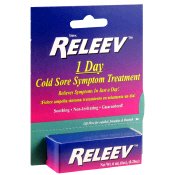
 Glaxo makes Abreva, an OTC pharmaceutical approved by the FDA for shortening the healing time of cold sores. Merix makes Releev, a cold sore product, and sells it for roughly the same price. It’s a combination of a common topical antiseptic and the herb Echinacea, for which Merix has two patents. Drug stores often stock Releev and Abreva together, and they are the only two cold sore products selling in their price range. Releev generates annual revenues of several million dollars. Glaxo sued for false advertising under the Lanham Act (and
Before suing, Glaxo complained to the FDA, which issued Merix a warning letter. Glaxo also brought a challenge before the National Advertising Division, which ruled in Glaxo’s favor on all its claims. When Merix appealed, Glaxo abandoned NAD and sued.
The allegedly false advertising included: Releev has been "clinically proven" (a) to be a "1 Day Cold Sore Treatment" and (b) to "prevent outbreaks"; Releev is endorsed by the
The district court concluded that both sets of claims were false. The only claim Releev can truthfully make is symptom relief. The new claims still implied a cure by characterizing Releev as a “1 Day … Treatment” and showing before and after photos, not to mention by establishing continuity with the old packaging and suggesting that the old claims were therefore still valid. (Though the court doesn’t specify, I think this is falsity by necessary implication: If it weren’t implying a cure, it couldn’t promise time-limitation of treatment of the symptoms of pain and tingling caused by cold sores. Given that cheaper immediate topical anaesthetics are on the market, it's also ridiculous to interpret the claim as "use this product today and your cold sores will stop hurting tomorrow.")
The district court identified the “prevents outbreaks” language as a false establishment claim, because the words were in close proximity to the words “clinically proven,” but there was no clinical evidence to support it. Advertisers have to be very careful about separating clinically proven claims from nonproven claims; courts often proceed as the district court did, treating the claim as explicitly made rather than requiring evidence that consumers would understand “clinically proven” to encompass all nearby claims. And, as it turned out, “clinically proven” was false for even the direct claim of one-day treatment. Merix’s clinical trials were tiny and unreliable.
Releev’s package also included claims that “Dr. Ken Thompson at the Clinical Microbiology Laboratory at The University of Chicago” had tested Releev and found it effective. Thompson had conducted in vitro tests and found Releev effective against certain herpes strains, but in vitro testing isn’t reliable evidence of in vivo effect. Moreover, Thompson hadn’t consented to be named, and the court found that using his name so prominently to support Releev’s claims constituted false endorsement. (I’m a little leery of the way this holding was worded: If the tests were reliable evidence of efficacy, surely Merix could have truthfully reported their results without liability. Otherwise makers of generic drugs wouldn’t be able to make claims based on studies sponsored by the original maker. Since the studies were not reliable evidence that Releev worked, however, making claims about them was misleading, and the misleadingness was increased by Thompson’s credentials.)
Releev also prominently touted the fact that it was registered, regulated or approved by the FDA as a cold sore drug. There was conflicting testimony about whether Releev’s active ingredient was covered by an FDA OTC Monograph for treatment of cold sores. The court assumed that Releev was covered, but found these claims, too, misleading, since the monograph only covered symptom relief, not Releev’s treatment claims. Releev also wasn’t registered with the FDA, and its claim to be registered violated FDA’s own rules. (The court didn't mention preemption.)
Separately, the district court found that the use of the brand name “Vira Medx” “conveys to consumers, falsely, that RELEEV is a medication that has been proven to cure cold sores by killing viruses.” Merix proposed to change the brand name to VIMDX.
Merix made a whole lot of other false and misleading claims, which I won’t detail, only to say that they were specific, extravagant, and totally unsubstantiated. The district court thus applied the Third Circuit rule that totally unsubstantiated claims are false, without the need for further evidentiary submission by the plaintiff.
Recalling that this ad strategy bought Merix millions of dollars of revenue even when there was a competitor confirmed by the FDA to work, that consumers were in no position to evaluate the competing claims, and that self-regulation was a failure, I’d like to suggest that this is a case where the Lanham Act served a valuable social function.
Related to a recent post on this blog: the district court had reasoned that Glaxo was suffering irreparable harm not just from sales diversion, but from the likelihood that, “when customers found that Releev did not live up to its promises, its failures might also tar the reputation and goodwill of Abreva, which is the only other cold sore product in the same price range.” The court of appeals, implying possible discomfort with this theory, found that the sales diversion evidence alone was enough to support irreparable harm and get a preliminary injunction.
Saturday, July 08, 2006
Infringement on a Plane?
Cobras in the Cockpit: based on a "fictional movie" (as opposed to an actual movie?), you play the snakes.
While the idea is so high concept as to be unprotectable by copyright, the creator has also hedged his bets -- there are snakes in the hedges -- by calling the game "a parody of all the snake movies you've ever seen, plus all the airplane movies you've ever seen." Ah yes, all those many snake-and-plane movies.
What about trademark infringement? Not scarily likely, since people would expect an official Snakes on a Plane game to be more like Snakes on a Plane. And probably have some sort of embedded chip that would include Samuel L. Jackson's voice. Dilution? Tougher question, unless resolved by calling this a noncommercial commercial use in commerce.
While the idea is so high concept as to be unprotectable by copyright, the creator has also hedged his bets -- there are snakes in the hedges -- by calling the game "a parody of all the snake movies you've ever seen, plus all the airplane movies you've ever seen." Ah yes, all those many snake-and-plane movies.
What about trademark infringement? Not scarily likely, since people would expect an official Snakes on a Plane game to be more like Snakes on a Plane. And probably have some sort of embedded chip that would include Samuel L. Jackson's voice. Dilution? Tougher question, unless resolved by calling this a noncommercial commercial use in commerce.
Friday, July 07, 2006
Must be seen to be believed
The U.S. Copyright Code, in verse. A for effort, B for rhyme. Best stanzas:
302
A copyright lasts seventy years
After you're dead
Or ninety years generally
If they can't find your head
303
If written before '78
But published only since
Go back to the last section
And try not to wince
My comment:
I love you, internet.
302
A copyright lasts seventy years
After you're dead
Or ninety years generally
If they can't find your head
303
If written before '78
But published only since
Go back to the last section
And try not to wince
My comment:
I love you, internet.
Thursday, July 06, 2006
Virtual infringement
The Trademark Blog discusses the role of trademarks in the virtual reality game Second Life. (Other takes; see also Counterfeit Chic on Sims Oscar knockoffs.) People buy and sell “Adidas” and other branded apparel for their virtual avatars using currency that has real cash value, but it’s not authorized by the trademark owner. Now American Apparel is opening up a store in Second Life, and trademark battles may not be far behind.
We can compare the issues here to the Marvel lawsuit against City of Heroes: If individual game players create costumes that resemble trademark-protected Marvel heroes, they haven’t engaged in use in commerce. If individuals in Second Life deck themselves up in virtual Versace, neither have they. But if they sell Versace to other avatars, there is a use in commerce and then other trademark considerations come into play.
Random thoughts:
There are few quality control issues: Your virtual Ford will work as long as the rules of the game allow it. There is no shoddy counterfeiting, only shiny counterfeiting.
The discussion in the links seems to assume the goods are the same, but are the goods really all that similar? A picture of a shirt isn’t a shirt. It may even be art, and protected by the First Amendment, like Warhol’s pictures of
What are reasonable consumers likely to think? The usual confusion-based justification for barring sales of goods the buyer understands to be counterfeit, unauthorized, or otherwise unaffiliated with the trademark owner is the risk of secondary confusion. People on the street will see the goods bearing an imitation mark and, lacking the sophistication and information available to the purchaser, think that the goods are authorized. Especially if the goods are shoddy, this can damage the trademark owner’s goodwill the same way as regular infringement.
This rationale has always been a bit of a stretch, and may be at its snapping point with Second Life, both because of the quality question and because, if unauthorized use of trademarks is the norm in the virtual world, there’s no reason to expect secondary confusion any more than primary confusion. Trademark dilution wasn’t made for this situation. But it might be the best fit (and indeed, might be a better application of dilution than most).
None of this is to say that I expect trademark protection not to show up in Second Life. But that’s a choice, not an inevitable requirement of trademark law.
Wednesday, July 05, 2006
Kinderstart v. Google
Eric Goldman discusses reports of oral argument in the Kinderstart v. Google case; the judge's comments about misleadingness hint that the false advertising claim may survive. I wish I'd written up my thoughts earlier, because then I'd seem prescient: I didn't think Google had a clear knockout on the false advertising claims. One of Kinderstart’s arguments is that Google falsely claims to consumers to have the best search engine because of its sophisticated, inexorable algorithms. Then it jiggers the results of those algorithms, secretly, to punish certain sites.
I see no reason why, in theory, this could not found a false advertising claim. (I do think materiality would be an upwards climb.) Google's statements about its ranking system, if made to attract consumers and advertisers, were commercial speech. And consumers, at least, were harmed if they didn’t get what they were expecting; it is a basic principle of modern consumer protection law that people are entitled to the truth, even when they’re ultimately satisfied with a product advertised under false pretenses. The remaining question is whether that principle applies to ad-supported businesses, since consumers “paid” Google only in their time, and advertisers pay Google for eyeballs. My consumer-protectionist heart tells me it should, though I admit I’m unaware of relevant precedent.
Google’s best argument is thus that Kinderstart is the wrong plaintiff. Google’s main overall claim is that rankings are opinions, thus can’t be true or false, but even if that’s true, Google’s statements about how it derives its rankings surely can be true or false. (Imagine if a retail store claimed to stock only garments purchased by expert Parisian buyers, but in fact stocked whatever the garment factories had as overstock.) Kinderstart, however, may not have been harmed by any falsehood, since it seems hard to connect its Adsense revenues, or lack thereof, with Google’s misrepresentations. If anything, consumers fooled into trusting Google would seem to increase Adsense revenue, all else being equal.
Google claims First Amendment protection for its rankings, but First Amendment protection for books doesn't mean I can advertise a copy of The Da Vinci Code and instead deliver a copy of the Bible. (I am simplifying: One might credibly argue that Google's commercial speech about a product itself protected by the First Amendment deserves special leeway, but Google's First Amendment arguments to date haven't taken that tack.)
There is one variant of the false advertising claim that could involve direct harm to Kinderstart, though it would also make Google’s First Amendment arguments relevant. If Google represents that the first few search results are the best matches to a query, consumers may believe this and not bother going to low-ranked Kinderstart. This is true even if the first few results aren’t that useful; consumers may trust Google, and think that, if the first few results are bad, the next will be even worse. A similar theory led to success for the plaintiff in a case involving false claims of waterproofness – rather than purchasing a truly waterproof suit, the court reasoned, a consumer disgusted with the failure of a suit allegedly “the best waterproof suit available” might just assume that all waterproofing technology was inadequate. W.L. Gore & Assocs., Inc. v. Totes, Inc., 788 F.Supp. 800 (D.Del.1992).
Google's motion papers make some typically aggressive arguments. For instance, Google seeks dismissal of the complaint under
Another provision of the anti-SLAPP law provides that commercial speech based on the creation, dissemination, or promotion of a literary work gets full anti-SLAPP coverage. Even though ads are protected by copyright, one
There's got to be a double jeopardy joke in here somewhere
Ken Jennings, famous (?) for multiple Jeopardy wins, has a blog on which he discusses how to write a trivia book that won't infringe copyright. As it turns out, his advice includes a theory that copyright scholars like Wendy Gordon and Jessica Litman have explored in depth: that, for some copyright purposes, statements about artistic products should be treated as facts.
Suing the advertiser and the source of the advertiser's data
Arrow Rock International, Inc. v. Dex Media Inc., 2006 WL 1793554 (D. Idaho)
The parties compete in the market for telephone directories. Defendant Dex used flyers purporting to show that its directories were more heavily used than plaintiff’s, based on evidence obtained and prepared by defendant Wiese Research Associates at Dex’s request. The flyers caused Dex to gain business and plaintiff to lose business.
Wiese made the relatively unusual argument that the complaint didn’t properly plead that the flyer was part of interstate commerce. And, even more surprisingly, the argument succeeded – though both defendants are from outside the state, the complaint alleged only activity in the “
Wiese also argued that neither its survey nor the reporting of the survey results to Dex were commercial advertising (even though Dex’s use of the results presumably would be). The complaint, however, alleged that Wiese acted at the direction of or in concert with Dex, and that Wiese knew its survey results would be used in a commercial advertisement. The court found that, at least at this stage, the complaint’s allegation that “the actions of Wiese and Dex together constitute the alleged violating commercial speech” (the court’s language, not the complaint’s) was enough to avoid dismissal, although the acts of conducting a survey and giving the results to Dex might not alone be commercial speech. Testing labs beware – this reasoning might put them on the hook for a lot of results used in ads. It's unlikely that truly independent testers could be held responsible for resulting ads; but waiting to show independence as opposed to collusion on summary judgment might be expensive. Keeping the testing agency as a defendant might also provide some leverage, as well as discovery advantages, but active practitioners are probably in a better position to evalute that.
Tuesday, July 04, 2006
Reality TV jurisprudence
Higgins v. Superior Court, ---
Homeowners invited five orphaned siblings to live with them, then later expelled them after the home had been rebuilt to accommodate the siblings on Extreme Makeover: Home Edition. (This description of the episode "The Leomiti-Higgins family" describes the homeowners as "caring and generous," which must be an embarrassment for all concerned now.) The siblings sued the homeowners, the network, and the producers, alleging intentional and negligent misrepresentation, false advertising, and breach of contract. The network and producers tried to compel arbitration pursuant to a release agreement executed by the siblings (some of whom were minors) prior to the broadcast. The court found the arbitration clause unconscionable and thus unenforceable.
Though it would be easy to call this another in the line of California cases hostile to arbitration despite the FAA, these facts would probably support an unconscionability finding anywhere – the TV defendants presented the siblings, who’d recently lost their parents, with a dense agreement that hid the arbitration provisions in small print near the end under the heading “Miscellaneous.” The TV defendants then gave them only minutes to sign. Moreover, the reason they were interested in the siblings was their vulnerable situation, so the defendants had specific knowledge of factors likely to prevent real understanding or bargaining. The substantive provisions were extremely one-sided (in fact, the TV defendants didn’t bother to sign the agreement until after filing the motion to compel arbitration, showing how seriously they took it for themselves.)
43(b)log hook: the siblings alleged that the rebroadcast of the show, at a time when the siblings had already been kicked out of the new McMansion, was false advertising, or maybe put them in a false light; the opinion doesn't go into detail. Hard to believe the rebroadcast is commercial speech, even under Nike, but the court didn’t analyze the merits.
M.A.F.I.A. in the courts
 Jones v. Ground Zero Entertainment, 2006 WL 1788949 (S.D.N.Y.)
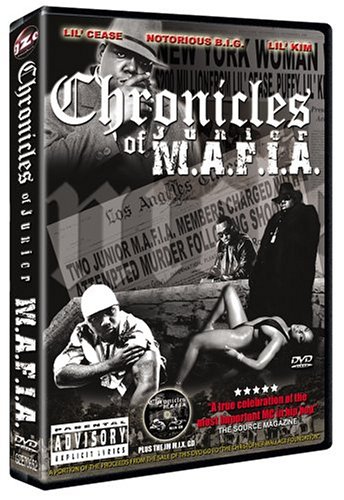
Plaintiff, publicly known as Lil’ Kim, used to be a member of the rap group Junior M.A.F.I.A., along with defendant Lil’ Cease and others including Christopher Wallace/Biggie Smalls/Notorious B.I.G. In November 2004, several years after Lil’ Kim severed ties with Junior M.A.F.I.A., defendants produced, marketed and distributed a documentary DVD, The Chronicles of Junior M.A.F.I.A., which featured plaintiff’s name and likeness on its cover and promotional materials.
Plaintiff sued for unfair competition, false endorsement, and false advertising in violation of section 43(a) of the Lanham Act and a plethora of state law claims. In November 2005, the court granted a preliminary injunction against any advertising or promotional material using the mark Lil’ Kim. This opinion explains that order. The court found that defendants’ use of the trade name Lil’ Kim likely constitutes false endorsement in violation of the Lanham Act and thus didn't reach the false advertising claims. The court held that the mark appears prominently on the DVD covers and some promotional material “in a manner that suggests endorsement.”
What is “a manner that suggests endorsement,” exactly? Given that the DVD is about Lil’ Kim, it’s hard to see how it’s supposed to truthfully identify its contents without risking a lawsuit. The court found the use was not descriptive because, at least for purposes of preliminary relief, the use “strongly suggests” endorsement and wasn’t in good faith. Looking at the image I found online, it does look like the name is presented in the way that movie stars' names are usually presented, and since movie stars usually consent to their representations, I could see how ordinary consumers would assume that this was an ordinary claim about the cast's approval of or affiliation with the producers.
The court found that Lil’ Kim’s image, by contrast, doesn’t imply endorsement and isn’t entitled to Lanham Act protection, relying on case law that a photo of a human being is not inherently distinctive in the trademark sense of automatically indicating origin. I must admit, the combination of a low-protectionist rationale for the image and a comparatively high-protectionist reasoning for the name is confusing to me.
Subscribe to:
Posts (Atom)



 Posts
Posts

